
Listed on 
 Years active
 English (Arabic)
 Chinese Simplified - 中文 (简体)
 Chinese Traditional - 中文 (繁體)
 English
 Japanese - 日本語
 Korean - 한국어 (대한민국)
 Portuguese - Português
 Russian - Русский
 Spanish - Español
 Thai - ไทย

 English (India)

Don't have an account?
Register via AppHave an account?
Login 20/11/2026 - 08:10 UTC
The United States Dollar Index (USDX) edged lower by -0.15%, hovering around the 103.65 level as it took a breather after touching a 19-month high near 103.97 earlier in the session. The modest pullback was driven by softer-than-expected U.S. labor and manufacturing data, including higher Initial Jobless Claims and a drop in the Philadelphia Fed Manufacturing Index. However, the broader bias for the Greenback remains tilted to the upside following hawkish October FOMC meeting minutes and commentary from Governor Christopher Waller suggesting a larger 50-basis-point rate hike could be warranted in December. With CME FedWatch pricing a December rate hike as a virtual certainty alongside strong foreign inflows into long-term U.S. securities, Treasury yields remain elevated and continue to anchor dollar demand.
Global commodity and energy markets faced contrasting drivers as aggressive monetary policy expectations clashed with escalating Middle East conflict risks. Gold (XAU/USD) tumbled -3.58% to languish near $3,520—its lowest level since September 2025—as relentless rate-hike bets and elevated yields drove flows away from the non-yielding metal despite the dollar's slight pause. Meanwhile, WTI Oil rose +0.94% in the latest session before stalling below $83.00 early Friday, remaining on track for a third straight weekly decline. While reports that U.S. President Donald Trump is considering fresh military strikes on Iran, Houthi attacks on Riyadh, and tanker disruptions in the Strait of Hormuz revived supply concerns, International Energy Agency projections of a growing global oil surplus through 2027 continued to cap upside momentum.
Asian equity markets retreated broadly as steep losses in regional technology and semiconductor shares weighed on sentiment following Wall Street's extended downturn. Major regional tech and internet leaders posted sharp declines in their latest trading sessions, including SoftBank (-13.21%), Samsung Electronics (-5.61%), SK Hynix (-4.71%), Baidu (-4.13%), Tencent (-2.05%), and Alibaba (-1.23%). Investors remained cautious over tighter U.S. export licensing rules on advanced artificial intelligence hardware and stretched valuations across the regional supply chain, overshadowing broader stimulus efforts.
U.S. equity markets extended their losing streak—marking their longest stretch of daily declines in over two-and-a-half years—as the main US equity indices moved lower under the weight of hawkish Federal Reserve rate expectations and persistent anxiety over artificial intelligence capital expenditures. Major technology names remained under pressure, with Nvidia falling -3.24% as investors continued to question the long-term sustainability of AI spending following Jensen Huang's recent departure and heightened regulatory scrutiny. In a landmark moment for public markets, Anthropic debuted on the Nasdaq under the ticker ANT following the largest initial public offering on record, raising approximately $81.3 billion at $83 per share alongside a $26 billion private placement. Anthropic shares surged well above their offering price at the open—briefly valuing the Claude developer near $2 trillion—before paring gains amid broader tech-sector profit-taking to close higher on the day, before dipping in extended trading. Wall Street analysts swiftly initiated coverage with bullish ratings, highlighting the company's rapid enterprise revenue expansion and improving computing efficiency, even as broader tech indices struggled to shake off macro headwinds.
Looking ahead to next week, market participants are preparing for major inflation and growth releases alongside key enterprise technology earnings. Focus will center on Australian CPI and Trimmed Mean CPI figures, followed by the U.S. Core PCE Price Index and Preliminary GDP data, while corporate earnings reports from Dell, Analog Devices, Autodesk, and Marvell will offer fresh insight into hardware and software demand.
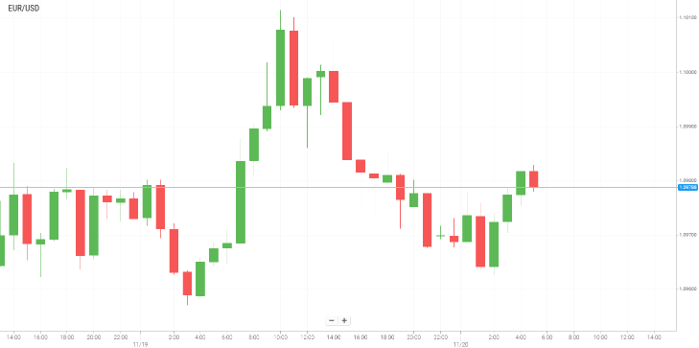
The Euro came under pressure against the US Dollar as expectations of further Federal Reserve (Fed) interest rate increases strengthened the greenback. EUR/USD edged lower to around 1.0970 during Friday’s Asian trading session, following a largely unchanged performance in the previous day, as markets increasingly anticipated tighter US monetary policy.
Minutes from the Federal Open Market Committee’s (FOMC) October meeting revealed that nearly all Fed officials believed further interest rate increases could be necessary, citing persistent inflation risks. These concerns were reinforced by recent economic data and comments from policymakers, including Fed Governor Christopher Waller, who suggested that the central bank may need to take a more aggressive approach to controlling rising prices. According to the CME FedWatch tool, markets are currently pricing in a 97.3% probability of a 25-basis-point rate increase in December, while the likelihood of a larger 50-basis-point hike stands at 2.7%.
Meanwhile, the Euro could find some support from growing expectations of another European Central Bank (ECB) rate increase in December. Final Eurostat figures confirmed that Eurozone headline inflation rose to 4.0% in October, marking its highest level in three years. Core inflation was also revised slightly higher, increasing from 2.5% to 2.6%, further reinforcing concerns about persistent price pressures across the region.
However, ECB President Christine Lagarde recently stated that she could not guarantee an interest rate increase next month.
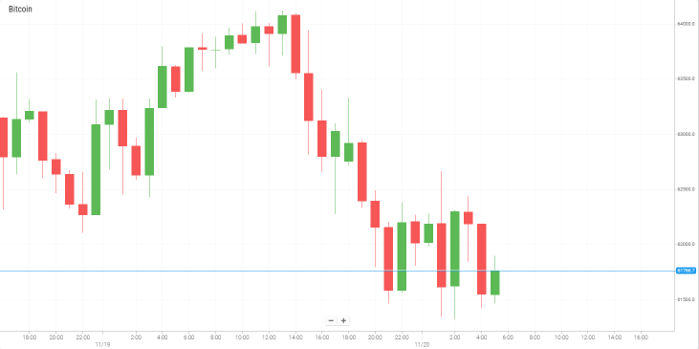
Bitcoin remained under significant selling pressure on Thursday, hovering near its lowest level since early July as growing expectations of a December Federal Reserve (Fed) interest rate increase weighed on investor appetite for riskier assets. The cryptocurrency market also faced additional pressure from a prolonged sell-off in technology and artificial intelligence (AI) stocks, further weakening overall market sentiment.
Minutes from the Fed’s late-October meeting indicated that an increasing number of officials supported further monetary tightening, particularly amid persistent inflation concerns. Higher interest rates generally reduce the attractiveness of speculative investments such as cryptocurrencies by increasing borrowing costs and making traditional interest-bearing assets more appealing. Bitcoin has historically struggled during monetary tightening cycles, declining approximately 36% during the Fed’s 2022–2023 rate-hiking campaign, a period that also coincided with several major bankruptcies across the cryptocurrency industry.
Beyond monetary policy concerns, uncertainty surrounding the US regulatory environment has added to the negative sentiment. The Democrats’ victory in both chambers of Congress during the midterm elections has raised concerns about potentially tighter cryptocurrency regulations. Several prominent Democratic lawmakers, including Senator Elizabeth Warren, have repeatedly called for stronger regulatory oversight of the digital asset industry.
Elsewhere in the cryptocurrency market, major altcoins traded mostly lower as investors struggled to find positive catalysts. Overall, the combination of rising interest rate expectations, regulatory uncertainty and weakness in equity markets continues to create a challenging environment for Bitcoin and the broader cryptocurrency sector.
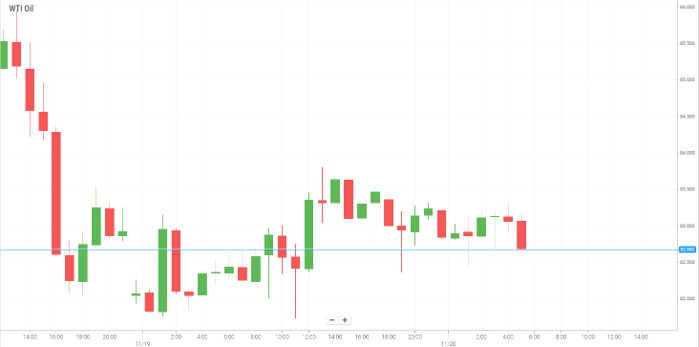
Oil prices edged higher on Friday as escalating geopolitical tensions in the Middle East raised concerns about potential supply disruptions, although both major crude benchmarks remained on track for a third consecutive weekly decline.
The latest gains followed reports of Houthi missile attacks on Saudi Arabia’s capital, Riyadh, alongside renewed concerns over the security of oil shipments through the Strait of Hormuz. Iran’s Revolutionary Guards Navy also reported that two oil tankers had struck naval mines in the strategic waterway, resulting in explosions and fires. These developments have heightened concerns about the security of energy infrastructure and maritime transportation routes across the region.
Despite Friday’s recovery, oil markets remained under pressure from expectations of an emerging global supply surplus. Both benchmarks were also on course for their third consecutive weekly decline, as oil shipments through the Strait of Hormuz had largely recovered to pre-war levels.
Market participants are also focusing on the upcoming OPEC+ meetings scheduled for November 29, when member countries, including Russia, will discuss production policy for 2027. Meanwhile, the International Energy Agency (IEA) warned that the ongoing Middle East conflict has caused the largest disruption to global oil and gas trade in history.
Additional supply concerns have emerged from Russia, where Ukrainian attacks on refineries and export infrastructure could further reduce crude production. Overall, oil prices are being influenced by opposing market forces, with escalating geopolitical tensions and potential supply disruptions providing upward support, while concerns over a global supply surplus and weakening economic sentiment continue to weigh on prices. The outlook for crude will likely depend on developments in the Middle East, OPEC+ production decisions and the direction of global demand.
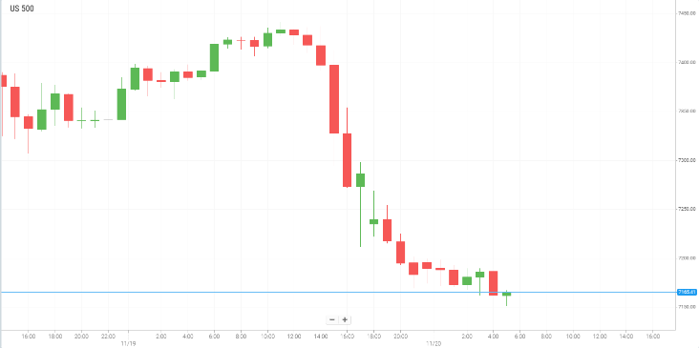
US stock futures declined on Thursday evening as investors remained cautious following a sharp sell-off on Wall Street, with the record-breaking initial public offering (IPO) of artificial intelligence company Anthropic failing to restore confidence in the technology sector. Concerns over elevated valuations, massive AI-related investments and uncertainty surrounding future returns continued to weigh on investor sentiment.
Anthropic's highly anticipated stock market debut initially provided some optimism for the struggling AI sector. Shares opened at $111.50, approximately 34% above their initial public offering price of $83, briefly pushing the company's valuation above $2 trillion. However, the shares subsequently surrendered much of their early gains, closing at $97.17, up 17.1% on their first trading day. The $81.3 billion listing represented the largest IPO on record. Nevertheless, Anthropic shares declined nearly 4% in extended trading, highlighting investors' reluctance to increase their exposure to AI-related stocks.
Chipmakers also remained under pressure despite Nvidia delivering an upbeat revenue forecast. Nvidia shares declined 3.3%, extending their losing streak to six consecutive sessions. Advanced Micro Devices (AMD) suffered a sharper decline of 7.7% after short-selling firm Hunterbrook disclosed a short position in the company.
Investors also remained focused on the Federal Reserve's monetary policy outlook following the release of minutes from its October meeting. The minutes reinforced expectations of further monetary tightening amid persistent inflation concerns, with markets pricing in a 96% probability of a 25-basis-point interest rate increase at the Fed's December meeting, according to CME FedWatch data.
Looking ahead, investors will closely monitor next week's Personal Consumption Expenditures (PCE) inflation report for additional indications about the Federal Reserve's future policy decisions. Persistent inflation, elevated interest rate expectations and uncertainty surrounding AI-related valuations could continue to influence market sentiment and contribute to volatility across US equity markets.
The materials contained on this document should not in any way be construed, either explicitly or implicitly, directly or indirectly, as investment advice, recommendation or suggestion of an investment strategy with respect to a financial instrument, in any manner whatsoever. Any indication of past performance or simulated past performance included in this document is not a reliable indicator of future results. For the full disclaimer click here.
Join iFOREX to get an education package and start taking advantage of market opportunities.
 A beginner's e-book
 $5,000 practice demo account
 A 12-part video course
 Trusted partner

 Featured partner
 By


