
Listed on 
 Years active
 English (Arabic)
 Chinese Simplified - 中文 (简体)
 Chinese Traditional - 中文 (繁體)
 English
 Japanese - 日本語
 Korean - 한국어 (대한민국)
 Portuguese - Português
 Russian - Русский
 Spanish - Español
 Thai - ไทย

 English (India)

Don't have an account?
Register via AppHave an account?
Login 06/11/2026 - 08:02 UTC
The United States Dollar Index (USDX) staged a recovery during Friday's Asian session, advancing +0.33% to the 101.80 area after touching its lowest level since late September on Thursday. The Greenback gained support from a sharp rebound in crude oil prices, which reignited inflationary concerns and bolstered Federal Reserve rate-hike expectations. CME FedWatch pricing indicates approximately a 70% probability of a December Fed rate increase. However, persistent political uncertainty following the Democratic midterm sweep of Congress, along with callouts from Democratic leaders to push for an end to the Iran war using budget controls, kept dollar bulls cautious ahead of key U.S. employment data.
Global commodity and energy markets experienced renewed volatility as geopolitical tensions and inflation expectations collided. Gold (XAU/USD) edged up +0.48% on Thursday before pulling back to trade around $4,050 per ounce during Friday's early European session, weighed down by the strengthening Dollar and hawkish Fed rate expectations, though it remains on track for its first weekly gain in three weeks. Meanwhile, WTI Oil rebounded +3.36% to extend its recovery above the $90.00 mark, bouncing from a two-month low near $86.00. Crude prices found support after President Donald Trump warned of potential strikes against Iran and unresolved disputes over Tehran's nuclear program and Strait of Hormuz shipping security, despite lingering weekly losses of nearly 12%.
The political fallout from the 2026 U.S. midterm election continued to ripple through financial markets. Investors increasingly focused on the policy implications of a Democrat-controlled Congress, particularly regarding potential legislative oversight and regulations that could slow the expansion of artificial intelligence infrastructure and data center developments. In corporate news, major technology firms faced heightened regulatory and earnings scrutiny, while top Senate Democrats reiterated plans to leverage congressional budget authority toward a diplomatic resolution in the Middle East.
Asian equity markets suffered severe losses on Friday as a massive unwind in semiconductor and technology shares broadened into a regional selloff. South Korea's KOSPI plunged, triggering an circuit breaker during the session—while Japan's Nikkei 225 fell around 6.0%, entering bear market territory. Regional technology and semiconductor leaders recorded notable losses in recent sessions, including Kioxia (-10.86%), SK Hynix (-10.78%), SoftBank (-9.75%), Samsung Electronics (-6.37%), TSMC (-4.91%), Tokyo Electron (-4.39%), and Tencent (-2.96%).
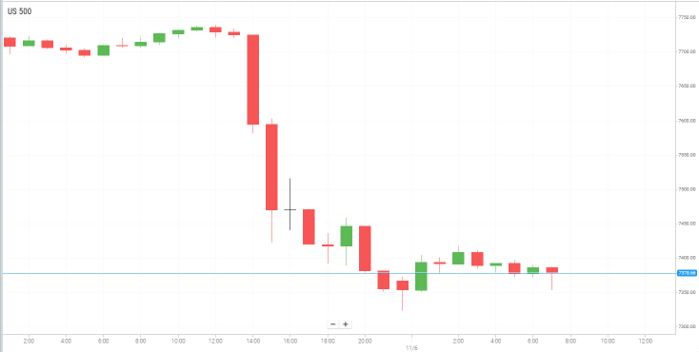
U.S. equity markets suffered a steep selloff on Thursday, with the main U.S. equity indices moving significantly lower as technology and semiconductor stocks led the decline, erasing the previous day's post-election rally. Heavy sell-offs across major U.S. technology names included AMD (-17.36%), Arm Holdings (-13.15%), Tesla (-10.83%), Qualcomm (-9.51%), SpaceX (-9.10%), and Nvidia (-9.08%).
Looking ahead, market participants are focused on key economic releases and central bank commentary to close out the week. The primary focus turns to the U.S. employment report at 3:30pm, featuring Average Hourly Earnings m/m (expected at 0.3% vs. 0.1% prior), Non-Farm Employment Change (expected at 65K vs. 29K prior), and the Unemployment Rate (expected at 4.2%). The week's central bank agenda concludes at 6:00pm with a speech by BOJ Governor Kazuo Ueda.
The EUR/USD pair declined sharply during early Asian trading on Friday as cautious market sentiment weighed on the Euro. However, further losses may be limited by the European Central Bank’s (ECB) hawkish outlook, with investors turning their attention to the US September employment report for fresh market direction.
ECB Governing Council member Joachim Nagel indicated that the central bank could raise interest rates again next month amid concerns about the deteriorating inflation outlook. Similarly, ECB policymaker Klaas Knot stressed the need to maintain a hawkish monetary policy stance to guard against potential inflation shocks. While economists anticipate one final rate increase next month, financial markets expect monetary tightening could extend beyond that, potentially continuing into 2027.
Meanwhile, declining US Treasury yields could put additional pressure on the US Dollar, providing some support for EUR/USD. The two-year Treasury yield, which is particularly sensitive to interest rate expectations, fell by approximately 10 basis points overnight to 4.47%.
The decline in bond yields also reflected changing expectations regarding the Federal Reserve’s monetary policy. According to the CME FedWatch Tool, the probability of a 25-basis-point rate increase in December eased to around 70%, down from more than 70.9% on Thursday.
Investors are now awaiting Friday’s US employment report for further clues about the Federal Reserve’s future interest rate decisions. Economists expect the US economy to have added 65,000 jobs in September, while the unemployment rate is forecast to remain unchanged at 4.2%.
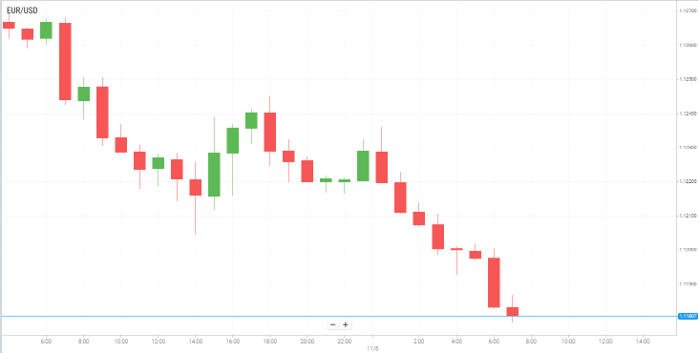
Gold prices posted looses early on Friday, falling further below the $4,050 level during early Asian trading. The precious metal came under renewed selling pressure as the US Dollar strengthened, recovering further from its lowest level since late September. However, the downside in Gold may remain limited as investors adopt a cautious approach ahead of the highly anticipated US Nonfarm Payrolls (NFP) report.
Meanwhile, concerns over a potential slowdown in artificial intelligence development following a Democratic victory in the US midterm elections contributed to a sharp sell-off on Wall Street on Thursday. The resulting uncertainty boosted demand for traditional safe-haven assets, including US Treasury bonds. However, a strong overnight recovery in crude oil prices reignited inflation concerns, reinforcing expectations that the Federal Reserve could maintain a restrictive monetary policy. Markets continue to price in approximately a 70% probability of another interest rate increase in December, helping support the US Dollar and limiting the decline in Treasury yields following their recent drop.
Geopolitical tensions are also contributing to demand for safe-haven assets. Uncertainty surrounding US President Donald Trump's next move toward Iran remains elevated after he warned that the United States could take further military action. Washington and Tehran also remain divided over Iran's nuclear programme and the Strait of Hormuz, adding another layer of geopolitical uncertainty that could support the US Dollar and weigh on Gold.
Despite the recent pullback, Gold remains comfortably above the psychologically important $4,000 level and is still on track to record gains for the first time in three weeks. Investors are now awaiting the US employment report for fresh clues about the Federal Reserve's interest rate outlook and the precious metal's next directional move.
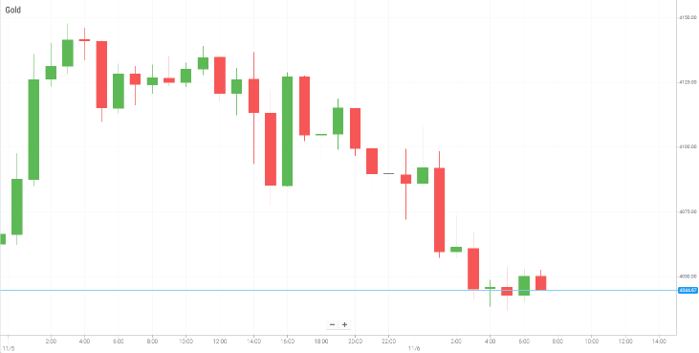
Oil prices extended their recovery during Asian trading on Friday as fresh attacks on oil tankers in the Middle East heightened concerns over potential supply disruptions. However, both major crude benchmarks remained on track for significant weekly losses as investors reassessed the prospects of a diplomatic resolution to the US-Israeli conflict with Iran.
Market sentiment remained cautious as traders questioned whether political pressure following the US midterm elections would translate into a lasting diplomatic agreement and the reliable restoration of oil shipments through the strategically important Strait of Hormuz.
Supply disruption concerns intensified after at least five vessels reported incidents since Sunday, according to the United Kingdom Maritime Trade Operations (UKMTO). The frequency of attacks has approached October's record of 35 reported vessel incidents. Iran's Islamic Revolutionary Guard Corps also reported that two oil tankers and a tugboat caught fire in separate incidents after attempting to navigate unauthorised routes through the Strait of Hormuz. Meanwhile, Saudi Arabia warned of potential threats near Yanbu, a key Red Sea oil export hub, as Iran-aligned Houthi militants continued attacks on the kingdom.
The geopolitical outlook remains uncertain following the US midterm elections, in which Democrats gained control of both chambers of Congress from President Donald Trump's Republicans. The outcome initially raised expectations that increased political pressure could accelerate diplomatic efforts to end the conflict and restore disrupted energy supplies.
Overall, crude oil prices remain caught between renewed supply disruption risks and expectations of a potential diplomatic resolution. Although fresh tanker attacks are supporting prices in the near term, uncertainty surrounding the conflict, combined with the possibility of restored energy shipments, continues to weigh on the broader weekly outlook.
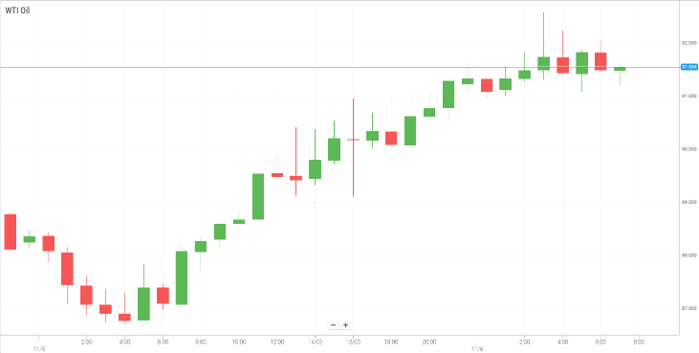
Wall Street suffered its worst trading session since April 2025 on Thursday as a sharp sell-off in artificial intelligence and semiconductor stocks intensified, pushing the US Tech 100 into correction territory. Investor sentiment deteriorated as concerns over potential regulatory changes under the newly elected Democratic-controlled Congress combined with disappointing corporate earnings and uncertainty surrounding the outlook for AI-related investments.
The technology sell-off intensified as investors reassessed the potential impact of the Democratic victory in the US midterm elections. With Democrats gaining control of both chambers of Congress, market participants became increasingly concerned about the possibility of stricter regulations on artificial intelligence development and large-scale data centre projects. Such measures could slow infrastructure expansion and put pressure on companies that have benefited significantly from the AI investment boom.
Data centre operators and AI infrastructure companies remained among the biggest losers, with CoreWeave, Nebius and IREN recording substantial declines. Semiconductor stocks also faced heavy selling pressure, with Nvidia falling approximately 8.9%, AMD plunging 17.4% and Intel losing 10.4%. The Philadelphia Semiconductor Index dropped more than 12%, highlighting the extent of the weakness across the chipmaking industry.
Disappointing corporate earnings and forward guidance added to the negative sentiment. British semiconductor designer Arm Holdings plunged 13% after its revenue and profit forecasts for the current quarter failed to meet market expectations, overshadowing stronger-than-expected quarterly results. Qualcomm also declined nearly 10% after reporting disappointing smartphone chip revenue and warning of rising costs across the semiconductor supply chain, despite providing a positive outlook for its data centre chip business.
Investors are now focusing on the US employment report for further clues about the Federal Reserve's monetary policy outlook. Continued resilience in the labour market could give policymakers additional room to raise interest rates in December, particularly as inflationary pressures remain a concern.
The materials contained on this document should not in any way be construed, either explicitly or implicitly, directly or indirectly, as investment advice, recommendation or suggestion of an investment strategy with respect to a financial instrument, in any manner whatsoever. Any indication of past performance or simulated past performance included in this document is not a reliable indicator of future results. For the full disclaimer click here.
Join iFOREX to get an education package and start taking advantage of market opportunities.
 A beginner's e-book
 $5,000 practice demo account
 A 12-part video course
 Trusted partner

 Featured partner
 By


