
Listed on 
 Years active
 English (Arabic)
 Chinese Simplified - 中文 (简体)
 Chinese Traditional - 中文 (繁體)
 English
 Japanese - 日本語
 Korean - 한국어 (대한민국)
 Portuguese - Português
 Russian - Русский
 Spanish - Español
 Thai - ไทย
 English (India)
Don't have an account?
Register via AppHave an account?
Login 18/09/2026 - 07:20 UTC
The US Dollar Index (USDX) eased around 0.07% in the latest trading session, retreating modestly from recent six-week highs as softer US Treasury yields weighed on the Greenback. The Dollar remained supported, however, by expectations of further Federal Reserve tightening after the central bank delivered a 25-basis-point rate hike and signaled additional tightening ahead. Investors continue to assess incoming US economic data and developments in the Middle East for fresh direction.
Gold advanced around 1.75% in the latest trading session, extending its recovery toward the $4,400 mark as softer US bond yields reduced pressure on the non-yielding metal. The retreat in the Dollar also provided additional support to bullion, although the Fed's hawkish outlook and persistent geopolitical tensions continue to limit the scope for a sustained upside move.
WTI Crude Oil declined around 0.67% in the latest trading session, consolidating below recent highs as markets continued to assess developments surrounding the Middle East conflict. While the recent pullback in energy prices has helped ease immediate inflation concerns, geopolitical tensions and potential disruptions to regional supply routes continue to keep a significant risk premium embedded in crude oil prices.
Asian equity markets traded broadly higher in the latest trading session, supported by a rebound in technology and semiconductor stocks, while lower energy prices helped ease concerns over inflation and borrowing costs. Japanese equities advanced following the Bank of Japan's policy decision, while semiconductor shares across the region recorded strong gains. Among major technology and semiconductor names, SK Hynix gained 5.45%, Samsung Electronics advanced 2.97%, Murata Manufacturing rose 3.20%, and Kioxia surged 7.49%. Chinese technology stocks were mixed, with Baidu gaining 1.70%, JD.com declining 0.95%, Meituan advancing 0.60%, and Tencent slipping 0.73%.
US equity markets benefited from improved risk sentiment and a renewed rebound in technology and AI-related shares in the latest trading session. Lower Treasury yields and easing oil prices provided additional support, while investors continued to assess the implications of the Federal Reserve's latest policy decision. NVIDIA advanced 2.49%, while Robinhood Markets climbed 5.11% following the Securities and Exchange Commission's announcement of guidance permitting digital versions of securities to trade in the US.
In central banking news, the Bank of Japan raised its policy rate by 25 basis points to 1.25%, bringing borrowing costs to their highest level since 1995. The decision reflected growing concerns that inflation is approaching the Bank's 2% target, while the central bank highlighted risks stemming from higher energy prices, AI-driven demand and a weaker yen. Despite the rate increase, the yen weakened following the decision, while Japanese equities advanced.
Markets continue to assess the Federal Reserve's hawkish policy outlook, with expectations for further rate increases supporting the US Dollar and keeping global bond yields elevated.
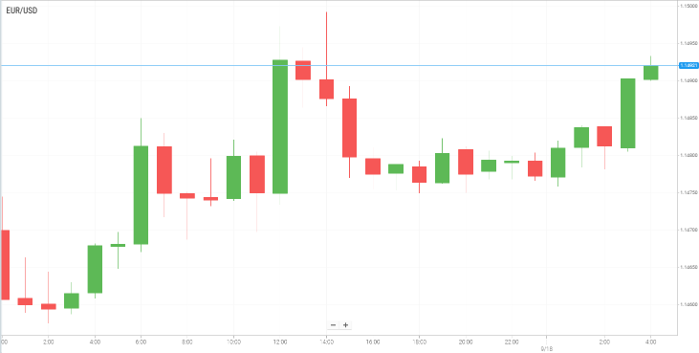
The EUR/USD pair edged higher to around 1.1490 during early Asian trading on Friday, as the US Dollar weakened amid falling US Treasury yields and softer oil prices.
The 10-year US Treasury yield declined by eight basis points to 4.94% in the previous session, while oil prices extended their retreat from levels not seen since mid-May. The combination weighed on the Greenback, while markets continued to assess the Federal Reserve’s outlook for interest rates.
Although Fed policymakers continue to signal a relatively hawkish stance, markets appear to anticipate a less aggressive path for rate increases. Fed officials project one additional rate hike later this year followed by a hold in 2027, while traders are pricing in more than one further increase in 2026 and roughly three additional hikes through the end of 2027.
Meanwhile, the European Central Bank raised its key deposit rate by 25 basis points to 2.50% from 2.25%, in line with market expectations. The ECB reiterated that it would not pre-commit to the timing or direction of future policy decisions, following its second rate increase since the outbreak of the Iran war.
ECB President Christine Lagarde warned that the conflict in the Middle East, along with developments in Russia’s war in Ukraine, could keep headline inflation well above the ECB’s 2% target for an extended period.
The divergence between softer US yields and persistent expectations for further ECB tightening could continue to influence EUR/USD direction in the near term.
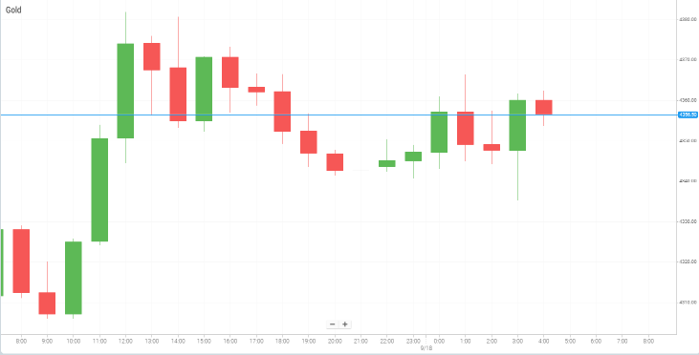
Gold attracts modest buying for a second consecutive session on Friday but struggles to build meaningful upside momentum. The precious metal remains below the weekly high reached on Thursday as traders weigh conflicting fundamental signals.
Falling US Treasury yields continue to put some pressure on the US Dollar, providing support for the non-yielding yellow metal. The recent decline in crude oil prices has eased immediate concerns over a renewed surge in inflation, contributing to the retreat in US yields and limiting demand for the Greenback. However, the Federal Reserve’s hawkish policy outlook continues to act as a headwind for Gold.
At the post-meeting press conference, Fed Chair Kevin Warsh emphasized the importance of bringing consumer-price pressures under control to support sustainable economic growth, noting that inflation had remained elevated for too long. Meanwhile, renewed tensions in the Middle East continue to underpin crude oil prices, raising concerns over energy-driven inflation and potentially strengthening the case for further Fed tightening.
Geopolitical developments remain another key factor for Gold and the US Dollar. The Islamic Revolutionary Guard Corps (IRGC) said it had struck a Togo-flagged tanker that attempted to make what it described as an illegal passage through the Strait of Hormuz.
US President Donald Trump also said he was nearing a major decision on whether to resume large-scale attacks on Iran. Any further escalation could increase demand for traditional safe-haven assets, while simultaneously fueling concerns over oil supplies and inflation.
Markets now await Friday’s US Industrial Production and Capacity Utilization data, while speeches from influential FOMC members could provide additional direction for the US Dollar and Gold during the North American session.
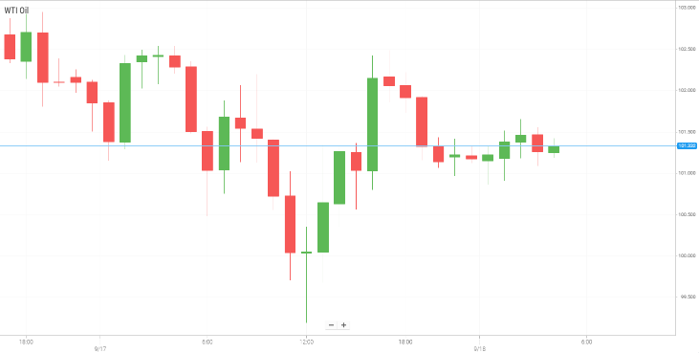
Oil prices extended their decline for a third consecutive session early on Friday as signs that Saudi Arabia could restore disrupted export capacity helped ease concerns over a prolonged supply shortage. However, renewed fighting in the Middle East continued to limit the downside.
Oil prices surged toward four-month highs earlier in the week after reports that crude loadings at Saudi Arabia’s Red Sea export hub of Yanbu had been suspended. Saudi Arabia had also cancelled some crude deliveries to Europe following damage to its East-West pipeline in an attack last week.
However, concerns over an extended supply disruption have eased after reports that Saudi Arabia is working to restore roughly half of the pipeline’s capacity within days. The kingdom has also reportedly offered additional crude cargoes to Asian refiners through ship-to-ship transfers near Oman’s Sohar port.
Despite the improvement, the timing for a full recovery in Saudi crude flows remains uncertain, with sources giving varying estimates on when the damaged pipeline could return to normal operations.
Meanwhile, the United States and Iran have not resumed peace talks since an interim agreement reached in June collapsed within weeks. The conflict is expected to feature in discussions at the upcoming United Nations General Assembly, with an Iranian delegation set to attend.
For oil markets, the near-term direction is likely to depend on whether Saudi export capacity can be restored as expected and whether shipping through the Strait of Hormuz remains stable. Any further deterioration in regional security could quickly revive supply concerns, while evidence of improving physical flows could reduce the geopolitical premium in crude prices.
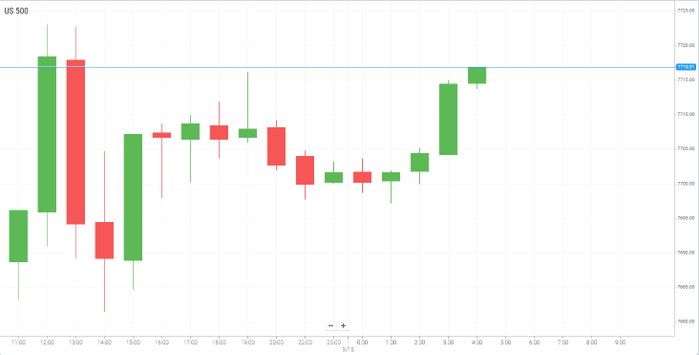
US stocks staged a strong rebound on Thursday, posting their best session in more than a month as falling Treasury yields, softer oil prices and renewed strength in technology shares lifted market sentiment.
The rally came a day after the Federal Reserve raised interest rates for the first time in more than three years. While the decision itself had been widely anticipated, investors initially reacted negatively to the Fed’s updated projections and comments from Chair Kevin Warsh regarding persistent inflation pressures.
The move came after stronger-than-expected employment and inflation data had increased expectations for tighter monetary policy. A sharp selloff in the Treasury market had also pushed borrowing costs to multi-year highs ahead of the decision.
The Fed’s updated projections pointed to the possibility of another rate increase before the end of the year, while Warsh emphasized the central bank’s commitment to restoring price stability.
Investors appeared more comfortable with the policy outlook after a day of assessing the Fed’s projections and messaging. The market response also reflected expectations that the central bank could continue addressing inflation without necessarily triggering a severe economic slowdown.
Among individual stocks, Robinhood Markets gained more than 5% after the Securities and Exchange Commission announced guidance supporting the trading of digital versions of securities in US markets.
Overall, Thursday’s rally reflected a combination of falling Treasury yields, easing oil prices and reduced uncertainty following the Fed’s latest policy decision.
The materials contained on this document should not in any way be construed, either explicitly or implicitly, directly or indirectly, as investment advice, recommendation or suggestion of an investment strategy with respect to a financial instrument, in any manner whatsoever. Any indication of past performance or simulated past performance included in this document is not a reliable indicator of future results. For the full disclaimer click here.
Join iFOREX to get an education package and start taking advantage of market opportunities.
 A beginner's e-book
 $5,000 practice demo account
 A 12-part video course
 Trusted partner
 Featured partner
 By
By 


