
Listed on 
 Years active
 English (Arabic)
 Chinese Simplified - 中文 (简体)
 Chinese Traditional - 中文 (繁體)
 English
 Japanese - 日本語
 Korean - 한국어 (대한민국)
 Portuguese - Português
 Russian - Русский
 Spanish - Español
 Thai - ไทย

 English (India)

Don't have an account?
Register via AppHave an account?
Login 05/11/2026 - 07:38 UTC
The United States Dollar Index (USDX) extended its losses for a second consecutive session on Thursday, touching a monthly low near 101.20 during Asian trading hours. The Greenback remained under broad selling pressure following a Democratic sweep of both houses of Congress, which raised prospects of legislative gridlock in Washington and lower government spending. Further downward pressure stemmed from a sharp pullback in oil prices. However, dollar losses were partially tempered by resilient U.S. economic data, including October ADP private payrolls rising by 86,000 and the ISM Services PMI remaining in expansion at 54.5. CME FedWatch pricing reflects an 82% probability of a December Federal Reserve rate hike as investors await weekly jobless claims and Friday's NFP data.
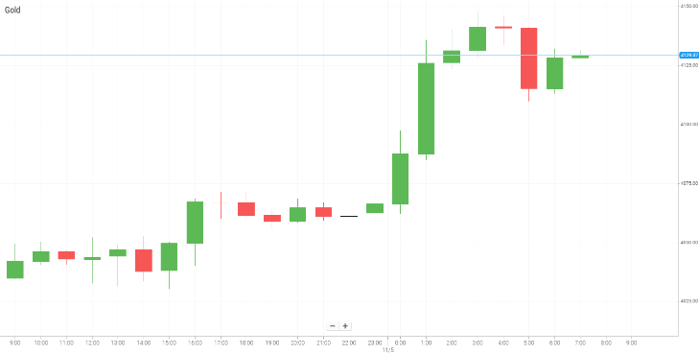
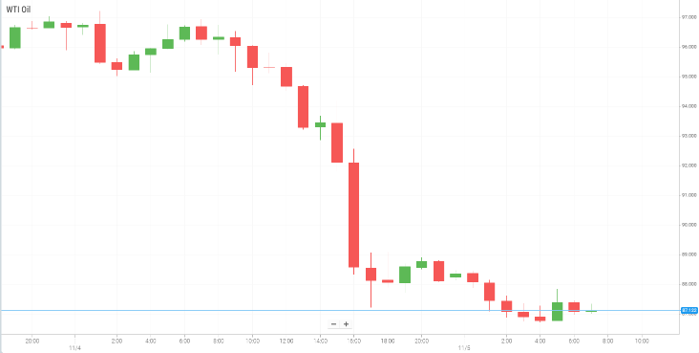
Global commodity and energy markets experienced significant price shifts as political developments altered geopolitical risk expectations. Gold (XAU/USD) built on Wednesday's 3.5% surge to trade near $4,130 per barrel during Thursday's Asian session, benefiting from persistent USD weakness, lower Treasury yields, and reduced expectations of immediate U.S. military strikes against Iran. Meanwhile, West Texas Intermediate (WTI Oil) fell toward mid-$87.00s per barrel, touching a one-month low. Crude prices faced pressure following statements from Democratic leaders to press for an end to the U.S.-Iran conflict via government funding controls, though ongoing security disruptions near the Strait of Hormuz—including reported mine incidents and tanker strikes—kept a residual risk premium intact.
The political landscape in Washington shifted dramatically as the Associated Press confirmed a Democratic majority in both the Senate and the House of Representatives following the 2026 midterm elections. Top Senate Democrat Chuck Schumer signaled plans to leverage congressional authority over federal budgets to push for a diplomatic conclusion to the Iran war. The midterm results also introduced renewed regulatory scrutiny for major corporate entities, with shares of Tesla and SpaceX drawing investor attention amid potential legislative oversight in key infrastructure sectors like data centers and artificial intelligence.
Asian equity benchmarks delivered mixed performances on Thursday as a sharp selloff in memory and chipmaking equipment shares dragged down South Korean and Japanese markets, triggering a five-minute sidecar trading halt on the KOSPI. In recent trading sessions, major technology and semiconductor names posted notable price moves, including Qualcomm (+5.10%), Arm Holdings (-6.82%), SpaceX (+0.82%), Tesla (-3.65%), Tencent (+11.11%), Advantest (-15.54%), Tokyo Electron (-8.49%), SoftBank (-11.62%), SK Hynix (-10.40%), and Samsung Electronics (-10.60%). Conversely, Chinese and Hong Kong benchmarks advanced, supported by a 25 basis point rate cut on the People's Bank of China's relending facility.
U.S. equity markets posted strong gains on Wednesday, with the main U.S. equity indices moved significantly higher, led by strong gains across major benchmarks.as investors welcomed the resolution of election uncertainty. Wednesday's session also recorded price moves for core benchmark instruments, including USDX (+0.12%), Gold (-3.11%), and Oil (-0.46%).
Looking ahead, market participants are monitoring a heavy economic, corporate earnings, and central bank calendar for the remainder of the week. Today, corporate focus centers on major quarterly results due from Berkshire Hathaway B (EPS est. $5.78, Rev est. $100.93B), and Airbnb (ABNB). Central bank attention today focuses on the Bank of England's rate decision at 2:00pm (Official Bank Rate expected at 4.00% vs. 3.75% previously, with a 7-0-2 vote split expected, alongside the Monetary Policy Report and Summary), followed by a speech from BOE Governor Andrew Bailey at 2:30pm. The week concludes on Friday, November 6 with the release of key U.S. employment metrics at 3:30pm (Average Hourly Earnings m/m expected at 0.3%, Non-Farm Employment Change expected at 65K vs. 29K previously, and the Unemployment Rate expected at 4.2%), alongside a speech by BOJ Governor Kazuo Ueda at 6:00pm.
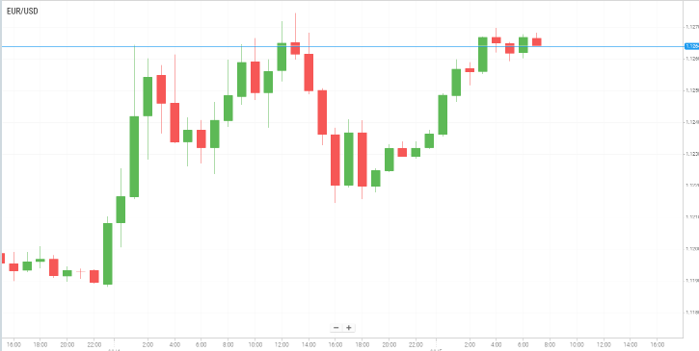
The euro strengthened against the US dollar, with the EUR/USD pair climbing to around 1.1250 during early Asian trading on Thursday, reaching its highest level in nearly a month. The euro’s gains were supported by a weaker US dollar following the Democrats’ victory in the US midterm elections, alongside stronger-than-expected inflationary pressures across the Eurozone.
The Democrats secured control of both the Senate and the House of Representatives, marking a significant political setback for President Donald Trump and his Republican Party. The election results raised expectations of increased political uncertainty and potential limitations on government spending, weighing on the US dollar.
Meanwhile, inflation in the Eurozone accelerated to 4.0% in October, its highest level in three years, according to preliminary data released on Wednesday. The reading followed 3.8% in September and matched market expectations, marking the first time inflation has reached or exceeded the 4% threshold since September 2023, when it stood at 4.3%.
The latest inflation figures have strengthened expectations that the European Central Bank (ECB) could consider further monetary tightening. The ECB maintained its key interest rate at 2.5% last month after delivering a 25-basis-point increase in September. Markets are currently pricing in approximately a 72% probability of another rate hike at the ECB’s final meeting of the year in December, reflecting expectations that persistent inflationary pressures could prompt further policy action.
Investors will now turn their attention to Germany’s September Factory Orders data, scheduled for release later on Thursday, which could provide additional insight into the health of the Eurozone’s largest economy and influence the euro’s near-term direction.
Gold prices edged lower after reaching a two-week high during Thursday’s Asian trading session, but continued to hold comfortably above the $4,100 level, trading around $4,130. The precious metal maintained its upward momentum for a second consecutive session, supported by persistent US dollar weakness following the Democrats’ strong performance in the US midterm elections. The dollar slipped to its lowest level since late September, helping gold extend the previous session’s rally around 3.5%, its strongest single-day gain since mid-August.
The Democrats’ decisive election victory eased political uncertainty and reduced expectations of further US military action against Iran. Senate Democratic leader Chuck Schumer also pledged to push for an end to the conflict, suggesting that his party could use its control over government funding to advance this objective. These developments contributed to a decline in crude oil prices to a two-month low, easing concerns over inflationary pressures. Lower oil prices, combined with expectations of political gridlock in Washington potentially limiting government spending, also put downward pressure on US Treasury yields, further weakening the US dollar and providing additional support for gold.
However, the upside potential for the precious metal could remain limited by expectations of a hawkish stance from central banks, which may reduce gold’s appeal. Investors are therefore closely monitoring upcoming US economic data, particularly the Nonfarm Payrolls (NFP) report, for further clues about the Federal Reserve’s monetary policy outlook and the dollar’s next direction.
Oil prices extended their decline for a fourth consecutive session on Thursday, as markets assessed the potential impact of the US midterm election results on the future of the US-Israeli conflict with Iran. Expectations that the Democrats’ gains in Congress could limit President Donald Trump’s military options have reduced concerns over further escalation, weighing on geopolitical risk premiums in crude markets.
A potential de-escalation could improve expectations for the recovery of Middle Eastern oil supplies previously disrupted by the conflict. In particular, the restoration of more stable shipments through the Strait of Hormuz, a critical route for global energy trade, could increase available supply and ease concerns over further market disruptions. Analysts have noted that shipments through the waterway have already recovered to levels close to those seen before the war, although transportation costs remain elevated.
Nevertheless, the outlook remains highly uncertain. Although the probability of renewed US strikes on Iran has declined, the possibility of a diplomatic agreement has also become less likely, with Iran maintaining firm negotiating demands.
Additional support for oil prices could come from tightening commercial inventories. US crude oil, gasoline and distillate stockpiles all declined last week, according to the Energy Information Administration, while demand reached its highest level in a year. Furthermore, inventories across major consuming economies remain close to their lowest levels in 15 years, leaving the market vulnerable to renewed supply disruptions.
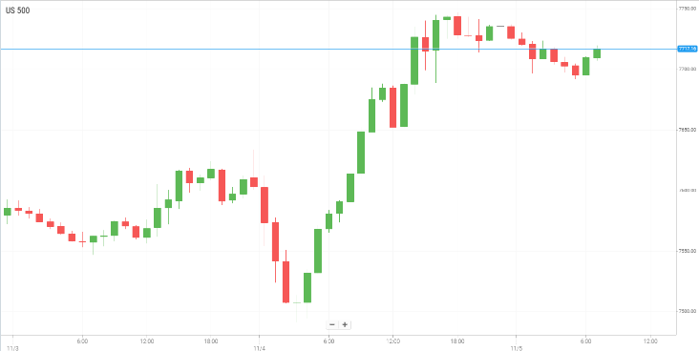
US stock index futures declined during early Thursday trading as the post-election rally on Wall Street lost momentum amid disappointing earnings and weaker-than-expected guidance from major chipmakers. Results from Arm Holdings and Qualcomm renewed concerns about the sustainability of the artificial intelligence (AI) investment boom, triggering fresh selling pressure across the technology sector.
The decline followed a strong rally on Wall Street on Wednesday, when investors welcomed the outcome of the US midterm elections, which saw Democrats secure control of both chambers of Congress. However, expectations that a Democrat-led Congress could introduce stricter regulations targeting artificial intelligence and data centres have raised concerns about the outlook for technology companies and the broader AI sector.
Meanwhile, disappointing corporate results added to the negative sentiment. Arm Holdings fell nearly 3% in after-hours trading after its revenue and profit guidance for the current quarter failed to meet market expectations, overshadowing stronger-than-expected quarterly results. Qualcomm also declined around 3% after reporting weaker-than-expected handset revenue and warning of rising costs across the semiconductor supply chain, despite delivering an overall earnings beat.
These developments have intensified concerns about elevated valuations in the technology sector and whether substantial investments in artificial intelligence will generate sufficient long-term returns. The latest weakness follows a difficult October for technology shares, when growing doubts surrounding the AI trade contributed to significant losses across the sector.
Investors are now turning their attention to additional third-quarter corporate earnings and upcoming US labour market data for further direction. Weekly jobless claims and Challenger job cuts figures are due on Thursday, followed by October's Nonfarm Payrolls report on Friday.
The materials contained on this document should not in any way be construed, either explicitly or implicitly, directly or indirectly, as investment advice, recommendation or suggestion of an investment strategy with respect to a financial instrument, in any manner whatsoever. Any indication of past performance or simulated past performance included in this document is not a reliable indicator of future results. For the full disclaimer click here.
Join iFOREX to get an education package and start taking advantage of market opportunities.
 A beginner's e-book
 $5,000 practice demo account
 A 12-part video course
 Trusted partner

 Featured partner
 By


