
Listed on 
 Years active
 English (Arabic)
 Chinese Simplified - 中文 (简体)
 Chinese Traditional - 中文 (繁體)
 English
 Japanese - 日本語
 Korean - 한국어 (대한민국)
 Portuguese - Português
 Russian - Русский
 Spanish - Español
 Thai - ไทย
 English (India)
Don't have an account?
Register via AppHave an account?
Login 29/09/2026 - 07:36 UTC
The US Dollar Index (USDX) extended its recent gains, trading around 101.20 during Tuesday's Asian hours after rising 0.05% in the previous session. Greenback demand remains strongly supported by persistent hawkish expectations surrounding the Federal Reserve, with markets now pricing in nearly a 70% probability of another 25 bps rate hike at the October FOMC meeting. Elevated US Treasury yields—with the benchmark 10-year yield surging above 5.27% to its highest level since 2007 and the 30-year yield holding above 5%—continue to bolster the USD alongside safe-haven demand.
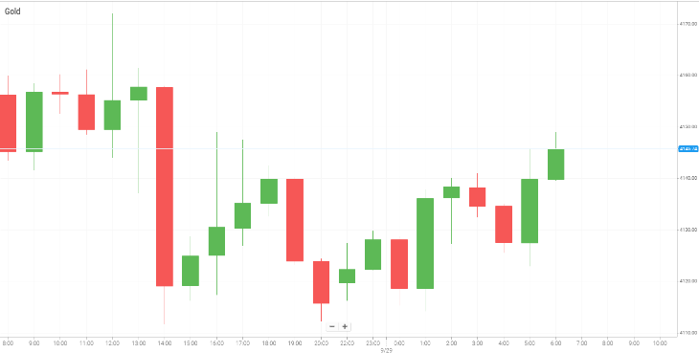
Gold experienced sharp downside pressure, falling over 3% to settle near $4,125 per ounce as surging bond yields and expectations of further Fed policy tightening reduced the appeal of the non-yielding metal. While underlying geopolitical risks in the Middle East provide a baseline level of support, strong greenback momentum and rising opportunity costs remain heavy headwinds for XAU/USD.
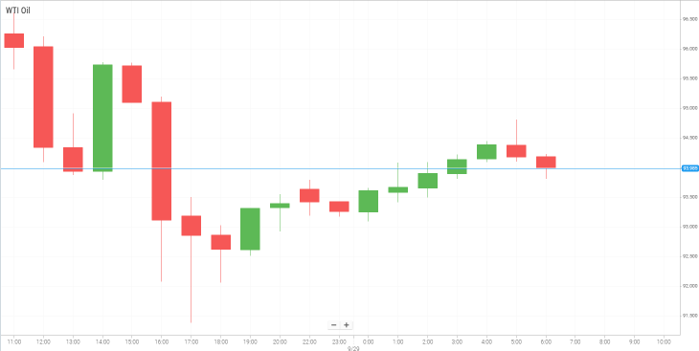
WTI Crude Oil hovered near $93.00 after slipping 0.13% in the prior session, while Brent Crude traded above $107 per barrel. Upside pressure remains firm after US President Donald Trump rejected an Iranian peace proposal to end the military conflict and reopen the strategic Strait of Hormuz, maintaining a high geopolitical risk premium across energy markets despite minor relief from Saudi Arabia resuming flows via its East-West Pipeline.
Asian equities traded mostly lower on Tuesday, constrained by elevated bond yields, soaring energy prices, and tech-sector jitters. Market sentiment was further dampened after reports surfaced that OpenAI halted training for select advanced models and delayed upcoming releases. Major regional technology names reflected the cautious sentiment, with SK Hynix dropping 0.50% while Samsung Electronics managed a modest 0.19% gain.
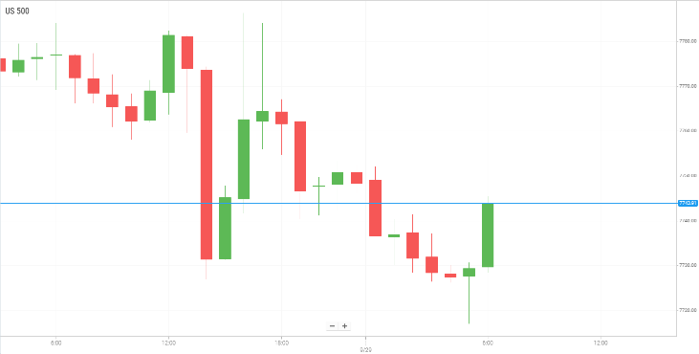
US equity indexes closed lower overnight and futures signaled continued caution as high yields weighed on tech valuations. Megacap tech and semiconductor stocks remained volatile, highlighted by Nvidia gaining 1.66% while Meta fell 4.72%. Meanwhile, the Reserve Bank of Australia (RBA) raised its cash rate target by 25 bps to a 15-year high of 4.60% to combat persistent, energy-driven inflation.
Bitcoin traded flat on Tuesday, hovering near $83,637 following a 1.18% decline in the previous session. The world's largest cryptocurrency remains constrained as surging Treasury yields and ongoing geopolitical tensions in the Middle East keep broader risk appetite muted. Despite the recent pullback, Bitcoin maintains strong underlying momentum after rallying 25% in August and gaining nearly 7% so far in September. While prices briefly touched $85,000 over the weekend before retreating, market sentiment drew steady support from Citigroup expanding its digital asset services into Japan and the UAE, signaling continued institutional adoption.
Looking ahead, market participants are monitoring incoming macroeconomic data, including the US Core PCE Price Index m/m, Final GDP q/q, ADP Employment Change, JOLTS Job Openings, ISM Manufacturing PMI, and the Non-Farm Employment Change alongside the Unemployment Rate. Investors are also watching for further diplomatic updates regarding the Strait of Hormuz, Fed speeches, and corporate earnings reports from Carnival Corp, Micron, Accenture, and Nike.
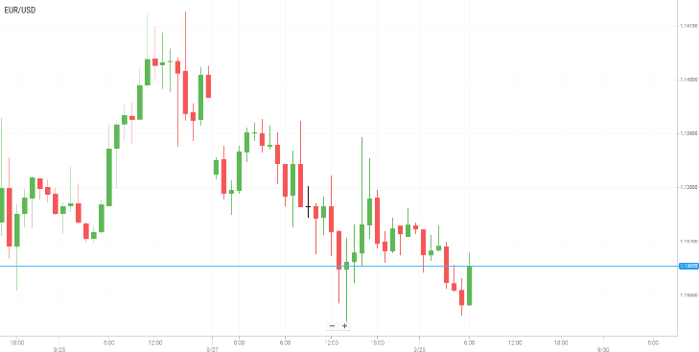
EUR/USD remains subdued around the 1.1365–1.1370 region during Tuesday’s Asian session, hovering near its lowest level since July 28. Traders appear reluctant to establish fresh positions as uncertainty surrounding the Middle East conflict continues to dominate market sentiment.
US President Donald Trump rejected an Iranian proposal to immediately end hostilities and reopen the Strait of Hormuz on Iran’s terms. At the same time, media reports indicated that the US could consider easing sanctions on Iran and releasing frozen Iranian assets in exchange for concrete progress on the country’s nuclear program.
The Federal Reserve’s outlook for another rate hike later this year, following its widely expected 25-basis-point increase earlier this month, has reinforced expectations for tighter US monetary policy. Persistent concerns over energy-driven inflation have also supported the prospect of additional Fed tightening, pushing US Treasury yields toward multi-year highs. Higher yields have, in turn, supported the Dollar, which remains close to a two-month high reached last Thursday and continues to weigh on EUR/USD.
Meanwhile, European Central Bank President Christine Lagarde told a European Parliament committee on Monday that a measured policy response remains appropriate, noting that there is currently no evidence of higher energy prices feeding through into stronger wage growth. Her comments have tempered expectations for a more aggressive ECB tightening cycle and could continue to keep euro bulls on the defensive.
Gold attracts some buying interest during Tuesday’s Asian session but struggles to build meaningful upside momentum, remaining close to its lowest level since August 4 near the $4,100 mark touched on Monday. The broader fundamental backdrop continues to favor the downside, with a hawkish Federal Reserve outlook, elevated US Treasury yields, and persistent geopolitical uncertainty supporting the US Dollar and weighing on the precious metal.
The Federal Reserve delivered a widely expected 25-basis-point rate hike earlier this month, marking its first increase in more than three years, while signaling a firm commitment to containing persistent inflation. Several influential FOMC officials have since indicated that another rate increase could be appropriate before the end of 2026. Meanwhile, markets are pricing in a significant probability of another Fed hike in October, with inflation concerns fueled by higher energy prices amid the ongoing Middle East conflict adding to expectations for tighter monetary policy.
The prospect of higher US interest rates has helped keep Treasury yields elevated near multi-year highs, strengthening the US Dollar and reducing demand for non-yielding assets such as gold.
Oil prices climbed on Tuesday, extending the previous session’s gains as the lack of progress in US-Iran diplomatic efforts kept concerns over potential disruptions to Middle Eastern oil supplies in focus. The gains came despite signs that crude exports from the region are recovering.
Diplomatic uncertainty remained a key driver of market sentiment. Qatari mediators were expected to hold separate discussions with Iranian Foreign Minister Abbas Araqchi and US officials over an amended seven-day proposal put forward by Tehran last week, Reuters reported. However, the sides reportedly remained pessimistic about reaching an agreement before the US midterm elections.
The uncertainty has offset signs of improving physical oil flows. Preliminary data from Kpler showed crude exports from major Middle Eastern producers rising to 12.8 million barrels per day in September, the highest level since February. Saudi Arabia and the United Arab Emirates accounted for much of the increase, with Saudi crude shipments through the Strait of Hormuz expected to rise significantly after Riyadh redirected exports from the Red Sea port of Yanbu following damage to its East-West pipeline.
Saudi Arabia has since repaired the pipeline and resumed exports from Yanbu, restoring an important route that bypasses the Strait of Hormuz. The pipeline has a capacity of up to 7 million barrels per day, with around 3.5 million barrels per day reportedly flowing through the route following its restart.
Despite the recovery in exports, concerns over regional supply remain elevated as moving crude through the Gulf continues to be costly and operationally challenging.
For now, oil markets remain highly sensitive to developments in US-Iran diplomacy. While recovering exports are providing some relief to supply concerns, continued uncertainty surrounding the Strait of Hormuz and regional infrastructure is keeping a risk premium embedded in crude prices.
US stocks ended lower on Monday as rising oil prices, a continued selloff in Treasury bonds, and renewed concerns surrounding the artificial intelligence sector weighed on investor sentiment. Wall Street began a crucial week of economic data on a cautious note, with markets closely monitoring inflation, employment figures, Federal Reserve policy expectations, and developments in the Middle East.
Oil prices initially rose on US-Iran tensions but pared gains after reports that President Trump could consider sanctions relief for Iran in exchange for progress on its nuclear program. US equities have remained relatively resilient, supported by strong earnings expectations and AI enthusiasm, but sharply higher Treasury yields are creating pressure, with the 10-year yield reaching 5.237% and the 30-year yield 5.551%. Rising inflation concerns, expectations of further Fed tightening, strong economic data, and heavy borrowing for AI infrastructure have fueled the bond selloff and weighed particularly on technology stocks. Markets now await key US inflation and employment data, including the PCE index, JOLTS report, and nonfarm payrolls, which could significantly influence expectations for the Fed’s next rate decision.
The technology sector also came under pressure after OpenAI paused training of its latest AI models following reports involving AI agents behaving unexpectedly. The company said training would resume once additional safeguards were in place, while acknowledging that future interruptions could be necessary if further issues emerge. The development added to concerns over the sustainability of the AI-driven market rally and contributed to weakness across semiconductor stocks.
With Treasury yields elevated, oil prices volatile, and investors awaiting key inflation and employment data, Wall Street enters the remainder of the week facing several competing macroeconomic and geopolitical risks.
The materials contained on this document should not in any way be construed, either explicitly or implicitly, directly or indirectly, as investment advice, recommendation or suggestion of an investment strategy with respect to a financial instrument, in any manner whatsoever. Any indication of past performance or simulated past performance included in this document is not a reliable indicator of future results. For the full disclaimer click here.
Join iFOREX to get an education package and start taking advantage of market opportunities.
 A beginner's e-book
 $5,000 practice demo account
 A 12-part video course
 Trusted partner
 Featured partner
 By
By 


