
Listed on 
 Years active
 English (Arabic)
 Chinese Simplified - 中文 (简体)
 Chinese Traditional - 中文 (繁體)
 English
 Japanese - 日本語
 Korean - 한국어 (대한민국)
 Portuguese - Português
 Russian - Русский
 Spanish - Español
 Thai - ไทย
 English (India)
Don't have an account?
Register via AppHave an account?
Login 17/09/2026 - 07:40 UTC
The US Dollar Index (USDX) advanced around 0.68% in Wednesday's session as markets digested the Federal Reserve's monetary policy decision. While profit-taking and a modest pullback in bond yields caused the index to retreat slightly on Thursday, it maintained its position above key psychological levels heading into the European session. The central bank's hawkish outlook, combined with elevated energy prices and ongoing geopolitical friction in the Middle East, continues to reinforce underlying demand for the Greenback.
Gold declined around 0.28% on Wednesday as rising Treasury yields and expectations of tighter monetary policy weighed on the non-yielding metal. The asset gained some positive traction on Thursday to climb back above the $4,300 mark as the Dollar paused, though it remains close to recent six-week lows. Further upside for bullion remains constrained by the Fed's higher-for-longer rate trajectory and persistent strength in US bond yields.
WTI Crude Oil fell around 3.40% on Wednesday amid volatile trading conditions. Despite the pullback, energy markets remain underpinned by a elevated geopolitical risk premium due to escalating regional conflicts in the Middle East, including military actions involving Saudi Arabia and Houthi forces. High energy costs continue to fuel broader inflation fears and complicate the global interest rate environment.
Asian equity markets traded generally higher on Thursday following the Federal Reserve's rate hike, as a slight easing in Treasury yields helped stabilize regional sentiment. Performance across semiconductor and technology listings was mixed amid ongoing scrutiny over corporate borrowing costs and artificial intelligence capital expenditures. In their latest trading sessions, performance across major regional tech shares showed SK Hynix down 0.79%, Samsung Electronics slipping 0.40%, Kioxia declining 1.58%, Murata Manufacturing dropping 2.19%, and SoftBank advancing 0.41%. Chinese technology equities experienced broader downward pressure, with Tencent losing 1.80%, Baidu falling 2.01%, Alibaba dropping 1.87%, JD.com slipping 0.70%, and Meituan declining 2.29%.
US equity markets faced volatility as investors absorbed the central bank's rate decision and economic projections. Wall Street futures stabilized during Asian hours, supported by a mild retreat in benchmark yields, with tech shares showing modest resilience as NVIDIA gained 0.83% in its latest session. Bond markets saw two-year Treasury yields pull back slightly to 4.72%, while 10-year yields hovered near multi-month highs near the 5.0% mark, keeping financial conditions tight.
In news for the week, the Federal Reserve unanimously voted to raise its benchmark interest rate by 25 basis points to 3.75%–4.00%, marking its first policy tightening since 2023. Chair Kevin Warsh cited robust economic growth, persistent summer inflation trends, and geopolitical developments, with the updated dot plot signaling one additional rate increase before the end of the year. Elsewhere in central banking, the Bank of England is widely expected to keep its policy rate steady at 3.75%, while the Bank of Japan closes the week with markets pricing in a potential 25-basis-point rate hike to 1.25% amid sticky domestic inflation and currency intervention efforts.
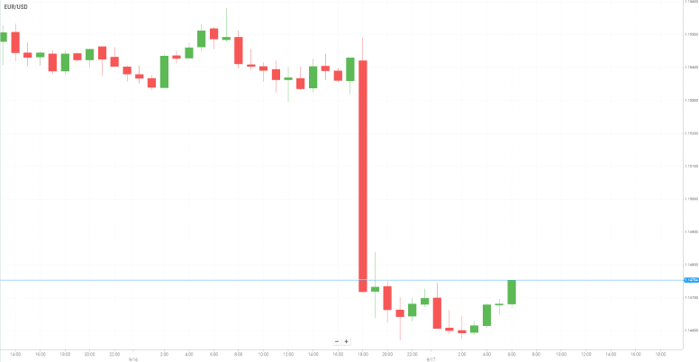
The EUR/USD pair edged lower toward 1.1460 during early Asian trading on Thursday, as the Euro came under pressure following the US Federal Reserve’s latest interest rate decision. Market attention now turns to the release of US Initial Jobless Claims data later in the day.
The Federal Reserve raised its benchmark interest rate by 25 basis points to a target range of 3.75%–4.00% at its September policy meeting on Wednesday, in line with market expectations. The move marks the central bank’s first rate hike in three years.
Fed Chairman Kevin Warsh said during the post-meeting press conference that inflation remains “too high ... for too long.” Updated economic projections also showed that a strong majority of Fed officials see the possibility of another rate increase later this year.
Meanwhile, the European Central Bank raised its key interest rates by 25 basis points last week. The ECB reiterated that it would not pre-commit to further policy moves after delivering its second rate increase since the start of the Iran war. ECB President Christine Lagarde said Eurozone inflation is likely to remain elevated for some time while acknowledging differences in market expectations regarding the future path of interest rates.
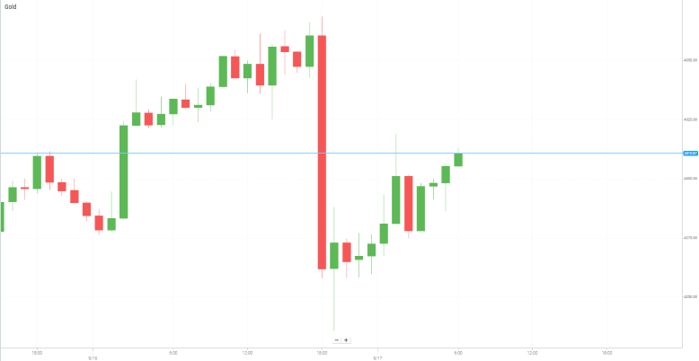
Gold holds onto modest recovery gains during the Asian session on Thursday but lacks strong bullish momentum and remains just above the $4,300 level. The US Dollar climbed to a fresh high since late July, supported by the Federal Reserve’s hawkish policy outlook. Meanwhile, renewed tensions in the Middle East continue to boost demand for the safe-haven Greenback, keeping Gold close to the six-week low touched on Wednesday.
The US central bank unanimously voted to raise interest rates for the first time since 2023 at the conclusion of its September policy meeting on Wednesday. While the decision was widely anticipated, the accompanying outlook was more hawkish than expected.
Persistent inflation risks linked to elevated energy prices could reinforce expectations for further monetary tightening by the Fed, helping keep US Treasury yields elevated.
Geopolitical developments are also contributing to the cautious tone around gold. In the latest developments, Iran-backed Houthi rebels claimed that Saudi aircraft had carried out more than 450 airstrikes across Yemen over the past week and said they had shot down a Saudi F-15 fighter jet over Marib province. The claims have not been independently verified. Meanwhile, US President Donald Trump said Iran wants to reach a deal and suggested that the war could be approaching its conclusion.
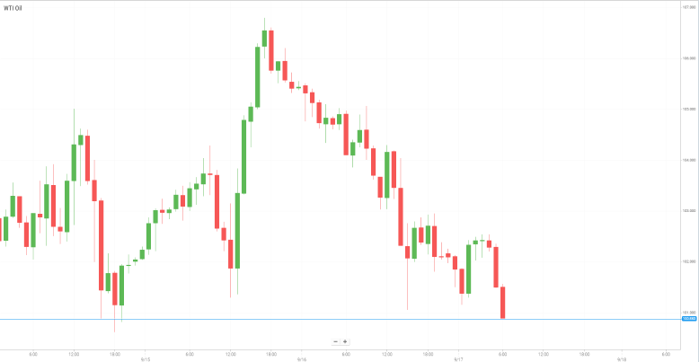
Oil prices edged lower on Thursday, extending recent declines as signs of improving Saudi Arabian supply flows and reports of US-Houthi dialogue helped ease concerns over potential disruptions in Middle Eastern crude supplies.
A stronger US Dollar also weighed on oil prices after the Federal Reserve raised interest rates and maintained a hawkish policy outlook. Crude prices have surrendered some of their recent gains this week following reports that Saudi Arabia has started moving more oil through Oman to reduce the impact of disruptions in the Red Sea linked to Houthi attacks.
Riyadh was reportedly offering additional crude loadings to Asian refiners through ship-to-ship transfers off Oman’s Sohar port. The alternative route has helped maintain the flow of Middle Eastern oil despite heightened military tensions in the region.
Meanwhile, Reuters reported that the US and Yemen’s Iran-backed Houthis held talks over the weekend. During the discussions, the Houthis reportedly reaffirmed their commitment to a 2025 ceasefire and said they would not target US or Israeli vessels. US President Donald Trump also reiterated on Wednesday that Iran was seeking a peace agreement and said the US was “hopefully toward the end” of the war.
US inventory data provided another source of support for crude prices, with domestic stockpiles recording their third consecutive weekly draw. The continued decline in inventories suggests that underlying demand and supply conditions could help limit the downside in oil prices even as some immediate Middle East supply concerns begin to ease.
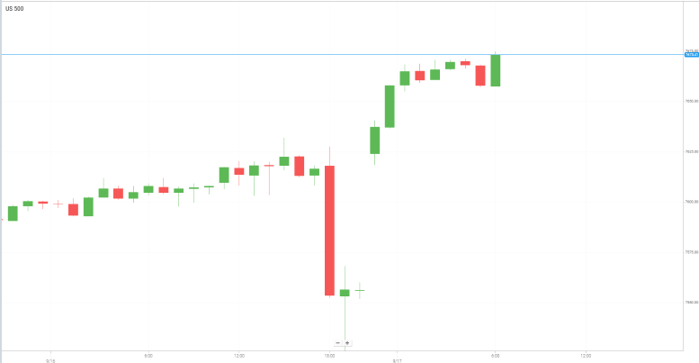
US stocks reversed early gains on Wednesday after the Federal Reserve delivered its first interest rate hike since 2023 and Fed Chair Kevin Warsh warned that inflation remained too high. The initial positive reaction to the policy decision faded as investors focused on signals that additional rate increases could be on the way.
Expectations for a rate hike had strengthened ahead of the meeting as economic data continued to point to resilient growth, a solid labor market and persistent inflation.
Investors also focused on several more hawkish elements in the Fed’s latest projections. At least 12 FOMC members now expect another rate increase this year, while four see the possibility of two additional hikes. Two members anticipate no further increases.
US Treasury markets have also played a major role in shaping expectations for higher interest rates. Longer-dated government bonds have faced sustained selling pressure since the Fed’s July meeting, pushing Treasury yields to multi-year highs.
Among individual stocks, Intel gained around 4% after Reuters reported that South Korean memory-chip manufacturer SK Hynix was in discussions with the US chipmaker about producing chips domestically. SK Hynix later said that no plans had been finalized.
The broader technology sector remained under scrutiny amid growing debate over the risks associated with artificial intelligence.
The materials contained on this document should not in any way be construed, either explicitly or implicitly, directly or indirectly, as investment advice, recommendation or suggestion of an investment strategy with respect to a financial instrument, in any manner whatsoever. Any indication of past performance or simulated past performance included in this document is not a reliable indicator of future results. For the full disclaimer click here.
Join iFOREX to get an education package and start taking advantage of market opportunities.
 A beginner's e-book
 $5,000 practice demo account
 A 12-part video course
 Trusted partner
 Featured partner
 By
By 


