
Listed on 
 Years active
 English (Arabic)
 Chinese Simplified - 中文 (简体)
 Chinese Traditional - 中文 (繁體)
 English
 Japanese - 日本語
 Korean - 한국어 (대한민국)
 Portuguese - Português
 Russian - Русский
 Spanish - Español
 Thai - ไทย

 English (India)

Don't have an account?
Register via AppHave an account?
Login 18/11/2026 - 07:56 UTC
The United States Dollar Index (USDX) edged slightly lower by -0.02%, flattening at around the 103.60 level after giving up its opening gains as the upside run faced a roadblock. The Greenback's consolidation follows robust retail sales figures from the U.S. Census Bureau showing a moderate 0.2% increase in October, pointing to underlying economic resilience. Persistent inflation risks and hawkish signals from Federal Reserve officials—including Musalem, who warned of several rate hikes before spring—keep markets pricing in aggressive policy tightening, with Treasury yields remaining elevated above the 5% threshold. Investors now turn their attention toward the release of the FOMC meeting minutes for further guidance on the central bank's policy path.
Global commodity and energy markets experienced downward pressure as expectations of a growing supply surplus weighed on sentiment alongside geopolitical developments. Gold (XAU/USD) retreated by -0.39% and plunged a further 2% down early Wednesday to trade below the $3,800 mark near its lowest level since September 2025. The precious metal faced continuous headwinds from firming Fed rate-hike expectations and a strong dollar, even as a fresh escalation of tensions in the Middle East—following a U.S. strike on an Iranian missile launch site—kept geopolitical risks alive. Meanwhile, WTI Oil initially posted a 0.7% gain but slid over 2% down early Wednesday toward mid-$83.00s, hovering near multi-month lows as International Energy Agency surplus projections and rising U.S. crude stockpiles offset Middle East supply concerns.
Asian equity markets traded mixed as regional exchanges reacted to global headwinds and chip sector developments. Major regional technology and semiconductor shares registered notable moves, including Advantest (+4.37%), SK Hynix (+4.46%), Samsung Electronics (+1.73%), and Kioxia (+0.12%). While South Korea's KOSPI outperformed with a 2% rally and Japan's trade data showed exports expanding for a 14th consecutive month, broader regional sentiment remained cautious amid ongoing regulatory scrutiny on advanced AI chip exports and mixed domestic economic indicators.
U.S. equity markets extended their tech-led retreat, with major indices closing lower as investors weighed aggressive interest rate expectations, mid-term election outcomes, and tighter U.S. licensing controls on AI chip exports to Asia. Major corporate and technology names registered downward moves in the latest session, including Nvidia (-0.54%), AMD (-0.15%), CoreWeave (+0.06%), and Nebius (-1.03%). Despite the broader pullback, Nvidia dominated market focus after delivering blowout fiscal third-quarter results—with quarterly revenue doubling year-on-year to $115.84 billion and data center sales surging to $107.6 billion—while interim CEO Colette Kress assured markets that business remains usual following Jensen Huang's shock exit. Meanwhile, investor enthusiasm for artificial intelligence remained strong as Anthropic prepared to price its landmark IPO above the expected range, targeting a valuation between $1.5 trillion and $1.6 trillion.
Looking ahead, market participants are bracing for a data-heavy economic calendar focused on inflation metrics and central bank communications. Wednesday features UK CPI data, speeches from BOE Gov Bailey, and the release of the FOMC Meeting Minutes, alongside high-profile earnings from Palo Alto Networks and Target. Thursday brings Australian employment figures and additional corporate reports.
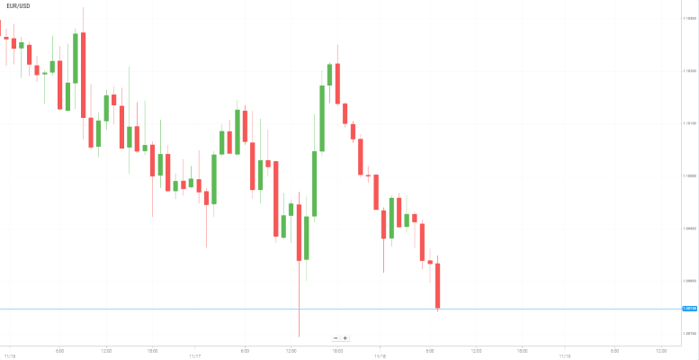
The Euro weakened against the US Dollar on Wednesday, with EUR/USD falling below the 1.1000 level to trade around 1.0980 during the early European session. The decline comes as stronger-than-expected US inflation data and hawkish remarks from Federal Reserve officials reinforce expectations of another interest rate increase in December. Investors are now turning their attention to the release of the Federal Open Market Committee (FOMC) Minutes later in the day for further clues about the Fed’s monetary policy outlook.
US economic data released on Tuesday showed that Retail Sales increased by 0.2% month-on-month in October, slowing significantly from the previous reading of 0.8%, while matching market expectations. Despite the moderation in consumer spending, comments from St. Louis Fed President Alberto Musalem supported the US Dollar. Musalem indicated that the central bank may need several additional rate increases to bring inflation under control and stressed the importance of taking action before inflationary pressures intensify further.
Meanwhile, the European Central Bank is also facing persistent inflationary pressures, with markets anticipating a possible final rate increase in December and further monetary tightening next year. Investors are currently pricing in two to three additional rate hikes by the end of next year.
ECB policymaker Boris Vujcic suggested that expectations for further monetary tightening in 2027 are not unreasonable, emphasizing that a December rate increase alone may not be sufficient to bring inflation under control. He added that additional tightening could be necessary next year, depending on the inflation outlook and the effectiveness of monetary policy transmission.
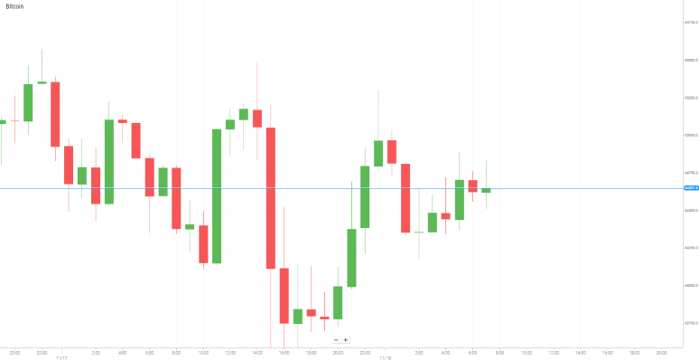
Bitcoin remained subdued below the $65,000 level on Wednesday, trading near recent lows as persistent concerns over higher interest rates and weakness in technology stocks continued to weigh on investor sentiment. Market attention is now focused on the minutes of the Federal Reserve’s late-October meeting, due later on Wednesday, for further indications about the central bank’s monetary policy outlook amid growing expectations of a December rate hike. Bitcoin has now recorded six consecutive weeks of losses, reflecting growing concerns that higher US interest rates could reduce demand for speculative assets, including cryptocurrencies.
Bitcoin also received limited support from Strategy Inc., which disclosed another purchase of the cryptocurrency last week. Investor attention remains focused on the potential impact of the company’s anticipated removal from MSCI indexes and the implications for its capital position.
Meanwhile, continued weakness in technology stocks has further dampened risk appetite. Concerns surrounding governance issues at Nvidia and expectations of slower artificial intelligence spending in the coming quarters have added to broader market uncertainty.
Additional pressure could come from the highly anticipated initial public offering of Anthropic, scheduled to begin trading on November 19. Analysts warn that the offering could attract significant investment capital away from speculative assets and toward the artificial intelligence sector. Anthropic is reportedly targeting a valuation between $1.3 trillion and $1.4 trillion.
Elsewhere in the cryptocurrency market, major altcoins showed mixed performance on Wednesday as investors remained cautious ahead of the Federal Reserve minutes.
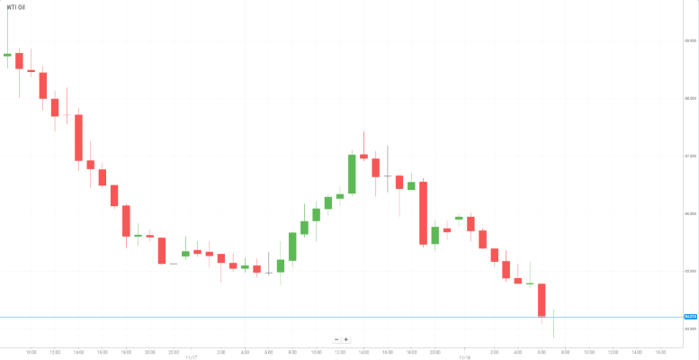
Oil prices declined on Wednesday as rising US crude and fuel inventories added to concerns about a potential supply surplus, although escalating tensions between the United States and Iran and continued disruptions to shipping through the Strait of Hormuz limited the losses.
The downward movement reflects growing bearish sentiment in the oil market, with higher US stockpiles weighing on prices despite persistent geopolitical risks in the Middle East.
According to data from the American Petroleum Institute (API), US crude inventories increased by 5.28 million barrels in the week ended November 13. Gasoline stocks also recorded a substantial increase of 5.12 million barrels, while distillate inventories rose by 351,000 barrels. The accumulation of crude and refined fuel stocks has intensified concerns about weakening demand and growing supply availability in the US market.
However, geopolitical developments continue to provide some support to oil prices. Tensions between Washington and Tehran escalated further after Bahrain's defence force reported intercepting Iranian aerial attacks on Wednesday. The country hosts the US Navy's Fifth Fleet, making the latest developments particularly significant for regional security.
Both oil benchmarks had settled higher on Tuesday as military confrontations between the United States and Iran intensified, despite ongoing diplomatic discussions involving Iran and mediators Oman and Qatar. Concerns over maritime security also increased after Iranian drones reportedly targeted a US military radar system in Bahrain, prompting American retaliatory strikes against a missile launch site on Iran's Qeshm Island.
Overall, oil markets remain influenced by two opposing forces. Rising US crude and fuel inventories, together with expectations of a potential global supply surplus, are weighing on prices, while escalating Middle Eastern tensions and disruptions to critical shipping routes continue to support a geopolitical risk premium.
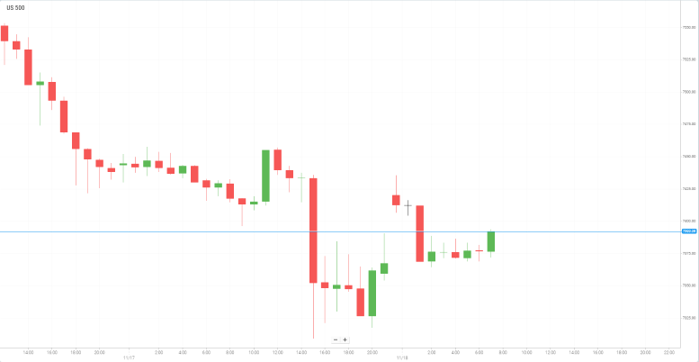
US stock futures trimmed most of their earlier gains during Wednesday’s Asian trading session as investors assessed Nvidia’s stronger-than-expected quarterly results and revenue outlook against growing concerns surrounding artificial intelligence (AI) valuations, profitability and the sustainability of technology-sector investments. The futures initially surged following Nvidia’s latest earnings report, which exceeded Wall Street expectations and included an upbeat revenue forecast for the current quarter.
Nvidia shares rose 1.6% in extended trading after gaining nearly 5% earlier in the session. The semiconductor giant reported fiscal third-quarter revenue of approximately $115.8 billion, more than doubling from the previous year and surpassing analyst estimates. The company also forecast fourth-quarter revenue between $126 billion and $134 billion, exceeding the market consensus of approximately $125 billion. However, despite the strong results, concerns emerged over the company's profitability outlook. Investors also focused on comments from interim Chief Executive and Chief Financial Officer Colette Kress regarding Nvidia’s financial arrangements with some of its largest customers. The company has increasingly provided investments, prepayments and financing guarantees to selected customers and data-centre projects. Although Kress indicated that Nvidia would continue supporting certain strategic partnerships, she emphasized that the company would apply greater scrutiny to these commitments.
Broader concerns surrounding the technology sector continue to weigh on sentiment, particularly as investors question the sustainability of AI valuations and the profitability of massive infrastructure investments. The upcoming stock market debut of Anthropic, the developer of the Claude chatbot, is also attracting attention, with the company's IPO expected to target a valuation of as much as $1.4 trillion. The offering could potentially redirect significant investment capital toward the artificial intelligence sector.
Investors are now awaiting the release of the Federal Reserve's October meeting minutes on Wednesday for further insight into policymakers' views on inflation, economic conditions and the future direction of interest rates.
The materials contained on this document should not in any way be construed, either explicitly or implicitly, directly or indirectly, as investment advice, recommendation or suggestion of an investment strategy with respect to a financial instrument, in any manner whatsoever. Any indication of past performance or simulated past performance included in this document is not a reliable indicator of future results. For the full disclaimer click here.
Join iFOREX to get an education package and start taking advantage of market opportunities.
 A beginner's e-book
 $5,000 practice demo account
 A 12-part video course
 Trusted partner

 Featured partner
 By


