
Listed on 
 Years active
 English (Arabic)
 Chinese Simplified - 中文 (简体)
 Chinese Traditional - 中文 (繁體)
 English
 Japanese - 日本語
 Korean - 한국어 (대한민국)
 Portuguese - Português
 Russian - Русский
 Spanish - Español
 Thai - ไทย
 English (India)
Don't have an account?
Register via AppHave an account?
Login 06/10/2026 - 07:30 UTC
The US Dollar Index (USDX) maintained its upward trajectory, trading near 102.20 in Tuesday's Asian session after gaining 0.23% on Monday. Greenback demand remains strongly anchored by safe-haven flows tied to escalating Middle East clashes, French fiscal instability, and elevated US Treasury yields, with the 10-year yield holding near 5.32%. Despite softer Nonfarm Payrolls easing immediate rate hike bets for October, market pricing continues to reflect over an 85% probability of another Fed rate increase before year-end as persistent inflation remains the primary policy focus.
Gold extended its downside momentum, surrendering -0.21% to hit a two-month low near $4,100 per ounce. A firm greenback alongside multi-year high bond yields continues to undermine non-yielding bullion, overshadowing receding near-term Fed rate hike odds. However, safe-haven demand stemming from recent Houthi missile strikes across Saudi Arabia and potential Israeli action against Iran continues to offer a structural buffer against a complete breakdown below key support levels.
WTI Crude Oil staged a mild rebound to trade around $89.00 per barrel after sliding -1.82% on Monday, while Brent crude hovered near $100.00. Crude prices faced headwinds as G7 emergency reserve releases and steady Middle Eastern export flows temporarily alleviated supply fears. Nonetheless, upside risks remain active due to ongoing military offensives in Yemen, Houthi threats surrounding the Bab el-Mandeb strait, and broader Middle East geopolitical friction capping steeper losses.
Asian stock markets traded mixed on Tuesday, navigating a backdrop of record Wall Street tech closes and surging global bond yields. Regional chip heavyweights faced downside pressure ahead of Q3 earnings prints, with SK Hynix falling -3.62%, Samsung Electronics declining -1.08%, and Kioxia dropping -2.7%. SoftBank Group also retreated -2.77%. Conversely, Chinese tech megacaps staged a notable rebound, led by Alibaba jumping 4.66%, Baidu gaining 3.13%, and Tencent advancing 1.37%.
US equity indexes closed higher on Monday, with the S&P 500 and Nasdaq Composite extending gains driven by materials, communication services, and AI momentum. Tech heavyweights displayed divergent moves, with Nvidia advancing 2.12%, while Micron slipped -1.05% and Intel dropped -2.5% on Monday. Although September ISM Services PMI slowed slightly to 54.9, the prices paid component accelerated to its highest level since July 2022, reinforcing inflation concerns and keeping pressure on fixed-income markets.
Looking ahead, market participants are focused on a heavy schedule of macroeconomic events and corporate earnings, including the OPEC-JMMC Meetings, BOJ Governor Ueda's speech, the Reserve Bank of India's rate decision, FOMC Meeting Minutes, US Unemployment Claims, and the Prelim UoM Consumer Sentiment and Inflation Expectations reports, alongside upcoming Q3 earnings releases from PepsiCo and Delta Air Lines. Investors will scrutinize these updates closely to gauge central bank policy trajectories and high-growth sector profitability.
EUR/USD edged lower to around 1.1220 during Tuesday’s early Asian trading session, with the Euro coming under pressure amid growing concerns over France’s deteriorating fiscal position. The shared currency remains near a 17-month low against the US Dollar as investors closely monitor rising French debt costs and the government’s efforts to bring its stretched public finances under control.
French Prime Minister Sébastien Lecornu’s minority government announced a €54 billion savings plan last month in an effort to prevent a potentially severe downgrade of the country’s credit standing or a sovereign debt crisis. Lecornu said the measures are intended to reduce France’s budget deficit from 5.5% of GDP this year to 5% next year. Without further action, he warned that the deficit could rise to as much as 6.5% of GDP.
Political developments elsewhere in the region are also adding to the currency’s downside risks. In Spain, Prime Minister Pedro Sanchez has called a snap election for November 29 in an attempt to strengthen his parliamentary support after lawmakers rejected proposals aimed at addressing the country’s housing crisis, which has triggered widespread protests.
At the same time, expectations of a Federal Reserve rate hike this month have declined following weaker-than-expected US employment data, potentially limiting further gains in the US Dollar and providing some support for EUR/USD.
The combination of growing fiscal concerns, political uncertainty and the possibility of a shallower ECB tightening cycle is therefore keeping the Euro under pressure. While weaker US employment data has reduced expectations for further Federal Reserve tightening and could provide some support to EUR/USD, persistent concerns surrounding France’s finances and broader political risks across the Eurozone remain key obstacles for the shared currency.
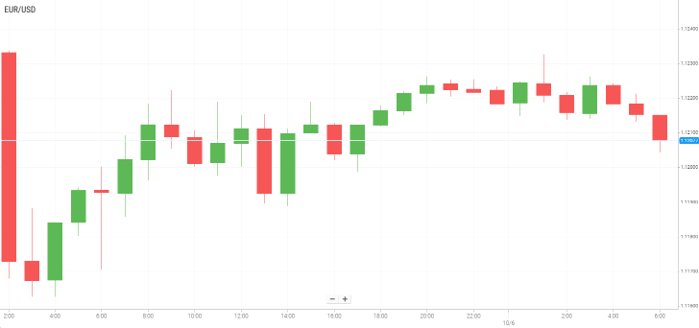
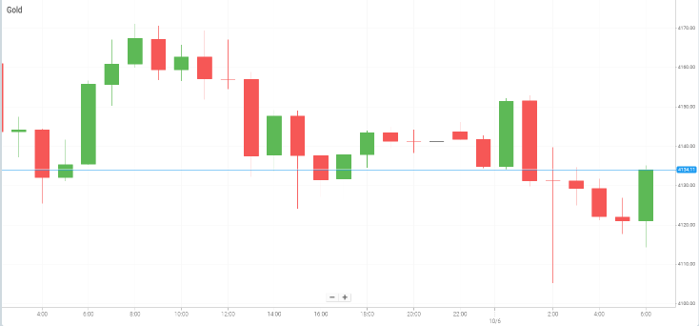
Gold (XAU/USD) came under renewed selling pressure on Tuesday, falling to a two-month low during the Asian trading session as bears turned their attention to the key $4,100 level. The precious metal remains under pressure as the US Dollar (USD) maintains its bullish bias despite declining expectations for a Federal Reserve (Fed) rate hike in October. A stronger Dollar continues to weigh on demand for gold, while elevated US Treasury yields are adding further pressure to the non-yielding asset.
Recent US economic data pointed to moderating inflation and signs of a gradual cooling in the labor market, which have led investors to scale back expectations for an October Fed rate hike. At the same time, however, US bond yields remain elevated, limiting gold’s ability to recover. The combination of firm Treasury yields and a resilient US Dollar continues to encourage selling in the precious metal.
Investors will now turn their attention to the minutes of the Federal Open Market Committee (FOMC) meeting, due on Wednesday, for further clues about the Federal Reserve’s policy outlook. The minutes could provide additional insight into policymakers’ views on inflation, employment and the appropriate path for interest rates. A hawkish tone could strengthen the US Dollar and increase selling pressure on gold, while a more cautious stance could offer the precious metal some relief.
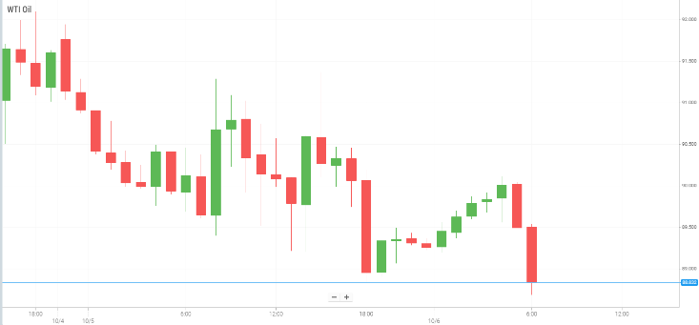
Oil prices edged lower on Tuesday as resilient Middle Eastern crude exports and a decision by G7 countries to release emergency stockpiles eased concerns about supply disruptions. However, continued attacks by Yemen’s Iran-backed Houthi forces on targets in Saudi Arabia kept traders cautious about the potential risks to oil supplies from the Gulf region.
The modest declines came after oil prices weakened in the previous session as markets continued to assess improving supply conditions against persistent geopolitical risks.
Shipping data released on Monday showed that crude exports from the Middle East exceeded pre-war levels on four days during the final week of September. The figures highlight the resilience of regional oil flows despite continued attacks on vessels traveling through the strategically important Strait of Hormuz, one of the world’s most critical energy shipping routes.
Supply concerns were further eased after G7 countries agreed on Friday to release 100 million barrels of diesel and crude oil from emergency reserves. The group also pledged to avoid imposing energy export restrictions following pressure from US President Donald Trump. The additional supply is expected to provide some relief to markets at a time when geopolitical tensions remain elevated.
Nevertheless, risks to regional oil supplies have not disappeared. The ongoing conflict between Saudi Arabia and Iran-backed Houthi forces in Yemen continues to raise concerns about potential disruptions in exports from Saudi Arabia, the region’s largest oil producer. Uncertainty has also persisted around US-Iran relations, with talks remaining at an impasse and no clear diplomatic breakthrough in sight.
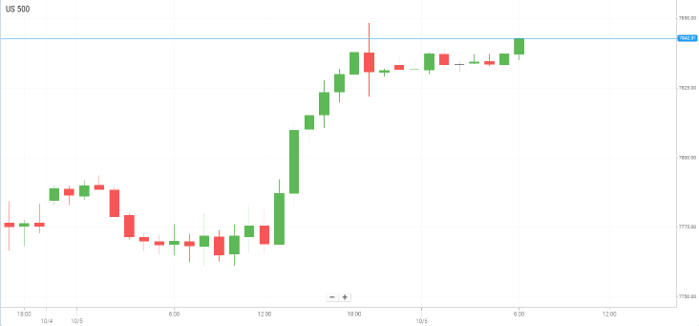
Wall Street closed higher on Monday, with the US 500 finishing close to its record closing high as investors largely looked past continued turmoil in global bond markets. Strength in materials and communication services stocks, combined with softer oil prices and momentum from the previous session, helped support equities despite a persistent rise in borrowing costs.
The rally came despite another difficult session for global bonds. US Treasury yields eased from their session highs but remained elevated, with the 10-year yield around 5.313% and the 30-year yield near 5.666%, both close to levels not seen since early 2002. The bond sell-off has been driven by a combination of concerns over oil-related inflation, heavy corporate borrowing to finance artificial intelligence infrastructure, hawkish central banks and growing government debt.
Investors are also keeping a close eye on developments in Europe, particularly France, where fiscal concerns have intensified market volatility. The sharp increase in French borrowing costs has raised questions over whether the latest market moves represent the beginning of another Eurozone sovereign debt crisis or whether investors have already pushed valuations too far.
Economic data this week are expected to be relatively limited, with the final services-sector surveys among the main releases. Monday’s Institute for Supply Management report showed that activity in the US services sector slowed in September but remained in expansion territory. More importantly, the prices-paid component accelerated to its highest level since July 2022, suggesting that inflationary pressures remain a concern.
Despite the positive performance of equities, the broader market backdrop remains fragile. Investors are balancing strong stock-market momentum against elevated Treasury yields, persistent inflation risks, rising government debt, trade tensions and geopolitical uncertainty.
The materials contained on this document should not in any way be construed, either explicitly or implicitly, directly or indirectly, as investment advice, recommendation or suggestion of an investment strategy with respect to a financial instrument, in any manner whatsoever. Any indication of past performance or simulated past performance included in this document is not a reliable indicator of future results. For the full disclaimer click here.
Join iFOREX to get an education package and start taking advantage of market opportunities.
 A beginner's e-book
 $5,000 practice demo account
 A 12-part video course
 Trusted partner
 Featured partner
 By
By 


