
Listed on 
 Years active
 English (Arabic)
 Chinese Simplified - 中文 (简体)
 Chinese Traditional - 中文 (繁體)
 English
 Japanese - 日本語
 Korean - 한국어 (대한민국)
 Portuguese - Português
 Russian - Русский
 Spanish - Español
 Thai - ไทย
 English (India)
Don't have an account?
Register via AppHave an account?
Login 07/10/2026 - 07:52 UTC
The United States Dollar Index (USDX) advanced 0.27% in its latest trading session, reflecting renewed strength ahead of the Federal Open Market Committee (FOMC) minutes from the September policy meeting. Demand for the Greenback remained firm across major currency pairs, gaining most against the New Zealand Dollar as investors digest recent Federal Reserve commentary signaling no immediate rush for additional rate hikes while preserving a hawkish stance on inflation.
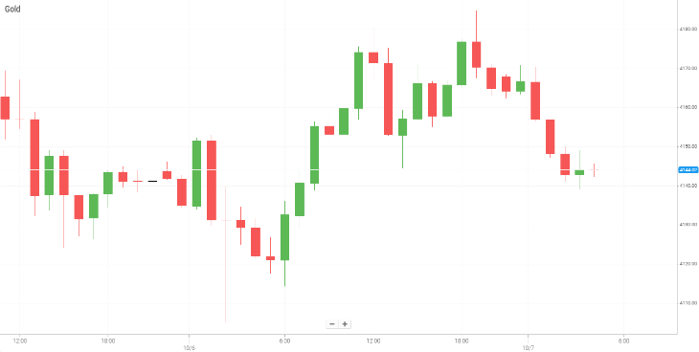
Gold prices faced renewed selling pressure, rising 0.77% in its latest session after bouncing off recent multi-month lows near $4,100 per ounce. Broad USD strength and elevated Treasury yields continued to limit the upside for non-yielding bullion, keeping traders focused on upcoming central bank policy cues.
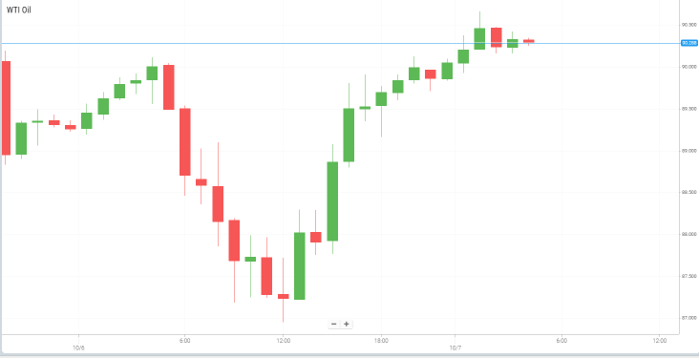
West Texas Intermediate (WTI) crude oil advanced 0.89% in its latest session, building on recent momentum as energy markets weighed heightened geopolitical friction alongside severe weather risks in the Gulf of Mexico. Escalating Houthi attacks on regional oil facilities and Iranian interference in the Strait of Hormuz, coupled with storm developments threatening U.S. production infrastructure, continued to underpin energy prices.
Asian stock indices traded lower as rising oil prices and persistent yield pressures weighed on investor appetite. South Korea’s benchmark market dropped, with tech majors seeing broad declines as SK Hynix fell 2.70% and Samsung Electronics slipped 1.10% ahead of expected quarterly results. Hong Kong equities also posted losses, led by declines in major technology names such as Tencent, which fell 1.96%, and Alibaba, which dropped 1.33%.
U.S. stock indices ended higher in the previous session, supported by tech strength and solid underlying corporate momentum. Advanced Micro Devices (AMD) rose 2.80%, Nvidia added 0.21%, and Paramount Global gained 2.67% following the completion of its $110 billion merger with Warner Bros. Conversely, Intel fell 3.21% and Meta Platforms slipped 0.33%, while SpaceX shares surged 7.68% in private market activity.
Top tier cryptos including Bitcoin, Ethereum, Solana and Ripple demonstrated relative resilience, with cryptocurrency markets holding above technical support levels as broader risk-off sentiment affected conventional equities. Market participants remain focused on upcoming FOMC policy disclosures and global macroeconomic indicators to assess the future path of interest rates and global economic growth.
Looking ahead to the remainder of the week, market focus will shift toward pivotal economic data and key corporate earnings reports to gauge consumer health and corporate margin resilience. On the macroeconomic front, investors await the release of the U.S. Consumer Price Index (CPI) and weekly initial jobless claims for updated inflation and labor market signals. On the corporate earnings calendar, major releases scheduled for later this week include PepsiCo reporting on Thursday, followed by Delta Air Lines and major financial institutions kicking off earnings results on Friday.
The EUR/USD pair remains under pressure near 1.1250 during early Asian trading on Wednesday, as the Euro weakens against the US Dollar amid growing concerns over France’s fiscal situation and political uncertainty. Investors are now turning their attention to the minutes of the Federal Open Market Committee (FOMC), due later on Wednesday.
France’s Finance Minister said the government is prepared to use special constitutional powers to bypass Parliament and push through billions of euros in spending cuts if negotiations over next year’s budget fail to reach an agreement. Concerns over France’s ability to reduce its budget deficit, combined with a sharp selloff in the bond market last week, have increased fears of a potential sovereign debt crisis in the Eurozone. These concerns could continue to weigh on the Euro in the near term.
Pressure on French debt has intensified as political leaders struggle to bring the country’s budget deficit under control ahead of a divisive election in 2027. The prospect of a snap election in Spain is also adding to pressure on the Euro.
Meanwhile, expectations for further US Federal Reserve rate hikes have eased following softer-than-expected US jobs data released last week. This could limit gains in the US Dollar and provide some support for EUR/USD. According to the CME FedWatch Tool, interest-rate swaps showed traders pricing in an almost 20% probability of a Fed rate hike at its October meeting.
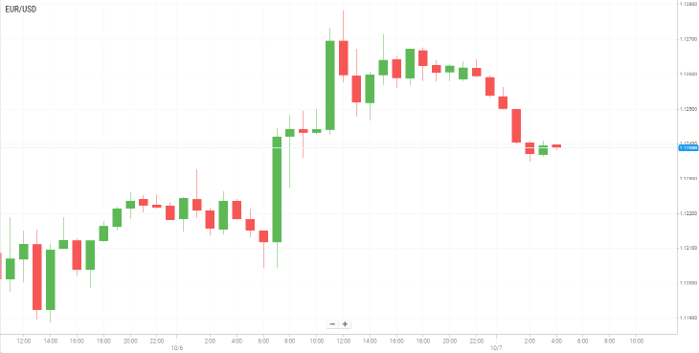
Gold prices held near $4,150 on Wednesday after rising 0.77% in the previous session, as improving oil supplies from the Middle East and easing Treasury yields reduced pressure on the Federal Reserve to raise interest rates this month.
Oil supplies from the Middle East have recovered to around four-fifths of their pre-conflict levels, according to analysts and research firms. The improvement has helped ease concerns over prolonged disruptions to regional energy flows, supporting greater stability in oil prices and reducing some inflationary pressure that could otherwise influence the Federal Reserve’s interest-rate outlook.
Meanwhile, Treasury yields retreated on Tuesday after longer-dated maturities had surged to fresh multi-decade highs a day earlier. The decline in yields has provided some support for gold by reducing the opportunity cost of holding the non-yielding precious metal.
Investors will closely watch the minutes of the Fed’s September meeting, due later Wednesday, for further clues about the central bank’s policy direction. Policymakers raised borrowing costs at that meeting for the first time in three years, making the minutes particularly important for assessing the outlook for future rate decisions.
Despite the recent support from lower Treasury yields and fading rate-hike expectations, gold remains in a relatively tight trading range in October and continues to trade below several closely watched moving averages.
Oil prices rose on Wednesday as traders weighed potential supply disruptions from a storm approaching major US oil-producing regions and renewed attacks by Yemen’s Iran-backed Houthis against Saudi Arabia. These risks offset the impact of increased crude supplies from the Middle East.
US forecasters said on Tuesday that a storm developing in the Gulf of Mexico was expected to become the first Atlantic hurricane of 2026 within two days, potentially disrupting oil and gas production facilities. The storm could potentially affect six refineries, while refineries across the US Gulf states represent roughly half of the country’s total refining capacity of 18.2 million barrels per day.
Meanwhile, US crude oil and gasoline inventories declined last week, while distillate stocks increased slightly, according to market sources citing data from the American Petroleum Institute. US crude inventories fell by 2.09 million barrels in the week ended October 2.
Despite the improvement in supply flows, geopolitical risks remain elevated. Saudi Arabia’s airports in Jazan and Najran were targeted in two attacks on Monday evening, according to the Saudi aviation authority, as tensions between Riyadh and Yemen’s Iran-backed Houthis intensified.
US-Iran relations also remain strained, with little sign of an immediate diplomatic breakthrough. US President Donald Trump said on Tuesday that it remained unclear who was leading Iran following months of conflict between the United States, Israel and Iran. Iran’s foreign ministry, however, said Washington was fully aware of its counterpart in Iran and understood how the country’s decision-making system operates.
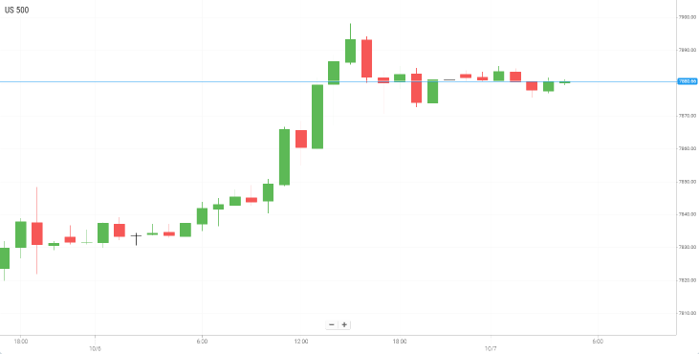
Wall Street climbed on Tuesday, with the US 500 closing at a record high for the first time since mid-August as investors extended last week’s rally. Strong enthusiasm surrounding artificial intelligence, softer oil prices and a recovery in the US Treasury market helped equities overcome recent concerns about rising bond yields and broader economic uncertainty.
Despite the major indexes reaching new highs, market gains have remained heavily concentrated in the so-called Magnificent Seven and other mega-cap technology companies. Analysts have warned that the strength of the headline indexes may not fully reflect the performance of the broader market.
Another factor supporting Wall Street was a pause in the steep selloff in US government bonds. The benchmark 10-year Treasury yield fell 3.7 basis points to 5.276%, while the 30-year yield declined by nearly one basis point to 5.655%. Both yields had recently reached their highest levels since early 2002.
Concerns over an oil-driven inflation shock, the large amount of corporate debt being issued to finance AI infrastructure, hawkish central-bank policies and rising government debt have contributed to the recent bond-market selloff. The pressure has spread across global fixed-income markets, with political and fiscal concerns in France adding to investor anxiety.
Overall, Wall Street’s latest record-setting session reflects renewed investor confidence, but the rally remains dependent on several key factors, including the path of Federal Reserve policy, Treasury yields, oil prices and corporate earnings. While AI enthusiasm continues to drive the major indexes higher, persistent volatility in bonds and energy markets remains a potential source of risk for the broader equity market.
The materials contained on this document should not in any way be construed, either explicitly or implicitly, directly or indirectly, as investment advice, recommendation or suggestion of an investment strategy with respect to a financial instrument, in any manner whatsoever. Any indication of past performance or simulated past performance included in this document is not a reliable indicator of future results. For the full disclaimer click here.
Join iFOREX to get an education package and start taking advantage of market opportunities.
 A beginner's e-book
 $5,000 practice demo account
 A 12-part video course
 Trusted partner
 Featured partner
 By
By 


