
Listed on 
 Years active
 English (Arabic)
 Chinese Simplified - 中文 (简体)
 Chinese Traditional - 中文 (繁體)
 English
 Japanese - 日本語
 Korean - 한국어 (대한민국)
 Portuguese - Português
 Russian - Русский
 Spanish - Español
 Thai - ไทย
 English (India)
Don't have an account?
Register via AppHave an account?
Login 08/10/2026 - 06:56 UTC
The United States Dollar Index (USDX) advanced 0.42% in its latest session, hovering near multi-month highs as rising bond yields and hawkish Federal Open Market Committee (FOMC) meeting minutes underpinned Greenback demand. Minutes from the Fed's September meeting revealed that while officials signaled no rush for immediate rate increases, most participants still expect another hike by year-end to restore price stability. This steady upward pressure on foreign exchange markets pushed major currencies into multi-week low ranges against the Greenback.
Gold prices faced renewed downside pressure, falling 1.38% in its latest trading session. Elevated Treasury yields—with the benchmark U.S. 10-year yield touching multi-decade highs—and broad U.S. Dollar strength continued to increase the opportunity cost of holding non-yielding bullion, keeping gains capped despite ongoing safe-haven demand. Consequently, technical traders observed precious metals testing critical support zones established earlier in the quarter.
West Texas Intermediate (WTI) crude oil slipped 1.08% in its latest session, paring recent gains as traders weighed supply disruption risks against broader market volatility. Energy markets remain sensitive to potential combat operations and heightened geopolitical tensions around the Strait of Hormuz, maintaining a firm risk premium under crude prices. Still, demand outlook uncertainties and profit-taking activity served to constrain any immediate structural price rally.
Asian stock indices closed lower as surging energy prices and elevated yields dampened investor appetite across the region. South Korea's benchmark market slid, led by tech majors as SK Hynix fell 2.70% and Samsung Electronics slipped 1.10% despite projecting record quarterly operating profits. Japanese equities traded lower, weighted down by SoftBank which dropped 4.58%, while Kioxia managed a gain of 1.70%. Hong Kong and Chinese equities also posted broad losses, led by technology names including Alibaba falling 2.13%, Tencent dropping 0.85%, and Baidu declining 2.03%. The widespread regional weakness highlighted growing sensitivity among global asset managers to high capital borrowing costs.
U.S. stock indices ended lower in the previous session, snapping multi-day winning streaks as a steep bond market sell-off weighed heavily on equity valuations. Major tech constituents saw mixed results, with Nvidia down 0.76% and Meta Platforms falling 2.42%, while Intel bucked the broader trend with a gain of 0.50%. The downturn reflected broader investor hesitancy as equity risk premiums narrowed significantly relative to fixed-income returns.
Looking ahead to the remainder of the week, market focus shifts toward key macroeconomic releases and the official launch of corporate earnings season. On the economic agenda, investors are awaiting updated U.S. Consumer Price Index (CPI) and weekly initial jobless claims data to assess inflation trends and labor market health. Meanwhile, quarterly earnings reports from consumer staples giant PepsiCo, cannabis and craft beverage producer Tilray, and major carrier Delta Air Lines—alongside results from leading financial institutions—will provide critical insight into broader consumer strength and margin resilience. Taken together, these upcoming catalysts will likely establish the macro framework for market direction heading into the fourth quarter.
EUR/USD recovered toward the 1.1200 level during early Asian trading on Thursday as the US Dollar weakened. However, gains in the pair remained limited by renewed concerns over France’s fiscal position ahead of the 2027 presidential election.
French Prime Minister Sébastien Lecornu’s minority government has proposed a €54 billion savings plan aimed at containing the country’s growing deficit and avoiding a further deterioration in its sovereign debt outlook. Political uncertainty and doubts over the government’s ability to implement fiscal consolidation have increased pressure on French bonds, raising broader concerns about financial stability across the Eurozone.
The fiscal strain has also reduced expectations for further European Central Bank rate hikes, weighing on the Euro. Investors remain cautious as political resistance to spending cuts could make it more difficult for France to bring its budget deficit under control.
Meanwhile, minutes from the Federal Open Market Committee showed that Fed policymakers continued to view inflation as the main risk to the economic outlook. Markets are now pricing in a 22% probability of a 25-basis-point rate hike at the Fed’s October meeting, unchanged from the previous day.
Attention now turns to the US weekly Initial Jobless Claims report and further comments from Federal Reserve officials later on Thursday, which could provide fresh direction for the US Dollar and EUR/USD.
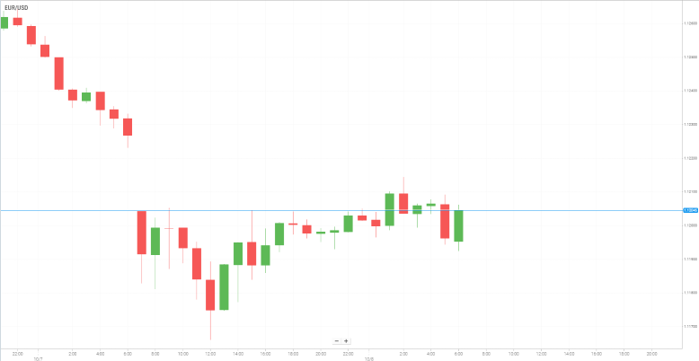
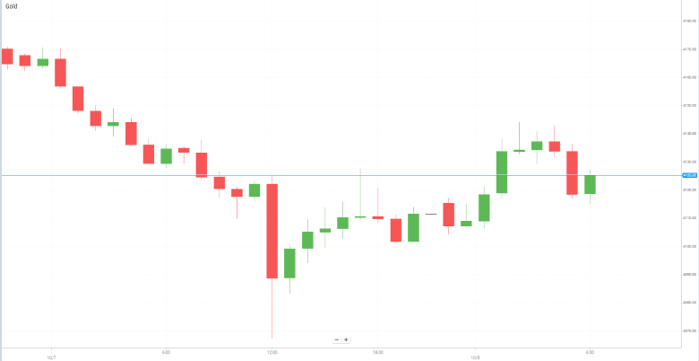
Gold prices edged higher during Thursday’s Asian session but remained below the $4,150 level as a resilient US Dollar limited the upside. The precious metal found some support as USD bulls paused following the Greenback’s recent rally to an 18-month high, although the broader environment remained challenging for non-yielding assets.
Minutes from the September 15–16 FOMC meeting showed that policymakers remained concerned about persistent inflation, with most officials seeing scope for another rate hike before the end of the year. Markets continue to expect the Federal Reserve to hold rates steady in October, while pricing around an 80% probability of another increase in December.
Elevated US Treasury yields and uncertainty over the inflation outlook, partly driven by volatile energy prices, have provided further support to the Dollar. Ongoing geopolitical tensions in the Middle East have also strengthened demand for the safe-haven Greenback, limiting Gold’s recovery potential.
Reports that the US military is preparing for the possibility of renewed major combat operations in Iran have added to concerns over further regional escalation. Any fresh geopolitical developments could increase market volatility and support demand for the Dollar.
Gold therefore needs stronger follow-through buying to confirm a sustained recovery from its recent two-month low. Traders will focus on US weekly Initial Jobless Claims and speeches from Federal Reserve officials for fresh clues on the interest-rate outlook, while geopolitical headlines are likely to remain an important driver of short-term moves in XAU/USD.
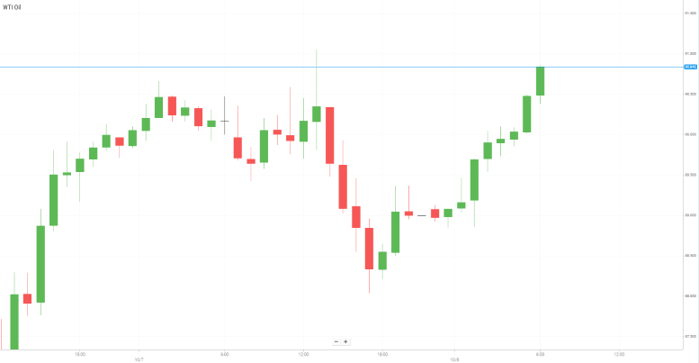
Oil prices climbed on Thursday as concerns over supply disruptions in the Middle East intensified amid a rise in attacks on shipping in the Gulf and the Strait of Hormuz.
The latest gains came despite the International Energy Agency’s decision to accelerate the release of oil stocks and prioritize diesel supplies in an effort to ease fuel shortages caused by disruptions linked to the Iran conflict. However, continued attacks on tankers have raised concerns over the security and cost of transporting crude through the Strait of Hormuz, a critical route that previously handled around 20% of global oil and fuel shipments.
A tanker north of Qatar was reportedly hit by multiple projectiles on Wednesday, adding to concerns that attacks on commercial shipping could intensify. Analysts noted that constrained supply flows, elevated logistics costs and the risk of further escalation are keeping oil prices supported, while strategic stock releases may provide only temporary relief without creating additional production capacity.
Supply concerns were also reinforced by a hurricane approaching US offshore production areas. Several energy companies have curtailed operations in the Gulf of Mexico, while more than 25% of current US Gulf oil production had been shut in as of Wednesday.
Meanwhile, US inventory data provided further support to crude prices, with domestic oil stockpiles falling by 3.2 million barrels in the week ended October 2, almost twice the decline expected by analysts. The combination of Middle East shipping risks, US production disruptions and falling inventories continues to underpin the oil market.
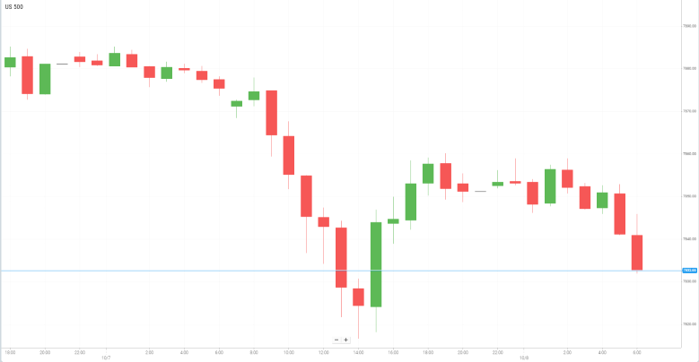
Wall Street ended lower on Wednesday, snapping a four-session winning streak, although the major averages recovered from their session lows as oil prices eased and Treasury yields pared earlier gains following a strong 10-year bond auction. The pullback came a day after US stocks reached record closing highs for the first time since mid-August.
Investors also focused on the minutes of the Federal Reserve’s September meeting, which showed that most policymakers believed another rate increase would likely be appropriate before the end of the year. Although expectations for an October hike have eased since the meeting, the minutes reinforced concerns that persistent inflation could keep monetary policy restrictive for longer.
Meanwhile, US Treasury yields remained elevated amid a broader bond sell-off driven by concerns over oil-related inflation, rising corporate debt issuance linked to artificial intelligence investment and growing fiscal pressures in major economies.
Despite the pressure from rising borrowing costs, equities have remained resilient, supported by renewed enthusiasm around AI stocks, expectations for strong third-quarter corporate earnings and previously softer inflation and labor-market data. Investors are now turning their attention to the upcoming earnings season, with major US banks including JPMorgan and Bank of America due to report next week.
With earnings season approaching and markets still sensitive to interest-rate expectations, bond yields, oil prices and further signals from the Federal Reserve are likely to remain key drivers for Wall Street in the sessions ahead.
The materials contained on this document should not in any way be construed, either explicitly or implicitly, directly or indirectly, as investment advice, recommendation or suggestion of an investment strategy with respect to a financial instrument, in any manner whatsoever. Any indication of past performance or simulated past performance included in this document is not a reliable indicator of future results. For the full disclaimer click here.
Join iFOREX to get an education package and start taking advantage of market opportunities.
 A beginner's e-book
 $5,000 practice demo account
 A 12-part video course
 Trusted partner
 Featured partner
 By
By 


