
Listed on 
 Years active
 English (Arabic)
 Chinese Simplified - 中文 (简体)
 Chinese Traditional - 中文 (繁體)
 English
 Japanese - 日本語
 Korean - 한국어 (대한민국)
 Portuguese - Português
 Russian - Русский
 Spanish - Español
 Thai - ไทย

 English (India)

Don't have an account?
Register via AppHave an account?
Login 03/11/2026 - 07:47 UTC
The United States Dollar Index (USDX) traded with a soft bias during early European hours on Tuesday, moving down 0.23% overall on Monday to hover near 101.80. The Greenback found underlying support from safe-haven flows triggered by reports of covert U.S. military strikes on Iran's Qeshm Island. However, broader dollar gains were capped as investors adopted a cautious stance ahead of the U.S. congressional midterm elections, alongside ongoing diplomatic efforts to resolve the Middle East conflict. CME FedWatch pricing maintained a roughly 73% probability of a December Federal Reserve rate hike, with market participants eagerly awaiting upcoming economic releases, including Tuesday's JOLTS Job Openings report and Friday's crucial Nonfarm Payrolls (NFP) data.
Global commodity and crypto markets experienced notable volatility amid shifting geopolitical and macroeconomic currents. Gold (XAU/USD) rebounded on Monday, advancing 0.91% to stabilize near the $3,900 mark as a softer U.S. Dollar provided temporary relief, though upside momentum remained constrained by firming Fed rate-hike expectations and rebounding Treasury yields. Meanwhile, West Texas Intermediate (WTI Oil) fell sharply, sliding 4.92% on Monday before recovering to trade near $96.00 per barrel on Tuesday. Crude prices faced heavy downward pressure following optimism over potential diplomatic pathways and ongoing Qatari-mediated talks, though losses were partially offset by a failure to secure a breakthrough regarding the temporary reopening of the Strait of Hormuz, keeping the geopolitical risk premium alive.
Asian stock markets traded mostly lower on Tuesday as investors evaluated Apple's holiday quarter earnings guidance and positioned themselves ahead of the U.S. midterm elections, while the Reserve Bank of Australia raised its cash rate by 25 basis points to 4.85% (its highest level since 2008). Regional technology shares extended recent losses, with South Korea's KOSPI dropping nearly 4%. In recent sessions, major memory and tech names recorded notable declines, including SK Hynix (-1.71%), Samsung Electronics (-2.89%), Kioxia (-16.28%), SoftBank (-1.31%), and TDK (-1.83%). Chinese and Hong Kong benchmarks traded mixed as regional risk appetite remained subdued.
U.S. equity markets ended mixed on Monday, with major indices giving up early gains as technology shares faced renewed pressure. Investor sentiment was impacted by Apple's post-earnings guidance warning of lower holiday gross margins due to rising memory-chip costs, overshadowing its role as a defensive shelter amid broader AI spending scrutiny. In Monday's regular trading session, Meta Platforms fell 1.34%, Alphabet dipped 0.10%, Apple dropped 1.78%, Nvidia slid 1.33%, while Amazon bucked the trend to add 2.23%. Wall Street index futures edged lower early Tuesday as political uncertainty took center stage.
Looking ahead, market participants are monitoring a high-stakes calendar featuring major corporate earnings, monetary policy decisions, and political developments. Today, traders will track key quarterly results from technology and healthcare leaders including Berkshire Hathaway (EPS est. $5.78, Rev est. $100.93B), Advanced Micro Devices (EPS est. $1.94, Rev est. $13.06B), and Arista Networks (ANET, EPS est. $1.08, Rev est. $3.33B). Today attention shifts globally to the U.S. Congressional Midterm Elections—expected to heavily influence legislative policy for the remainder of President Trump's term. Later in the week, focus centers on the Bank of England rate decision on Thursday (Official Bank Rate expected at 4.00% with a 7-0-2 vote split), concluding on Friday with the critical U.S. employment report (Non-Farm Employment Change expected at 65K, Unemployment Rate at 4.2%) and a speech by BOJ Governor Kazuo Ueda.
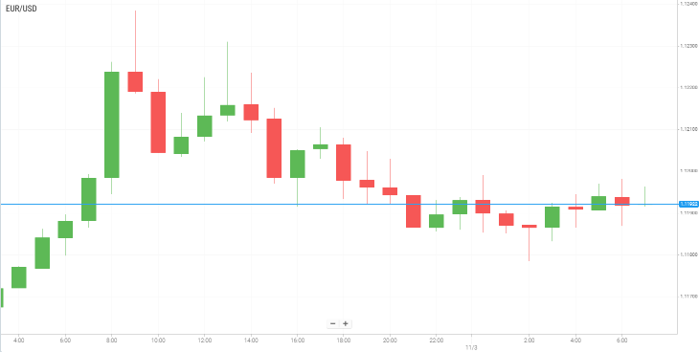
The EUR/USD pair remains under pressure below the 1.1200 level during Tuesday’s Asian session, as the US Dollar (USD) finds support from stronger-than-expected economic data and growing expectations of another Federal Reserve (Fed) interest rate hike. Meanwhile, concerns surrounding France’s worsening debt situation and political uncertainty continue to weigh on the Euro.
However, selling pressure remains limited as traders adopt a cautious approach ahead of the US midterm election results, which could trigger increased volatility across financial markets. Market expectations largely favor Democrats securing control of the House of Representatives, meaning a Republican sweep could come as a surprise and potentially push US Treasury yields and the Dollar higher. In the meantime, the upbeat US economic data released on Monday, combined with hawkish Federal Reserve expectations, continues to provide support for the Greenback.
However, hopes of a diplomatic breakthrough between the United States and Iran could limit further Dollar appreciation and offer some support to the EUR/USD pair. US President Donald Trump stated on Monday that Iran was interested in reaching an agreement to end the conflict, while Iranian Foreign Minister Abbas Araqchi confirmed that discussions through mediators remained intensive.
Looking ahead, market participants will monitor the US JOLTS Job Openings report for fresh trading impetus. Attention will then shift towards Wednesday’s preliminary Eurozone CPI figures and US ISM Services PMI, while Friday’s US Nonfarm Payrolls (NFP) report is expected to remain the main market focus. Until then, the US midterm election results and shifting expectations surrounding Federal Reserve policy are likely to influence near-term movements in the EUR/USD pair.
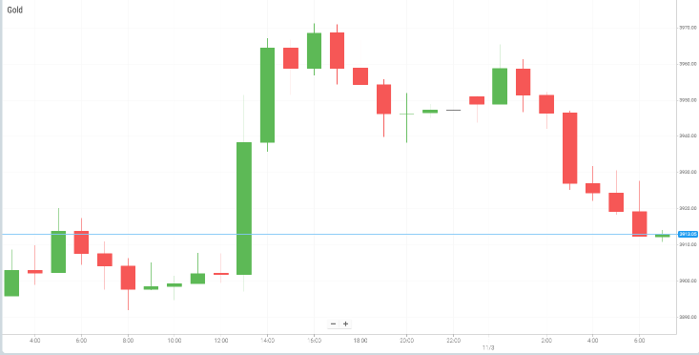
Gold remains under pressure below the $3,950 level during Tuesday’s Asian trading session, extending its decline after partially recovering from last week’s one-year low. The precious metal is facing renewed selling pressure as stronger-than-expected US economic data reinforces expectations of further Federal Reserve (Fed) monetary tightening, while rising US Treasury yields provide additional support to the US Dollar (USD).
Data released on Monday showed that activity in the US manufacturing sector expanded for the tenth consecutive month in October. The Institute for Supply Management (ISM) Manufacturing PMI climbed to 55.5 from 54.5 in the previous month, surpassing market expectations. The upbeat figures have strengthened expectations of another Fed interest rate hike and increased the opportunity cost of holding non-yielding Gold, weighing on demand for the precious metal.
Meanwhile, hopes of a diplomatic breakthrough between Washington and Tehran are also limiting the Dollar’s upside potential. Nevertheless, negotiations between Iranian officials and Qatari mediators have so far failed to deliver a significant breakthrough, despite Tehran reportedly presenting revised proposals concerning the reopening of the strategically important Strait of Hormuz. The continued uncertainty surrounding the US-Iran conflict, alongside renewed tensions between Russia and Ukraine, is keeping geopolitical risks elevated and providing some underlying support to safe-haven demand.
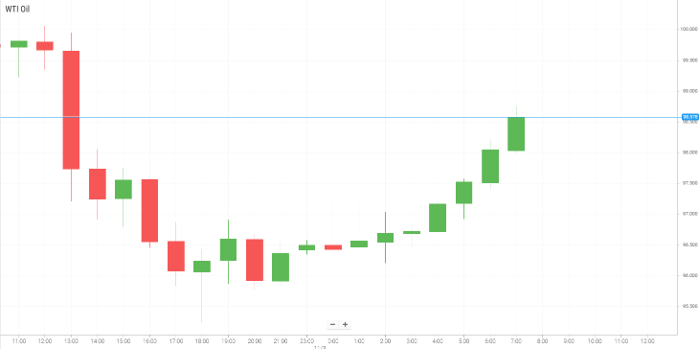
Oil prices edged higher during Asian trading on Tuesday, recovering some ground after suffering sharp losses in the previous session, as reports of a US strike on Iran’s Qeshm Island renewed concerns about potential disruptions to Middle Eastern oil supplies.
According to a report by the Wall Street Journal, citing US officials, the United States carried out an attack on Iran’s Qeshm Island on Monday. The reported strike was part of a series of limited US military operations against Iranian targets in recent weeks, as Washington sought to avoid signalling a return to a broader military campaign. Qeshm Island is strategically located in the Strait of Hormuz, one of the world's most important oil transit routes.
The latest development has highlighted the fragile balance between military escalation and ongoing diplomatic efforts to resolve the conflict, keeping oil traders concerned about the possibility of further disruptions to energy shipments through the Gulf.
Crude prices had declined sharply on Monday after US officials signalled a preference for diplomatic negotiations, easing fears that Washington could resume a wider military campaign following Tuesday’s US midterm elections.
Iranian President Masoud Pezeshkian indicated that Tehran remained willing to pursue dialogue, while Foreign Minister Abbas Araqchi confirmed that discussions with Qatari mediators were continuing. The diplomatic efforts have focused on establishing a possible framework to end the conflict and restore regional stability.
Nevertheless, negotiations have yet to produce a lasting agreement, leaving considerable uncertainty surrounding the security and future movement of oil tankers through the Strait of Hormuz. Any prolonged disruption to shipping through this strategic waterway could have significant implications for global energy supplies and crude prices.
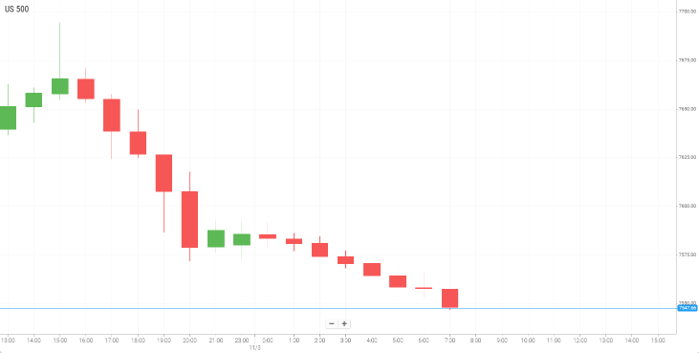
US stock markets ended Monday’s session mixed, surrendering earlier gains as renewed weakness in the technology sector extended last week’s sell-off. Persistent concerns over the rising cost of artificial intelligence (AI) infrastructure and increasing financing requirements weighed on investor sentiment, offsetting the positive impact of declining oil prices and a rotation into more defensive sectors.
Concerns surrounding the sustainability of massive AI investments remain a key source of pressure. Investors are increasingly questioning the scale of capital expenditure, the growing reliance on debt financing and the timeline for generating meaningful returns from AI-related infrastructure. Recent earnings reports from major technology companies have done little to ease these concerns, with elevated spending commitments and weaker cash flow overshadowing otherwise solid business performance.
Despite the technology-led weakness, the broader market has demonstrated some resilience as investors rotate towards defensive sectors and companies with stronger balance sheets and more predictable cash flows. Beyond corporate earnings, Tuesday's US midterm elections represent another important event for financial markets. Investors will monitor the results for potential implications regarding technology regulation, fiscal policy, infrastructure investment and future debt-ceiling negotiations. A Democratic victory in the House or across both chambers could complicate the administration's legislative agenda and introduce additional uncertainty for businesses and investors.
Overall, Wall Street remains caught between persistent concerns over expensive AI investments, shifting sector positioning and uncertainty surrounding US political and monetary policy. While defensive stocks and broader market participation are providing some support, the technology sector's ability to stabilise, together with the outcome of the midterm elections and Friday's employment report, will be crucial in determining the near-term direction of US equities.
The materials contained on this document should not in any way be construed, either explicitly or implicitly, directly or indirectly, as investment advice, recommendation or suggestion of an investment strategy with respect to a financial instrument, in any manner whatsoever. Any indication of past performance or simulated past performance included in this document is not a reliable indicator of future results. For the full disclaimer click here.
Join iFOREX to get an education package and start taking advantage of market opportunities.
 A beginner's e-book
 $5,000 practice demo account
 A 12-part video course
 Trusted partner

 Featured partner
 By


