
Listed on 
 Years active
 English (Arabic)
 Chinese Simplified - 中文 (简体)
 Chinese Traditional - 中文 (繁體)
 English
 Japanese - 日本語
 Korean - 한국어 (대한민국)
 Portuguese - Português
 Russian - Русский
 Spanish - Español
 Thai - ไทย

 English (India)

Don't have an account?
Register via AppHave an account?
Login 17/11/2026 - 07:48 UTC
The United States Dollar Index (USDX) retreated slightly, moving near the 103.53 level after pulling back from a 19-month high of 103.70 as the currency witnessed a modest correction of +0.19% in its latest trading session. The Greenback's broader strength remains supported by persistent inflationary pressures and hawkish signals from Federal Reserve officials, with Cleveland Fed President Beth Hammack highlighting broadening price pressures and Kansas City Fed President Jeffrey Schmid warning that inflation runs too hot. Markets are now pricing in aggressive policy tightening, as treasury yields remain elevated near multi-month highs. Investors look ahead to Tuesday's key macroeconomic releases, featuring critical U.S. Core Retail Sales and Retail Sales data during the North American window.
Global commodity and energy markets experienced downward pressure as expectations of a growing supply surplus weighed on sentiment. Gold (XAU/USD) retreated by -0.97% in its latest session, struggling to capitalize on an intraday uptick as firming Fed rate-hike expectations and a strong dollar offset safe-haven demand, even amid ongoing Middle East uncertainties surrounding the deployment of the USS Theodore Roosevelt and reported maritime incidents in the Strait of Hormuz. Meanwhile, WTI Oil fell sharply by -3.62% toward mid-$83.00 levels, touching an over two-month low as the International Energy Agency's fourth-quarter surplus forecasts and stabilizing regional oil flows overshadowed ongoing geopolitical risks.
Asian equity markets fell sharply, led lower by semiconductor-heavy exchanges as Washington tightened licensing controls on advanced artificial intelligence chip exports to data-centre operators across Southeast Asia to prevent circumvention by Chinese developers. Regional technology shares retreated significantly during the session, registering losses across major names including Kioxia (-4.62%), Samsung Electronics (-2.61%), SK Hynix (-1.89%), Murata (-0.07%), and Tencent (-3.20%), alongside broader declines in the MSCI Asia Pacific gauge. Investors also weighed weak domestic activity data out of China and Japan's third-quarter economic contraction, keeping regional sentiment cautious ahead of pivotal global catalysts.
U.S. equity markets suffered a steep selloff at the start of the week, with all major indices closing firmly in the red as technology shares led the decline amid uncertainty over Nvidia's leadership, tighter AI chip restrictions, and aggressive Federal Reserve rate expectations. Major corporate and technology names registered notable downward moves in the latest session, including Nvidia (-4.04%), Home Depot (-0.30%), Target (-0.69%), and Beyond Meat (-7.98%). Nvidia remains at the epicenter of market focus ahead of its highly anticipated fiscal third-quarter earnings report, which will serve as a crucial valuation test alongside Anthropic's landmark IPO following Jensen Huang's ouster and interim leadership under Colette Kress. Beyond tech, upcoming retail earnings from Walmart, Home Depot, and Target will provide vital insight into consumer spending health ahead of the holiday shopping season.
Looking ahead, market participants are bracing for a data-heavy economic calendar focused on retail sales metrics and central bank communications to determine the Federal Reserve's next policy path. Tuesday features the release of Core Retail Sales and Retail Sales data alongside high-profile corporate earnings from Nvidia, Home Depot and Walt Disney. Wednesday brings UK CPI data, speeches from BOE Gov Bailey, and the release of the FOMC Meeting Minutes, while Thursday features Australian employment figures and additional earnings from Palo Alto Networks, Walmart, Intuit, and others.
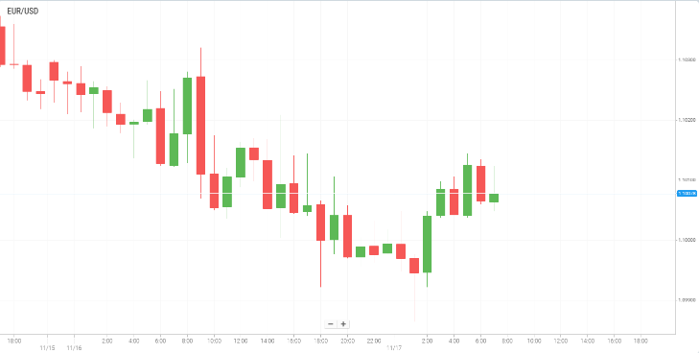
The EUR/USD pair remains under significant pressure, trading around the psychological 1.1000 level during Tuesday’s Asian session and hovering near its lowest levels since May 2025. The Euro continues to weaken against a strengthening US Dollar, as expectations of further Federal Reserve (Fed) interest rate hikes and rising geopolitical tensions support demand for the Greenback.
The latest US inflation figures, released last week, alongside hawkish comments from key Federal Open Market Committee (FOMC) members, have strengthened expectations of an imminent Fed rate hike.
Geopolitical risks remain elevated as the United States has deployed a third aircraft carrier, the USS Theodore Roosevelt, to the Middle East amid stalled diplomatic efforts to end the US-Israel conflict with Iran. Meanwhile, Iran’s Navy reported that a fourth oil tanker had caught fire within 24 hours after striking a naval mine near the Strait of Hormuz. These developments have heightened concerns over regional instability and energy supply disruptions, further supporting demand for the US Dollar.
On the European side, the Euro continues to face pressure from France’s deteriorating fiscal position, political deadlock, and concerns over rising sovereign debt. Missed deficit targets and uncertainty surrounding the country's fiscal outlook have undermined confidence in the single currency. These concerns are offsetting expectations of further European Central Bank (ECB) interest rate hikes, leaving the Euro vulnerable to additional losses against the Dollar.
Looking ahead, traders will focus on the upcoming release of US monthly Retail Sales data for fresh direction. Overall, the combination of stronger US economic fundamentals, expectations of further Fed tightening, geopolitical uncertainty, and persistent fiscal concerns in France continues to favour the US Dollar, leaving EUR/USD exposed to further downside pressure.
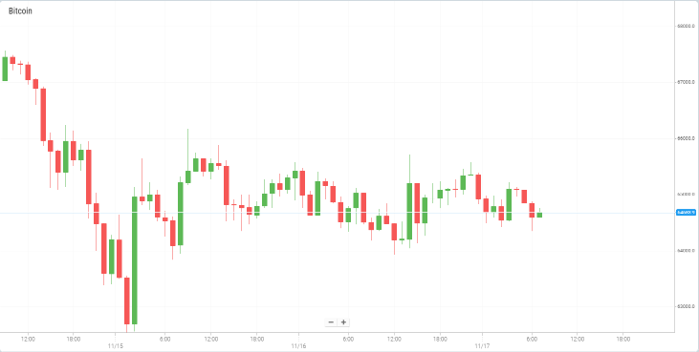
Bitcoin remains under pressure below the $65,000 level, trading close to recent lows as concerns over higher US interest rates and regulatory uncertainty continue to weigh on cryptocurrency markets. Despite a slight recovery on Tuesday, the world's largest cryptocurrency has struggled to regain momentum following six consecutive weeks of losses.
Markets are increasingly pricing in either a 25 or 50-basis-point rate hike, while expectations of unchanged interest rates have largely diminished, according to CME FedWatch data. The prospect of tighter monetary policy has created additional headwinds for Bitcoin and other risk-sensitive assets. Bitcoin has historically struggled during previous Fed tightening cycles, adding to concerns about further downside.
Meanwhile, political developments following the Democratic victory in the US midterm elections have contributed to uncertainty surrounding the future regulatory environment for digital assets. The lack of clarity over potential cryptocurrency policies has further weakened investor confidence. Despite the broader market weakness, Strategy Inc., the world's largest publicly traded corporate Bitcoin holder, announced another purchase. The company acquired 485 Bitcoin for approximately $33 million at an average price of $68,887 per coin, bringing its total holdings to 850,849 Bitcoin.
Overall, Bitcoin's near-term outlook remains vulnerable as expectations of further Federal Reserve tightening, regulatory uncertainty, and concerns surrounding institutional investment continue to weigh on sentiment. Although Strategy's latest purchase highlights ongoing corporate demand, it has so far been insufficient to reverse the broader bearish trend.
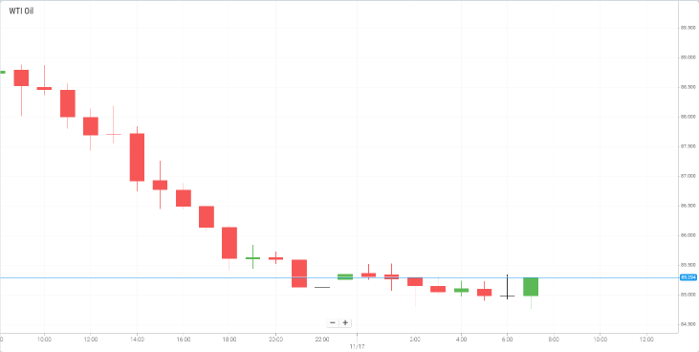
Oil prices edged lower on Tuesday as expectations of a growing global supply surplus outweighed concerns over continued attacks on energy infrastructure and shipping in the Middle East. Despite ongoing geopolitical tensions in the Gulf and around the Strait of Hormuz, improving oil exports from the region have eased some concerns about potential supply disruptions.
The International Energy Agency (IEA) reinforced this outlook, forecasting that the global oil market would return to a supply surplus in the fourth quarter of 2026. The agency attributed this expected shift to the faster-than-anticipated recovery in Middle Eastern exports, which is outpacing growth in global oil demand.
However, geopolitical risks continue to provide some support to crude prices. Attacks on energy infrastructure and commercial shipping in the Gulf and Strait of Hormuz have persisted, keeping uncertainty elevated around one of the world's most important oil-export routes. Nevertheless, the geopolitical risk premium associated with the US-Iran conflict has temporarily taken a back seat as markets place greater emphasis on improving supply conditions.
Meanwhile, the Organization of the Petroleum Exporting Countries (OPEC) held an online meeting on Monday to discuss its assessment of member countries' maximum sustainable production capacity. The review is particularly important as it will help determine production quotas for OPEC+ members in 2027 and beyond. The wider OPEC+ alliance, which includes Russia and other non-OPEC producers, is scheduled to meet on November 29 to discuss its oil production policy for 2027.
In the United States, crude inventories held in the Strategic Petroleum Reserve (SPR) declined to 276.4 million barrels last week, marking their lowest level since August 1982, according to the US Department of Energy. The recent drawdowns form part of an agreement to release 172 million barrels from the reserve.
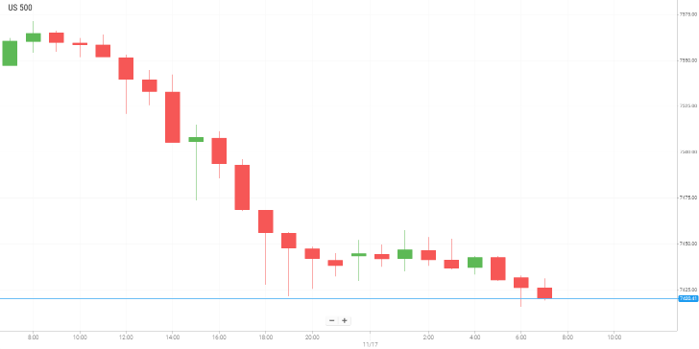
US stock futures edged lower during Tuesday’s Asian trading session as investors remained cautious following a sharp sell-off on Wall Street. Growing concerns surrounding the artificial intelligence (AI) sector, uncertainty over Nvidia’s leadership transition, and expectations of further Federal Reserve (Fed) interest rate hikes weighed on market sentiment ahead of the chipmaker’s highly anticipated quarterly earnings results.
Technology stocks remained at the centre of the market sell-off, with Nvidia shares falling more than 4% on Monday, extending their November losses to nearly 24%. Investor uncertainty has increased following reports surrounding CEO Jensen Huang's departure last week, raising questions about the company's future leadership and strategic direction. Speculation about a possible campaign by prominent Silicon Valley executives to bring Huang back has added another layer of uncertainty. Nvidia's quarterly earnings, scheduled for Tuesday, are expected to play a crucial role in determining the near-term direction of technology stocks and broader equity markets.
Pressure also spread across the broader semiconductor industry. The Philadelphia Semiconductor Index plunged 5.3%, with Intel and Micron among the biggest losers. Advanced Micro Devices (AMD) and Broadcom also recorded significant declines, alongside companies involved in data-centre infrastructure.
Meanwhile, investors are closely monitoring the anticipated stock market debut of Anthropic, the developer of the Claude artificial intelligence chatbot. The company is reportedly targeting a valuation of up to $1.4 trillion and could raise approximately $64.4 billion through its offering. The potential listing could become one of the largest public offerings on record and provide an important indication of investor appetite for high-valued AI companies amid growing concerns about excessive market valuations.
Overall, Wall Street faces a challenging environment as investors balance strong expectations for AI-related earnings growth against leadership uncertainty, geopolitical and regulatory risks, and rising interest rate concerns. Nvidia's upcoming earnings report could provide a significant catalyst for market direction, while the broader outlook for US equities remains vulnerable to further volatility if inflation pressures continue to strengthen expectations of tighter monetary policy.
The materials contained on this document should not in any way be construed, either explicitly or implicitly, directly or indirectly, as investment advice, recommendation or suggestion of an investment strategy with respect to a financial instrument, in any manner whatsoever. Any indication of past performance or simulated past performance included in this document is not a reliable indicator of future results. For the full disclaimer click here.
Join iFOREX to get an education package and start taking advantage of market opportunities.
 A beginner's e-book
 $5,000 practice demo account
 A 12-part video course
 Trusted partner

 Featured partner
 By


