
Listed on 
 Years active
 English (Arabic)
 Chinese Simplified - 中文 (简体)
 Chinese Traditional - 中文 (繁體)
 English
 Japanese - 日本語
 Korean - 한국어 (대한민국)
 Portuguese - Português
 Russian - Русский
 Spanish - Español
 Thai - ไทย
 English (India)
Don't have an account?
Register via AppHave an account?
Login 14/09/2026 - 07:05 UTC
The US Dollar Index (USDX) continues to build momentum for a third straight session, hovering around 99.30 during Asian trading hours. The Greenback is drawing solid support from heightened expectations of a Federal Reserve rate hike following hotter-than-expected US inflation data. Financial markets have now priced in nearly an 87% probability of a quarter-point rate increase at this week's Fed meeting, up sharply from 59% last week. This aggressive repricing follows August inflation figures showing headline CPI rising 0.4% month-over-month to reach 3.4% annually, while core CPI topped expectations with a 0.3% monthly gain. Over the previous week, the US Dollar Index traded flat, down just 0.01%.
Gold is treading water above the $4,300 mark as traders exercise caution ahead of a heavy slate of central bank policy decisions. The precious metal is struggling to build on its late-week bounce, hemmed in by a strengthening US dollar and persistent hawkish rate expectations from major central banks. Because rising yields increase the opportunity cost of holding non-yielding assets, gold’s upside remains capped despite underlying support from Middle East geopolitical risks. Gold retreated 1.94% over the course of last week.
WTI Crude Oil kicked off the new week with a strong bullish gap, climbing over 2% to trade above the mid-$98.00s and building on last week's massive 10.14% surge. Supply disruption fears remain acute after Iran-backed Houthi forces launched drone and missile strikes against a military installation in southern Saudi Arabia, alongside the indefinite postponement of a regional meeting between Gulf states and Iran concerning the Strait of Hormuz.
Asian stock markets experienced broad selling pressure on Monday, driven by a sharp retreat in technology shares. Market sentiment turned risk-averse after prominent artificial intelligence leaders—including Anthropic CEO Dario Amodei, OpenAI CEO Sam Altman, and Elon Musk—publicly advocated for slowing the development of next-generation AI models to implement stricter safeguards and independent safety evaluations. Regional indexes retreated, with South Korea's KOSPI dropping over 2% and Japan's Nikkei 225 sliding into negative territory, while Hong Kong's Hang Seng managed to record modest gains. In individual equity movements during the latest trading session, major Asian tech suppliers saw heavy losses: SK Hynix fell 6.6%, Samsung Electronics dropped 4.03%, Murata Manufacturing lost 3.04%, and Kioxia plunged 6.54%. SoftBank Group tumbled 11.17% in Tokyo after Altman confirmed OpenAI would not pursue an IPO this year.
US equity futures pointed to a weaker Wall Street open, led by tech heavyweights reassessing whether soaring corporate spending can justify elevated AI valuations. The tech sector enters the session coming off a difficult week, highlighted by Nvidia dropping 5.19%. Investors are weighing whether a voluntary slowdown in model rollouts will crimp revenue visibility across semiconductor and hardware supply chains, creating an additional overhang just as markets prepare for critical central bank policy shifts.
Looking ahead to the rest of the week, financial markets face an event-packed economic calendar dominated by major central bank rate announcements and corporate updates. On Wednesday, the UK releases its August annual CPI report, followed directly by the US Federal Reserve's interest rate decision, Monetary Policy Statement, Summary of Economic Projections, and FOMC press conference. Central bank action continues Thursday with the Bank of England's Official Bank Rate decision and policy summary, alongside earnings results from Carnival Corp. The week concludes with the Bank of Japan's rate decision, policy statement, and press conference.
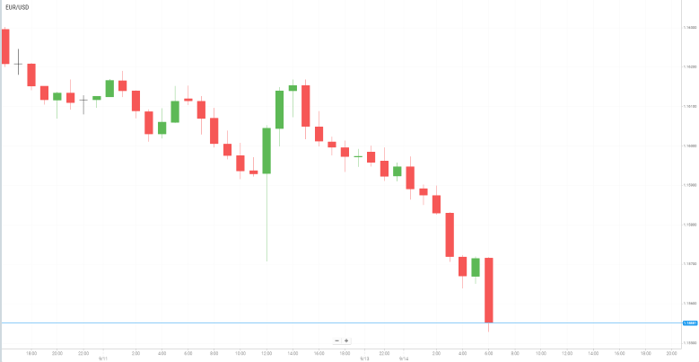
EUR/USD fell toward 1.1555 in early Asian trading on Monday as markets increased expectations for a Federal Reserve rate hike later this week. The dollar gained support after stronger-than-expected underlying U.S. inflation reinforced the case for tighter monetary policy.
U.S. consumer prices rose 0.4% month-on-month in August, bringing the annual inflation rate to 3.4%, both in line with expectations. However, core CPI, which excludes food and energy, accelerated to 0.3% from 0.2% previously and exceeded forecasts, adding to concerns that inflationary pressures remain persistent.
Markets are now pricing in around a 91% probability of a 25-basis-point Fed rate increase at Wednesday’s meeting, up sharply from roughly 72% before the latest U.S. producer price data. The shift in expectations has provided additional support to the dollar and weighed on the euro.
Meanwhile, the European Central Bank raised its deposit rate to 2.50% at last week’s meeting, marking its second rate hike of the year.
Overall, the euro remains under pressure in the near term as the prospect of higher U.S. interest rates supports the dollar, although expectations of additional ECB tightening could help limit the downside for EUR/USD.
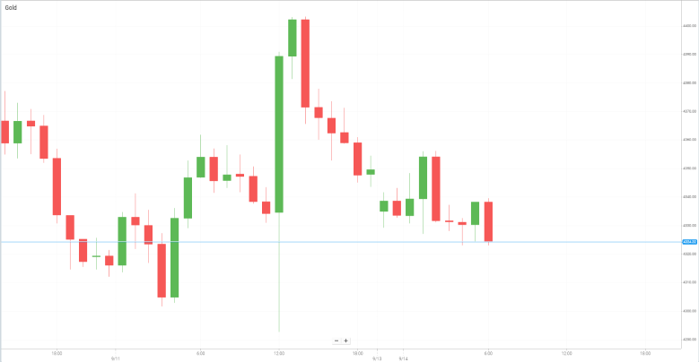
Gold prices edged lower to around $4,340 in early Asian trading on Monday as markets increasingly anticipated a Federal Reserve rate hike at this week’s policy meeting.
The precious metal remained under pressure after the latest U.S. inflation data reinforced expectations for tighter monetary policy.
Higher interest rates tend to weigh on gold, as the non-yielding asset becomes less attractive compared with interest-bearing investments.
All eyes are now on Wednesday’s Fed decision, with investors also focusing on Fed Chair Kevin Warsh’s press conference for clues about the outlook for monetary policy. A less hawkish tone could help cushion gold’s decline, while signals of further tightening may add to selling pressure.
Still, uncertainty ahead of the meeting remains elevated, with some policymakers likely to argue that easing underlying inflation pressures warrant a more cautious approach. This could keep gold volatile as markets position for the Fed’s decision.
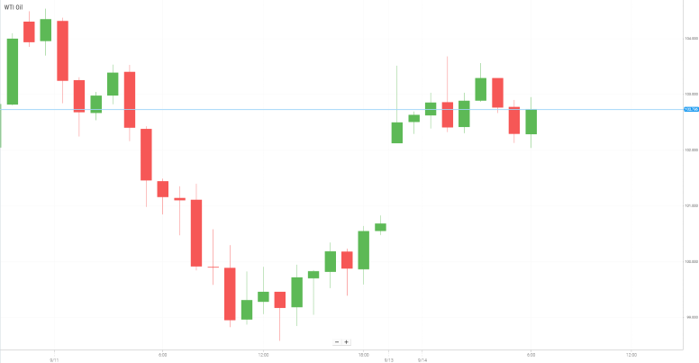
Oil prices jumped sharply early Monday as renewed Houthi attacks on Saudi Arabia and fresh strikes around the Strait of Hormuz heightened concerns over further disruptions to Middle Eastern crude supplies.
The latest gains kept oil prices close to their highest levels of the year as geopolitical risks continued to strengthen crude’s risk premium.
The rally was driven largely by renewed Houthi attacks over the weekend, including strikes on Saudi targets and shipping routes around the Bab el-Mandeb Strait. Saudi Arabia also shut a key East-West pipeline following the attacks, raising concerns about the country’s ability to redirect crude exports if disruptions around Hormuz intensify.
Meanwhile, hopes for a diplomatic de-escalation weakened after Oman said a regional meeting between Iran and Gulf states, originally scheduled for Monday, had been postponed. The delay reduced expectations that negotiations could ease tensions around Hormuz and further supported oil prices.
With crude flows through the Strait already significantly reduced following renewed U.S.-Iran hostilities, investors are likely to remain highly sensitive to developments in the region, keeping oil markets volatile in the near term.
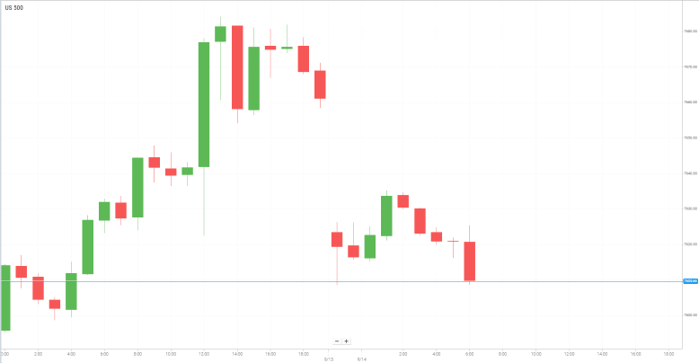
U.S. stocks finished higher on Friday as oil prices pulled back, offering some relief to investors despite renewed pressure on Treasury yields following the latest inflation data.
Despite Friday’s gains, the major indexes posted weekly declines as a sharp bond-market sell-off, rising rate expectations and elevated oil prices weighed on sentiment.
The latest U.S. CPI report strengthened expectations for tighter monetary policy. Headline inflation rose 0.4% month-on-month in August, while core CPI increased 0.3%, slightly above the 0.2% consensus. On an annual basis, headline CPI remained at 3.4%, while core inflation eased to 2.4%.
In corporate news, Oracle shares fell 1.74% after surrendering earlier gains despite stronger-than-expected earnings and an upgrade to its annual outlook. The company reported more than $30 billion in new AI cloud contracts, lifting its remaining performance obligations to $664 billion. Adobe gained 1.4% after reporting solid quarterly results, although its guidance was slightly weaker than expected.
Overall, markets remain caught between resilient corporate earnings and growing concerns that higher inflation, oil prices and Treasury yields could keep the Fed on a tighter policy path for longer.
The materials contained on this document should not in any way be construed, either explicitly or implicitly, directly or indirectly, as investment advice, recommendation or suggestion of an investment strategy with respect to a financial instrument, in any manner whatsoever. Any indication of past performance or simulated past performance included in this document is not a reliable indicator of future results. For the full disclaimer click here.
Join iFOREX to get an education package and start taking advantage of market opportunities.
 A beginner's e-book
 $5,000 practice demo account
 A 12-part video course
 Trusted partner
 Featured partner
 By
By 


