
Listed on 
 Years active
 English (Arabic)
 Chinese Simplified - 中文 (简体)
 Chinese Traditional - 中文 (繁體)
 English
 Japanese - 日本語
 Korean - 한국어 (대한민국)
 Portuguese - Português
 Russian - Русский
 Spanish - Español
 Thai - ไทย

 English (India)

Don't have an account?
Register via AppHave an account?
Login 02/11/2026 - 08:29 UTC
The United States Dollar Index (USDX) remained relatively stable, trading near 102.00 during early European hours on Monday after posting a modest gain of 0.12% over the previous week. The Greenback traded in a narrow range as safe-haven demand eased amid ongoing diplomatic efforts to resolve the Middle East conflict, while lingering expectations for a December Federal Reserve rate hike continued to provide underlying support. CME FedWatch pricing indicated a roughly 75% probability of a 25-basis-point rate increase, with investors closely monitoring upcoming U.S. macroeconomic releases, including the ISM Manufacturing and Services PMI reports alongside Friday's crucial Nonfarm Payrolls (NFP) employment data.
Global commodity and crypto markets saw increased volatility as investors reacted to geopolitical updates and sector-specific events. Gold (XAU/USD) clung to modest intraday gains above the $3,900 mark, though it remained under heavy broader pressure, closing last week down 3.11% near October 2025 lows as firming Fed rate-hike expectations and rebounding economic data offset safe-haven inflows. Bitcoin fell 4.14% over the week, experiencing a moderate decline primarily triggered by a major security breach and hack on the Binance exchange. Meanwhile, West Texas Intermediate (WTI Oil) slid 2.25% on Monday and finished down 0.46% for the week, trading below $100.00 per barrel as OPEC+ agreed to maintain steady production targets for December and optimism grew regarding potential diplomatic breakthroughs, including ongoing Qatari-mediated talks and signals from Washington prioritizing diplomatic resolution over military escalation.
Asian stock markets mostly advanced on Monday, supported by easing oil prices and a recovery in regional technology shares following last month's tech-driven selloff. South Korea's KOSPI jumped over 4% last week, bolstered by strong gains in key memory producers, as SK Hynix surged 10.33% and Samsung Electronics added 4.65% over the weekly tracking period. Conversely, Japanese benchmarks traded mixed under pressure from heavy semiconductor losses, with Kioxia dropping 16.28%, SoftBank easing 1.31%, and TDK falling 1.83%. Chinese and Hong Kong indices posted solid gains as risk appetite improved across broader regional markets.
U.S. equity index futures advanced during Asian trading on Monday, offering relief after Wall Street's sharp tech-driven declines in October, which left the Nasdaq Composite down over 5% for the month. Investor sentiment faced severe headwinds last week following disappointing corporate guidance, highlighted by Intel plunging 24.84% over the week. Heavyweights also struggled over the weekly period, with Apple dipping 0.84% and Nvidia sliding 2.91% amid ongoing scrutiny over massive artificial intelligence infrastructure spending and capital expenditure returns.
Looking ahead, market participants are monitoring a high-stakes calendar featuring major corporate earnings, monetary policy decisions, and political developments. Today, traders will track key quarterly results from technology and retail leaders including Apple (AAPL, EPS est. $1.99, Rev est. $113.38B), Palantir Technologies (PLTR, EPS est. $0.4105, Rev est. $2.17B), Berkshire Hathaway (BRKb, EPS est. $5.78, Rev est. $100.93B). Other reports due later this week include AMD, Shopify, Pfizer, and Super Micro Computer. Tomorrow while attention shifts globally to the U.S. Congressional Midterm Elections—expected to heavily influence legislative policy for the remainder of President Trump's term. Later in the week, focus centers on the Bank of England rate decision on Thursday (Official Bank Rate expected at 4.00% with a 7-0-2 vote split), concluding on Friday with the critical U.S. employment report (Non-Farm Employment Change expected at 63K, Unemployment Rate at 4.2%) and a speech by BOJ Governor Kazuo Ueda.
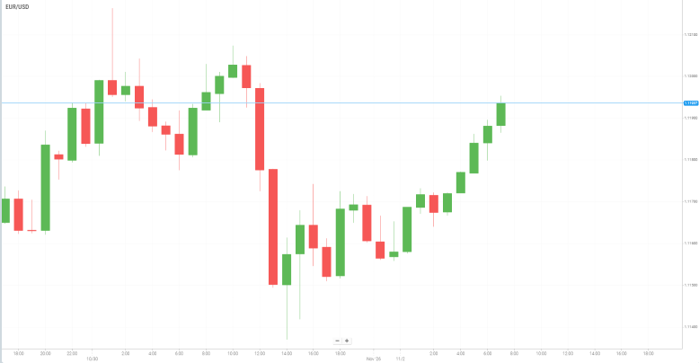
The EUR/USD pair strengthened above the 1.1150 level supported by stronger-than-expected Eurozone and German GDP figures for the third quarter. The Euro gained momentum as the latest economic data highlighted the resilience of the European economy despite ongoing Middle East tensions and elevated energy costs. Eurozone GDP expanded by 0.4% quarter-on-quarter in Q3, exceeding market expectations of 0.2%, although growth slowed from 0.6% in the previous quarter. Meanwhile, Germany’s economy grew by 0.2%, beating forecasts of 0.1%, despite easing from the 0.3% expansion recorded in Q2.
However, the Euro’s upside may remain limited following Fitch’s decision to downgrade France’s outlook from stable to negative on Friday. The ratings agency cited deteriorating fiscal conditions and rising political risks as factors threatening the country’s debt stabilization prospects, potentially weighing on investor confidence in the shared currency. Market participants will now turn their attention to Germany’s Retail Sales figures and the US ISM Manufacturing PMI report, both due later on Monday, for further trading signals.
Meanwhile, attention is also shifting towards the US midterm elections scheduled for Tuesday, with voters deciding whether the Democratic Party can gain control of Congress from President Donald Trump’s Republican Party. Democrats are widely expected to secure a majority in the House of Representatives, while the outcome of the Senate race remains uncertain. The election results could influence market sentiment and contribute to volatility in the US Dollar, potentially shaping the near-term direction of EUR/USD.
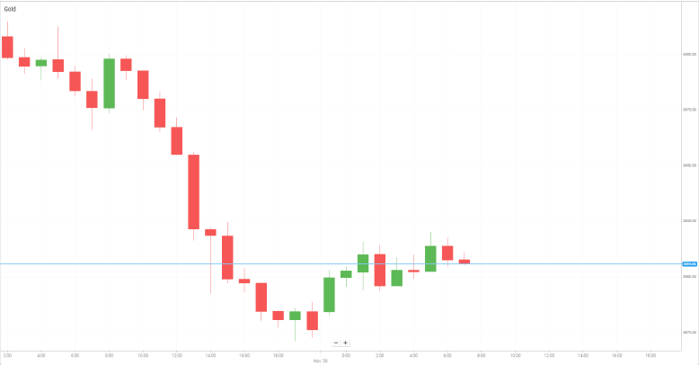
Gold maintained modest gains above the $3,900 level during early European trading on Monday, although buying momentum remained limited as investors assessed conflicting fundamental developments. The precious metal found some support from a weaker US Dollar amid growing optimism over a potential diplomatic breakthrough to end the US-Iran conflict. Reports indicated that Iranian negotiators held discussions with Qatari mediators for a third consecutive day on Sunday, seeking progress towards an agreement. Iran also reportedly proposed a 48-hour plan to reopen the Strait of Hormuz, subject to conditions including sanctions relief and a reduction in US military presence in the region. US President Donald Trump described negotiations with Iran as progressing well, adding to hopes of a possible diplomatic resolution.
However, geopolitical uncertainties continue to limit optimism and support demand for safe-haven assets. Trump has not ruled out further military action following the November 3 midterm elections, while Iran’s Supreme Leader, Mojtaba Khamenei, has reportedly instructed military commanders to prepare for a potential renewed confrontation with the US and Israel. Meanwhile, continued Ukrainian attacks on Russian oil refineries have added to geopolitical tensions and uncertainty surrounding global energy supplies. These developments have prevented a more significant decline in the US Dollar and limited Gold’s recovery.
On the monetary policy front, expectations of further Federal Reserve tightening remain a major headwind for the non-yielding precious metal. Recent US economic data pointed to resilient economic activity and persistent inflationary pressures, reinforcing expectations of another interest rate increase in December.
Investors will now focus on a series of important US economic releases for further direction. The ISM Manufacturing PMI is scheduled for release later on Monday, followed by the ISM Services PMI on Wednesday and the closely watched Nonfarm Payrolls report on Friday.
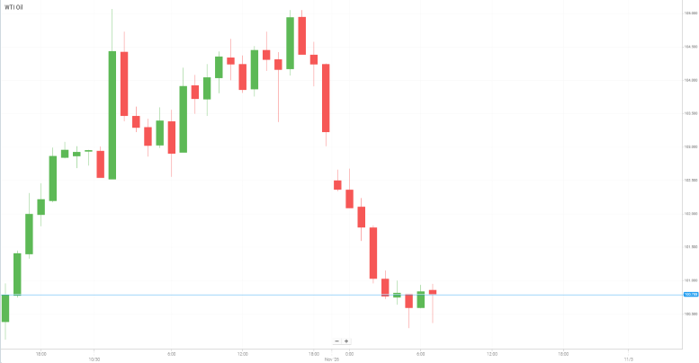
Oil prices declined by more than 2% on Monday as renewed diplomatic efforts between Iran and Qatar raised hopes of a potential agreement to end the US-Israeli war on Iran, easing some concerns over further disruptions to global energy supplies.
Market sentiment improved after Iranian and Qatari officials held discussions for a third consecutive day on Sunday, seeking progress towards a diplomatic resolution. Iranian Foreign Minister Abbas Araqchi described the negotiations as ongoing and progressing, emphasizing that Tehran remained prepared for both diplomatic engagement and defence. Optimism was further supported by the absence of significant military escalation over the weekend, encouraging investors to take profits following last week's gains. Nevertheless, continued attacks on oil tankers transiting the Strait of Hormuz remain a major concern, contributing to higher global energy and shipping costs. Meanwhile, Saudi Arabia increased its crude exports in October compared with September, despite attacks by Iran-aligned Yemeni Houthi forces on its energy infrastructure.
Meanwhile, OPEC+ maintained its December oil production targets unchanged during Sunday's meeting, in line with market expectations. The group, which includes major producers such as Saudi Arabia and Russia, indicated that further adjustments to production policy are unlikely before next year. Ongoing export disruptions caused by the Iran conflict continue to complicate the alliance's supply strategy. Overall, oil prices remain sensitive to developments in Middle East diplomacy, potential military escalation and global supply disruptions, with the $120 level emerging as an important potential ceiling for the market in the near term.
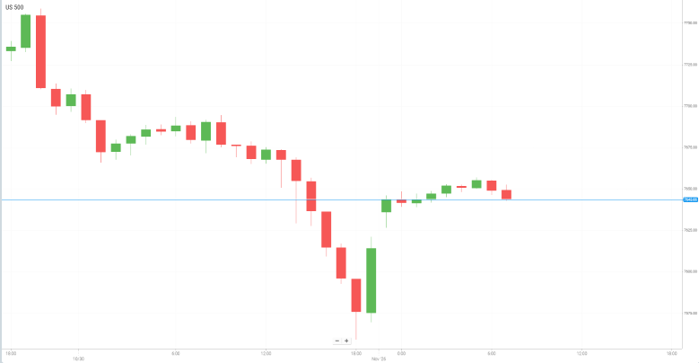
Wall Street closed sharply lower on Friday as growing concerns over the enormous spending required to develop artificial intelligence (AI) technology triggered a broad sell-off in technology stocks. Disappointing quarterly results from Intel and Amazon intensified investor concerns about whether heavy AI investments will generate sufficient returns, putting pressure on major technology companies and semiconductor manufacturers.
The technology sector led Friday’s losses, with Intel shares plunging 29.03% following disappointing quarterly results. Semiconductor stocks also came under significant selling pressure, as AMD dropped 10.9% and Nvidia declined 4.13%, while the broader semiconductor index fell 7.2%. Investors are increasingly questioning whether the substantial capital expenditure by major technology companies can translate into sustainable profitability, particularly as expectations surrounding AI-related growth remain exceptionally high. Market participants appear increasingly selective, rewarding companies that meet or exceed expectations while heavily penalizing those delivering disappointing results.
Overall, all three major US equity indices finished the week lower. The US 500 and US Tech 100 recorded monthly losses in October, while the US 30 managed to finish the month in positive territory. The sharp decline in technology shares highlights growing investor sensitivity to earnings disappointments and questions surrounding the profitability of AI investments, suggesting that market volatility could remain elevated as investors reassess valuations and future growth expectations.
The materials contained on this document should not in any way be construed, either explicitly or implicitly, directly or indirectly, as investment advice, recommendation or suggestion of an investment strategy with respect to a financial instrument, in any manner whatsoever. Any indication of past performance or simulated past performance included in this document is not a reliable indicator of future results. For the full disclaimer click here.
Join iFOREX to get an education package and start taking advantage of market opportunities.
 A beginner's e-book
 $5,000 practice demo account
 A 12-part video course
 Trusted partner

 Featured partner
 By


