
Listed on 
 Years active
 English (Arabic)
 Chinese Simplified - 中文 (简体)
 Chinese Traditional - 中文 (繁體)
 English
 Japanese - 日本語
 Korean - 한국어 (대한민국)
 Portuguese - Português
 Russian - Русский
 Spanish - Español
 Thai - ไทย
 English (India)
Don't have an account?
Register via AppHave an account?
Login 05/10/2026 - 07:01 UTC
The US Dollar Index (USDX) gathered further momentum, trading near 102.20 in Monday's early Asian session after gaining 0.92% last week. Greenback demand remains well-supported by safe-haven flows tied to ongoing Middle East tensions and fiscal concerns in France. Although benchmark Treasury yields retreated slightly, with the 10-year yield easing to around 5.25%, the USD remains strong as markets price in less than a 25% chance of an October Fed rate hike following softer employment figures.
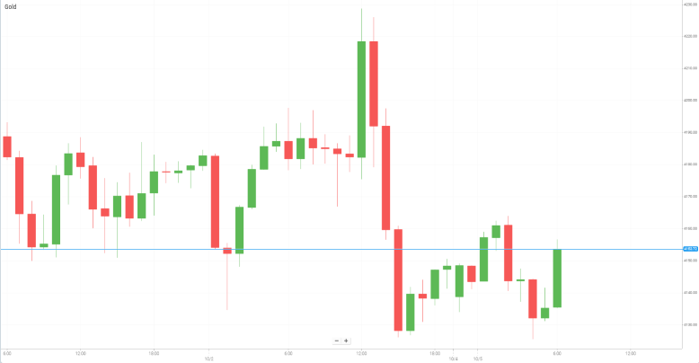
Gold extended its consolidative price move, trading below $4,150 per ounce in early Monday action after dropping -3.35% last week. A surging US dollar and a rebound in risk assets offset receding bets for further Fed monetary tightening, though underlying geopolitical risks in the Middle East continue to provide a critical safe-haven cushion against steeper downside. Consequently, bullion traders remain cautious while monitoring ongoing bond market shifts and central bank signaling heading into the new trading week.
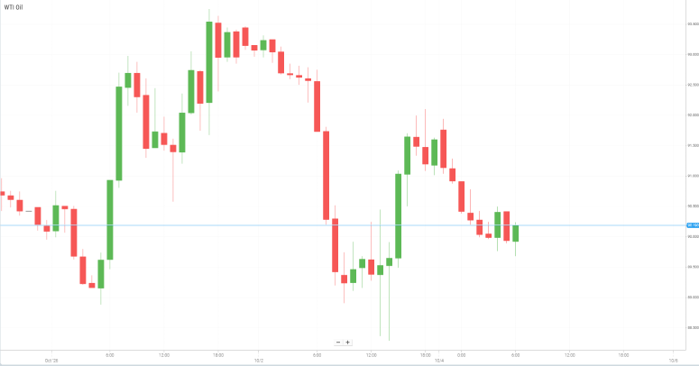
WTI Crude Oil slipped to around $89.30 per barrel after losing -0.77% last week, while Brent crude held near $101.60. Prices came under pressure after G7 nations agreed to release 100 million barrels from emergency reserves and OPEC+ decided to keep November production targets unchanged. However, downside remains capped as Middle East supply risks persist, highlighted by Saudi-backed forces launching an offensive in Yemen following Houthi control of the strategic Bab el-Mandeb strait, which threatens key Red Sea shipping lanes.
Asian stock markets traded mostly higher on Monday, as softer US labor data reduced interest-rate expectations and provided much-needed relief to risk assets. Japan's Nikkei 225 jumped 2.6% to 70,074, driven by broad technology strength and regional semiconductor optimism. Regional tech heavyweights posted mixed overall performances, with Samsung Electronics surging 9.61% last week while SK Hynix fell -0.74%. Elsewhere, Kioxia gained 2.67%, SoftBank Group rose 2.39%, and TSMC advanced, while Chinese tech names lagged, with Tencent falling -3.66%, Alibaba dropping -3.57%, and Baidu declining -3.44%.
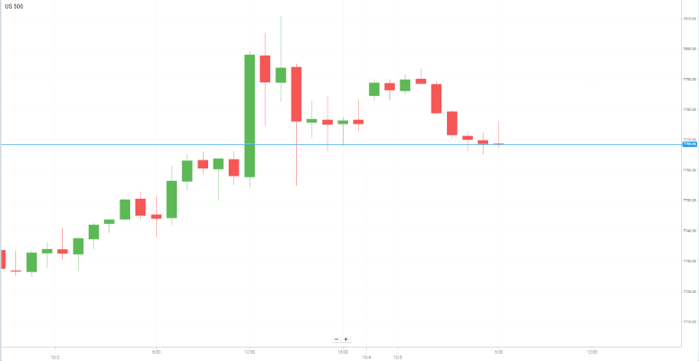
US equity indexes closed higher on Friday, boosted by rate-cut optimism after the Labor Department reported just 29K jobs added in September and unemployment rising to 4.2%. Megacap tech stocks drove broader sentiment, with Nvidia advancing 3.91% for the week, Meta slipping -3.09%, and Micron declining -0.64%. The weaker-than-expected payroll figures convinced traders that the Federal Reserve may pause further monetary tightening, giving major stock benchmarks momentum heading into October.
Looking ahead, market participants are focused on a heavy schedule of macroeconomic events and corporate earnings, including the OPEC-JMMC Meetings, US ISM Services PMI, BOJ Governor Ueda's speech, FOMC Meeting Minutes, US Unemployment Claims, and the Prelim UoM Consumer Sentiment and Inflation Expectations reports, alongside upcoming earnings releases from PepsiCo and Delta Air Lines. Investors will be scrutinizing these indicators closely to gauge future central bank policy moves and broader corporate earnings health.
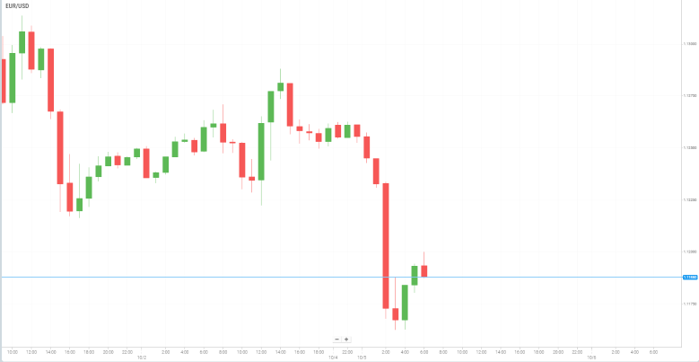
The EUR/USD pair came under intense selling pressure at the start of the new week, breaking below the 1.1200 level and falling to its lowest point since May 2025 during the Asian session.
The shared currency has been hit by growing concerns over France’s worsening debt situation and ongoing political gridlock ahead of next year’s election. These concerns, combined with strong demand for the US Dollar, have placed significant downward pressure on EUR/USD. French borrowing costs have also risen alongside global bond yields, with the benchmark 10-year government bond yield moving above 4.9%, close to its highest level in decades.
France’s fiscal outlook has further intensified market concerns. The country’s debt-to-GDP ratio is expected to rise to 122% next year, up from 119% this year. Political uncertainty is adding to the pressure, with far-right leader Marine Le Pen leading in polls for the presidential race and proposing tax cuts while pledging to reduce France’s retirement age to as low as 60. Such proposals have raised additional concerns about the sustainability of France’s public finances, particularly as its already generous pension system accounts for an increasingly large share of government spending.
Meanwhile, the US Dollar has attracted aggressive buying and climbed to its highest level since April 2025. Persistent geopolitical uncertainty has helped support the greenback despite Friday’s disappointing US Nonfarm Payrolls report, which further reduced expectations for a Federal Reserve rate hike in October. The combination of renewed USD strength, political uncertainty in France and growing concerns over the country’s fiscal position has reinforced the bearish outlook for EUR/USD, leaving the pair vulnerable to further losses.
Gold remains subdued at the start of the new week, extending its consolidative price action below the $4,150 level and staying within the range established over the past week. The precious metal is facing resistance from a renewed surge in US Dollar (USD) demand, with the greenback climbing to its highest level since April 2025. This strength in the USD is keeping a lid on Gold prices, although fading expectations of an October Federal Reserve (Fed) rate hike are helping to limit the downside.
The US Dollar has regained strong momentum as investors look beyond Friday’s disappointing US jobs report. The latest Nonfarm Payrolls (NFP) data showed that the US economy added just 29,000 jobs in September, sharply below the previous month’s downwardly revised figure of 133,000 and market expectations of 90,000. The report also showed that the Unemployment Rate unexpectedly increased to 4.2% from 4.1% in August.
The changing interest-rate outlook has pushed US Treasury yields lower, moving them further away from their multi-year highs. Lower yields generally benefit non-yielding assets such as Gold by reducing the opportunity cost of holding bullion. This provides some support for XAU/USD and helps prevent a deeper decline despite the renewed strength of the US Dollar.
Markets will now turn their attention to the US ISM Services PMI for further clues about the health of the economy and the Federal Reserve’s policy outlook. At the same time, ongoing geopolitical risks could continue to influence demand for the safe-haven US Dollar and Gold, leaving the precious metal caught between competing forces as traders assess the next direction for prices.
Oil prices fell in Asian trading on Monday as recovering crude exports from the Middle East and plans by the Group of Seven (G7) to release emergency oil reserves eased immediate concerns over supply disruptions. However, heightened geopolitical tensions in the region continued to limit the decline.
The G7 agreed on Friday to release 100 million barrels of crude and refined fuel products from emergency reserves, with a significant portion of diesel supplies expected to reach the market within 20 days. The decision is aimed at cushioning energy markets against potential supply disruptions linked to the conflict involving Iran. At the same time, Middle Eastern crude exports have shown signs of recovery. According to data from Kpler cited in reports, regional crude exports exceeded pre-war levels on four days during the final week of September.
Exports reached between 19.5 million and 22.5 million barrels per day on September 24 and between September 27 and 29. The seven-day moving average stood at around 18.5 million barrels per day on October 1, above the pre-war average of approximately 18 million barrels per day.
The recovery has been supported by increased flows through the Strait of Hormuz and alternative export routes, although shipping activity remains exposed to significant geopolitical risks. Continued attacks in the region are also adding uncertainty to the outlook for global oil supplies.
The broader supply outlook was also influenced by OPEC+. The producer group agreed to keep its November production targets unchanged, while its next meeting is scheduled for November 1. With Middle Eastern exports recovering and emergency reserves being released, near-term supply concerns have eased, but persistent geopolitical risks could continue to create volatility in oil markets.
US stocks ended sharply higher on Friday as investors scaled back expectations for an imminent Federal Reserve rate hike following a weaker-than-expected September jobs report. However, the gains were not enough to prevent the major indexes from ending the week lower as a persistent selloff in longer-term US Treasury bonds pushed yields to multi-decade highs.
The main catalyst for Friday’s rally was a surprisingly weak US employment report. According to the Bureau of Labor Statistics, nonfarm payrolls increased by just 29,000 in September, well below expectations of around 89,000 and marking the weakest monthly job growth of the year. Employment figures for July and August were also revised down by a combined 60,000. Meanwhile, the unemployment rate edged up to 4.2% from 4.1% in August.
Markets will now look ahead to upcoming inflation data for further clues about the Fed's next move. The Consumer Price Index is due on October 14, followed by the Producer Price Index on October 15, while the Federal Open Market Committee is scheduled to announce its next rate decision on October 28.
Among individual stocks, Nike declined 3.43% after the sportswear giant reported weaker-than-expected quarterly revenue and issued disappointing full-year guidance. The company also announced plans to reduce its workforce and restructure its global operations as CEO Elliott Hill works to revive the business amid intense competition and weakness in China.
Tesla, meanwhile, climbed 4.63% after the electric vehicle maker reported third-quarter deliveries well above expectations. The company delivered 486,532 vehicles during the quarter, approximately 5% higher than the company-compiled consensus estimate of 461,974.
The materials contained on this document should not in any way be construed, either explicitly or implicitly, directly or indirectly, as investment advice, recommendation or suggestion of an investment strategy with respect to a financial instrument, in any manner whatsoever. Any indication of past performance or simulated past performance included in this document is not a reliable indicator of future results. For the full disclaimer click here.
Join iFOREX to get an education package and start taking advantage of market opportunities.
 A beginner's e-book
 $5,000 practice demo account
 A 12-part video course
 Trusted partner
 Featured partner
 By
By 


