
Listed on 
 Years active
 English (Arabic)
 Chinese Simplified - 中文 (简体)
 Chinese Traditional - 中文 (繁體)
 English
 Japanese - 日本語
 Korean - 한국어 (대한민국)
 Portuguese - Português
 Russian - Русский
 Spanish - Español
 Thai - ไทย
 English (India)
Don't have an account?
Register via AppHave an account?
Login 21/09/2026 - 06:59 UTC
The US Dollar Index (USDX) gains ground on Monday, trading around 100.30 during Asian hours. The Greenback is drawing solid support from heightened expectations of further Federal Reserve policy tightening following recent hawkish signals and persistent inflation. Markets are now pricing in nearly a 56.5% probability of another rate increase at the Fed's October meeting, up sharply from 42.5% last week. This aggressive repricing follows comments from Fed Chair Kevin Warsh, who stressed that persistent inflation remains too high, alongside a 25-basis-point rate hike delivered by the central bank. Over the previous week, the US Dollar Index traded higher, up 0.82%.
Gold is treading water near the $4,350 mark as traders exercise caution following Friday's failure near $4,400, stalling a two-day recovery. The precious metal is struggling to build momentum, hemmed in by a strengthening US dollar and persistent hawkish rate expectations from the Federal Reserve, though a recent pullback in US bond yields provides minor support. While rising yields increase the opportunity cost of holding non-yielding assets, gold's downside remains capped by geopolitical risks, including fresh missile and drone attacks by Iran-backed Houthi forces against targets in Riyadh, as well as trader hesitation ahead of Thursday's summit between US President Donald Trump and Chinese President Xi Jinping. Gold fell 0.65% over the course of last week.
WTI Crude Oil slipped for a fourth successive session on Monday, dropping to trade around $93.60 per barrel as growing hopes for Middle East diplomacy eased supply fears. Optimism grew after President Trump signaled he would "probably" be open to meeting Iranian President Masoud Pezeshkian at the UN General Assembly, complemented by Qatari mediation efforts and reports from US Central Command that Strait of Hormuz shipping volumes hit six-month highs. However, deeper losses were restrained by ongoing geopolitical escalations, including a massive overnight Ukrainian drone assault on Moscow targeting an oil refinery, alongside Houthi strikes on Riyadh. Crude oil retreated 0.83% over the course of last week.
Asian stock markets advanced on Monday, driven by a strong rebound in technology shares ahead of the upcoming Trump-Xi summit. Market sentiment turned risk-on following positive weekend trade discussions in New York between US Treasury Secretary Scott Bessent and Chinese Vice Premier He Lifeng, where both sides agreed to establish a formal AI dialogue. This optimism lifted major Asian tech suppliers after a mixed performance last week, during which Nvidia rose 1.71%, SK Hynix gained 1.54%, Samsung Electronics jumped 5.38%, Murata rose 3.74%, Alibaba gained 3.64%, and Tencent rose 2.32%, while Kioxia dropped 1.77%, JD.com fell 0.65%, and Baidu dropped 1.63%.
US equity futures pointed to a stronger Wall Street open, led by tech heavyweights taking encouragement from positive signals surrounding US-China trade talks and technological cooperation. Investors are viewing the agreement to establish a bilateral AI dialogue between Washington and Beijing as a catalyst to boost revenue visibility across semiconductor and hardware supply chains, offering a brief respite as markets continue to weigh central bank policy shifts.
Looking ahead, market participants face a dense week of economic catalysts anchored by central bank commentary, manufacturing data, labor metrics, and high-profile retail earnings. Global policy direction will be in focus with speeches from RBA Governor Bullock, ECB President Lagarde, and BOE Governor Bailey. Traders will also closely monitor the health of the private sector via preliminary September PMI releases across the Eurozone and UK, alongside key U.S. consumer sentiment and inflation expectations updates. Capping off the macro picture, all eyes on Wall Street will turn to corporate earnings when Costco Wholesale reports its Q4 results after the US market close on Thursday, September 24.
EUR/USD struggles to build on Friday’s modest recovery from the mid-1.1400 area, its lowest level since late July, and edged lower at the start of the new week. The pair traded around 1.1475 and remained vulnerable as geopolitical tensions continued to weigh on market sentiment.
European officials have warned of a potential increase in Russia’s drone, missile, sabotage, and cyber operations against NATO members supporting Ukraine. French President Emmanuel Macron said on Friday that the Russian hybrid threat facing Europe and France had intensified. These concerns have put additional pressure on the Euro, while heightened tensions in the Middle East have provided further support to the US Dollar as investors seek safer assets.
Geopolitical risks remained elevated after Iran-backed Houthis in Yemen said they had targeted sensitive sites in Riyadh with missiles and drones. Iran also outlined seven conditions for resuming talks with the United States. These developments have kept geopolitical risk premiums elevated and, together with the Federal Reserve’s relatively hawkish stance, have supported the US Dollar and weighed on EUR/USD.
Investors will now turn their attention to ECB President Christine Lagarde’s speech later on Monday for fresh clues about the central bank’s policy outlook. However, broader geopolitical developments are likely to remain a key driver of market sentiment. Attention will also focus on Thursday’s meeting between US President Donald Trump and Chinese President Xi Jinping, with any developments potentially influencing risk appetite, the US Dollar, and the near-term direction of EUR/USD.
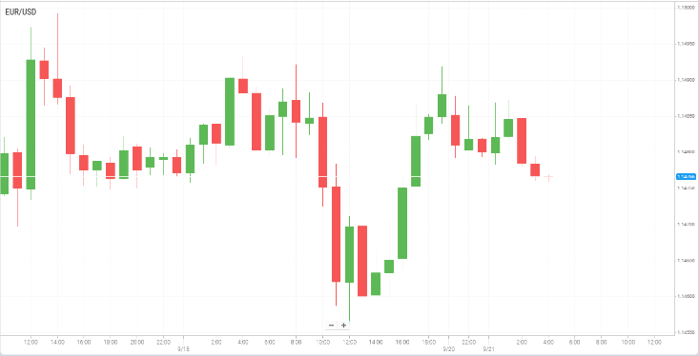
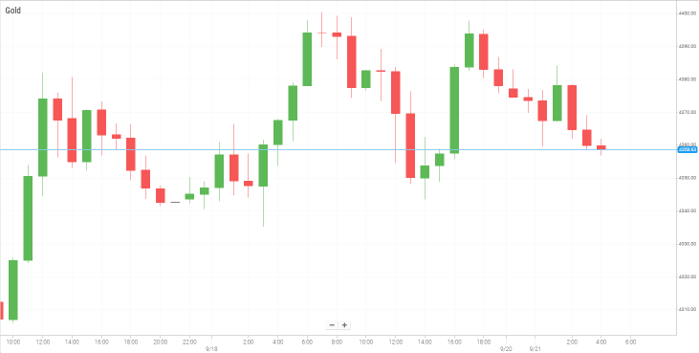
Gold prices edged lower toward $4,365 during early Asian trading on Monday as the precious metal came under pressure from renewed geopolitical tensions in the Middle East and hawkish comments from Federal Reserve officials. Investors are now awaiting further remarks from Fed policymakers later this week for fresh direction.
According to Reuters, governments across the Middle East are preparing for a possible escalation after Iran said it had received intelligence suggesting that Washington was planning to resume military action against the Islamic Republic. Rising tensions could fuel concerns over higher oil prices and renewed inflationary pressures, potentially weighing on gold as markets reassess the outlook for interest rates.
The Federal Reserve raised interest rates by 25 basis points last week, bringing the target range to 3.75%-4.00%, while signaling that additional increases could be possible in the coming months. Higher interest rates generally create headwinds for gold because the precious metal does not generate interest, making yield-bearing assets more attractive.
Hawkish remarks from Fed officials have added to the pressure on gold. Kansas City Fed President Jeffrey Schmid said on Friday that he supported the recent rate hike, noting that recent data indicated inflation was running above 3%. Minneapolis Fed President Neel Kashkari also said on Sunday that inflation in the United States remains elevated across several parts of the economy and is not being driven solely by higher energy and oil prices.
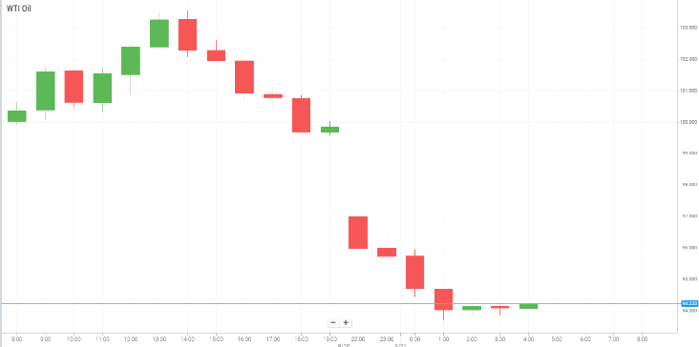
Oil prices fell to their lowest level in more than a week on Monday as hopes for a diplomatic breakthrough in the US-Iran conflict encouraged investors to scale back some of the geopolitical risk premium in crude markets.
Market participants are increasingly watching for signs that diplomacy could help de-escalate the conflict. US President Donald Trump said he was open to meeting Iranian President Masoud Pezeshkian, who is expected to travel to New York this week for the United Nations General Assembly. Iran has also reportedly communicated conditions to mediators for restarting negotiations aimed at ending the conflict. However, the US and Iran continued to exchange threats on Sunday, leaving uncertainty over whether diplomatic efforts will lead to a meaningful reduction in tensions.
Meanwhile, concerns over disruptions to Middle Eastern oil supplies remain. Yemen’s Iran-backed Houthis said they had attacked what they described as sensitive sites in Riyadh with missiles and drones, as well as an Aramco facility in Yanbu, a major oil export hub on the Red Sea. China has reportedly asked Iran to help restrain the Houthis following an appeal from Saudi Arabia.
Despite the attacks, Saudi oil exports have shown signs of recovery. Disruptions to Aramco’s East-West pipeline have encouraged the company to increase shipments through the Strait of Hormuz after reducing some exports through Yanbu.
The combination of renewed diplomatic hopes and improving Saudi export flows has eased some immediate supply concerns, putting pressure on crude prices. However, continued attacks and the possibility of further escalation mean geopolitical developments remain a key factor for the oil market in the near term.
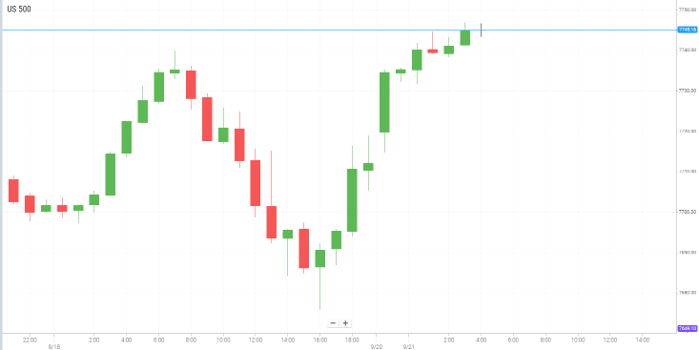
U.S. stocks ended mixed on Friday as investors took a pause following the previous session’s strong gains and assessed the Federal Reserve’s latest interest-rate decision, developments in the Middle East and growing concerns surrounding artificial intelligence safety. Rising Treasury yields added some pressure to equities, while investors continued to look for the next catalyst that could push Wall Street toward new highs.
The latest economic projections and comments from Fed Chair Kevin Warsh indicated a relatively hawkish policy stance. Although higher borrowing costs can weigh on equities, stocks rallied on Thursday as investors interpreted the rate hike as evidence that the central bank remained focused on controlling persistent inflation.
Away from the Middle East, concerns surrounding artificial intelligence also attracted significant attention from investors during the week. The debate intensified after Anthropic researcher Jacob Coxon resigned and raised concerns about the safety of advanced AI development. Anthropic scientist Evan Hubinger subsequently expressed support for those concerns, while Anthropic CEO Dario Amodei called for a slowdown in AI development in a lengthy blog post.
Other prominent figures in the technology industry, including OpenAI CEO Sam Altman, xAI founder Elon Musk and Google DeepMind co-founder Demis Hassabis, also commented on AI safety. OpenAI separately disclosed several reports describing unexpected or concerning behavior observed during the training or evaluation of its AI models.
With monetary policy, energy markets, geopolitical developments and AI-related concerns all competing for investors’ attention, Wall Street enters this week with several potential sources of volatility. The direction of oil prices, developments in the U.S.-Iran situation, Treasury yields and further signals from the Federal Reserve are likely to remain closely watched as investors assess the outlook for U.S. equities.
The materials contained on this document should not in any way be construed, either explicitly or implicitly, directly or indirectly, as investment advice, recommendation or suggestion of an investment strategy with respect to a financial instrument, in any manner whatsoever. Any indication of past performance or simulated past performance included in this document is not a reliable indicator of future results. For the full disclaimer click here.
Join iFOREX to get an education package and start taking advantage of market opportunities.
 A beginner's e-book
 $5,000 practice demo account
 A 12-part video course
 Trusted partner
 Featured partner
 By
By 


