
Listed on 
 Years active
 English (Arabic)
 Chinese Simplified - 中文 (简体)
 Chinese Traditional - 中文 (繁體)
 English
 Japanese - 日本語
 Korean - 한국어 (대한민국)
 Portuguese - Português
 Russian - Русский
 Spanish - Español
 Thai - ไทย

 English (India)

Don't have an account?
Register via AppHave an account?
Login 16/11/2026 - 07:58 UTC
The United States Dollar Index (USDX) held positive ground around the 103.45 level in early Monday trading, gaining momentum as hawkish comments from Federal Reserve officials and hot inflation readings revived bets on further tightening. The Greenback's strength follows a robust performance late last week, where USDX gained +1.15% propelled by strong U.S. employment data and elevated inflation metrics. The U.S. Bureau of Labor Statistics reported that headline Producer Price Index (PPI) climbed 6.5% YoY in October—the largest annual gain since November 2022—coming in below forecasts but following a hot CPI print, while core PPI rose to 5.0% YoY. Kansas City Fed President Jeff Schmid warned that inflation remains too hot across energy, goods, healthcare, and AI-related investment costs, while Boston Fed President Susan Collins backed a steady pace of modest increases. With 10-year Treasury yields reaching 5.14%, CME FedWatch pricing indicates a 93.5% probability of a 25-basis-point rate hike at the December 9 meeting, alongside a smaller 6.5% chance of a 50-basis-point move.
Global commodity and energy markets experienced downward pressure as geopolitical tensions showed mixed signals and oil supplies recovered. Gold (XAU/USD) retreated during the week, facing a weekly rout of -4.61%, and struggled to capitalize on a modest Monday uptick near the $3,900 mark as higher U.S. Treasury yields and a firm dollar fuelled Fed rate hike bets. Meanwhile, WTI Oil fell roughly -1.84% for the week toward $88.92 per barrel—while Brent crude traded near $95—continuing to digest conflicting messaging on U.S.-Iran diplomacy, ample supply, and improving Middle East flows through the Strait of Hormuz. However, Houthi attacks on Saudi energy infrastructure, threats to maritime traffic, and unverified Iranian reports of a tanker striking a naval mine near the waterway kept a geopolitical risk premium alive alongside anticipation of the upcoming APEC summit meeting in Shenzhen between U.S. President Donald Trump, Chinese President Xi Jinping, and Russian President Vladimir Putin.
Asian equity markets registered mixed movements over the week before sliding on Monday, led lower by Taiwan and South Korea as renewed doubts over the AI trade and Nvidia's leadership unsettled regional technology shares. During the prior week, major regional technology leaders registered significant gains following earlier stabilization, including Kioxia (+9.87%), Samsung Electronics (+9.70%), SK Hynix (+7.88%), and Murata (+6.00%), while Tencent (-7.60%) pulled back. At the start of the new week, however, broad selling hit tech benchmarks across South Korea, Taiwan, and Japan—dragging down TSMC, SK Hynix, Samsung Electronics, Kioxia, Murata, and Chinese AI developers—as weak October Chinese activity data in industrial output, retail sales, fixed-asset investment, and property prices underscored fragile domestic demand, though Hong Kong's Hang Seng managed modest gains. Adding to regional headwinds, Japan's economy contracted in the third quarter for the first time in a year amid elevated living costs, while Bank of Japan board member Hajime Takata stated that any rate hikes must remain nimble and data-dependent rather than following a fixed pace.
U.S. equity markets attempted a recovery at the end of last week following earlier tech selloffs, though stock index futures eased early Monday ahead of pivotal corporate results. Major corporate and technology names registered significant weekly movements last week, including Nvidia (-12.80%), AMD (+19.40%), CoreWeave (+14.68%), and SpaceX (+3.69%). Nvidia remains at the center of market scrutiny after CEO Jensen Huang resigned amid personal controversies and CFO Colette Kress stepped in as interim CEO, wiping out over $500 billion in market value since early October. Reports indicate Huang has discussed a possible return while Treasury Secretary Scott Bessent urged the board to seek an external successor, with Huang's China ties also raising potential chip-export policy implications. Elsewhere in tech, institutional interest has surged around Anthropic's upcoming IPO—surpassing interest in SpaceX's listing—while a Microsoft outage disrupted oil-trading data and dealmaking.
Over the weekend, Bitcoin slid toward a four-month low, approaching a major liquidation zone near $62,000 as institutional outflows from spot ETFs, leveraged selling, and expectations of higher U.S. interest rates pressured cryptocurrency markets. The world’s largest cryptocurrency extended a sharp multi-week selloff, triggering billions in liquidations across derivatives exchanges and bringing broader digital assets under intense downward pressure.
Looking ahead, market participants are bracing for a data-heavy economic calendar focused on retail sales metrics and central bank communications to determine the Federal Reserve's next policy path. Monday features speeches by Fed Chairman Kevin Warsh and New York Fed President John Williams, followed by Tuesday's release of Core Retail Sales and Retail Sales data alongside high-profile corporate earnings from Nvidia, Home Depot, Walt Disney, and Tyson Foods. Wednesday brings UK CPI data, speeches from BOE Gov Bailey, and the release of the FOMC Meeting Minutes, while Thursday features Australian employment figures and additional earnings from Palo Alto Networks, Walmart, Intuit, and others.
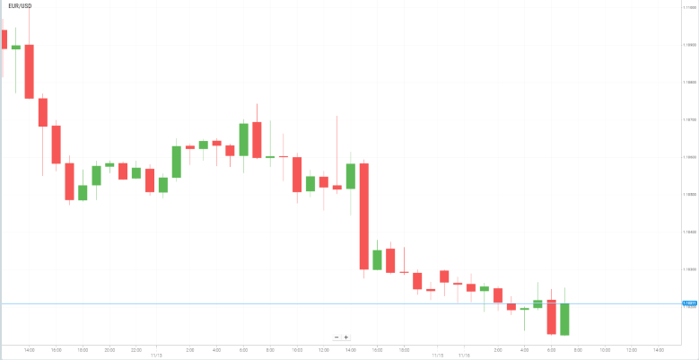
The EUR/USD pair edged lower to around 1.1020 during early Asian trading on Monday, slipping below the 1.1050 level as growing expectations of another US Federal Reserve (Fed) interest rate hike in December provided support for the US Dollar. Investors are now turning their attention to the US October Retail Sales report, due on Tuesday, followed by the release of the Federal Open Market Committee (FOMC) meeting minutes on Wednesday.
According to a Reuters poll, most economists expect the European Central Bank (ECB) to deliver its final interest rate increase of the current tightening cycle in December. However, more than a third anticipate an additional hike in early 2027 as inflation remains around twice the central bank’s 2% target. ECB policymaker Philip Lane noted that although energy prices may be declining, future monetary policy decisions will depend on how significantly higher fuel costs feed through into wages and broader consumer prices.
Meanwhile, expectations of further monetary tightening in the United States continue to strengthen the Greenback. The Federal Reserve is widely expected to raise its benchmark interest rate by 25 basis points from the current 3.75%–4.00% range at its December 8–9 policy meeting, with markets also anticipating the possibility of another increase in January.
Kansas City Fed President Jeff Schmid reinforced the central bank’s commitment to tackling inflationary pressures on Sunday, stating that price pressures remain too elevated and that the Fed still has work to do to bring inflation under control.
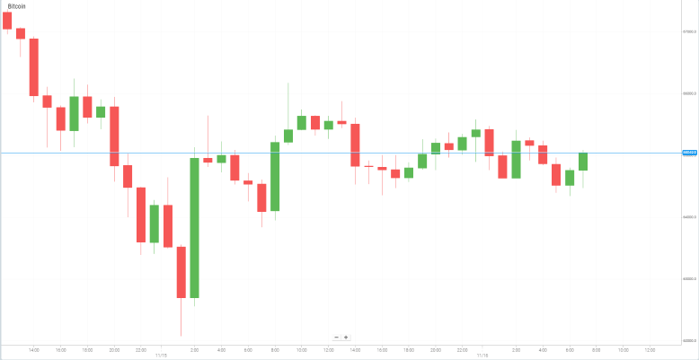
Bitcoin edged higher on Monday but remained below the $65,000 level, trading close to its lowest levels in three months as concerns over higher US interest rates and regulatory uncertainty continued to weigh on the cryptocurrency market.
Cryptocurrency sentiment remains fragile amid weakening risk appetite, with investors adopting a cautious approach ahead of Nvidia's earnings report later this week. Recent political developments in the United States have also contributed to uncertainty, as the Democrats' victory in the midterm elections raised concerns about the future regulatory environment for digital assets under a Democrat-led Congress.
Meanwhile, stronger-than-expected US inflation data has increased expectations that the Federal Reserve could raise interest rates in December, with some market participants even considering the possibility of a larger 50-basis-point increase. Higher borrowing costs typically create additional pressure on speculative assets such as Bitcoin by reducing demand for riskier investments. Historically, Bitcoin has struggled during previous Fed tightening cycles, particularly throughout 2022 and 2023.
Additional pressure has emerged following MSCI's decision to remove digital asset treasury companies, particularly Strategy, from its indexes starting at the end of November. The move could restrict the company's access to institutional capital and potentially increase concerns about its ability to meet growing debt and financial obligations, raising the possibility of Bitcoin sales.
Overall, Bitcoin's recovery remains limited as persistent ETF outflows, uncertainty surrounding US cryptocurrency regulation and expectations of further Federal Reserve tightening continue to undermine market sentiment.
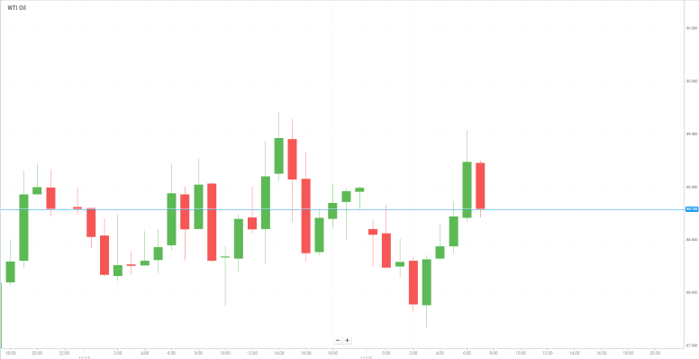
Oil prices moved lower on Monday as expectations of an emerging global supply surplus weighed on market sentiment. The recovery of crude shipments through the Strait of Hormuz to nearly pre-war levels, combined with recent measures by the United States to facilitate domestic fuel transportation, eased concerns over supply disruptions.
The decline follows a weaker session on Friday, when both benchmarks closed lower amid signs of easing geopolitical risks surrounding the US-Israeli conflict with Iran, which has now entered its ninth month.
Further pressure on prices came from the International Energy Agency (IEA), which warned that the global oil market could return to a supply surplus in the fourth quarter of 2026. According to the agency, recovering Middle Eastern exports are expected to outpace global demand, with average supply projected to reach 105 million barrels per day, approximately 1.7 million barrels per day above anticipated consumption. This represents a significant shift from the IEA's previous forecast of a supply deficit. The agency also confirmed that 71 million barrels from its members' record emergency oil reserve release will become available by the end of February, including 15 million barrels of diesel intended to ease market tightness.
Meanwhile, the US decision to extend a temporary waiver of the Jones Act for another 90 days has added to expectations of improved fuel availability. The waiver, extended by President Donald Trump, allows foreign-flagged vessels to transport oil, gasoline and diesel more freely between US ports, increasing the number of tankers available for domestic shipments.
Overall, the oil market is increasingly shifting its focus from supply disruption concerns towards the possibility of excess production. Although improving Middle Eastern exports and additional US shipping capacity are weighing on prices, persistent security risks and elevated transportation costs could limit further declines.
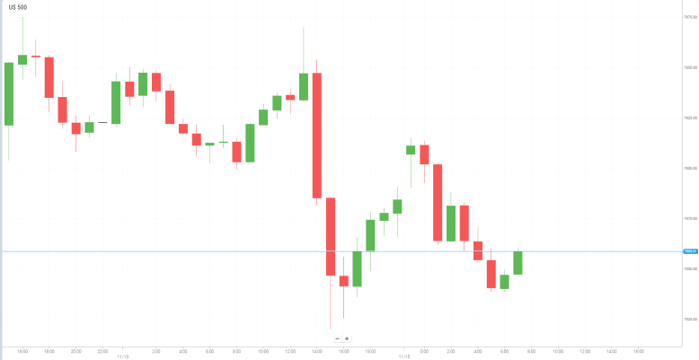
US stock futures moved lower during Asian trading on Monday as investors adopted a cautious stance ahead of Nvidia's quarterly earnings report, scheduled for later this week. Market participants are looking for fresh indications of the strength of artificial intelligence demand and whether substantial investments in AI infrastructure can continue to support the technology sector's valuations.
The cautious mood followed a volatile end to the previous week, when technology stocks came under significant pressure, with Nvidia shares plunging nearly 13% over the week. Despite the weakness in technology stocks, major US equity indices managed to record weekly gains for the first time since early October.
Investor attention is now firmly focused on Nvidia's fiscal third-quarter results, due on Tuesday, November 17, after the market close. The report is expected to provide important insights into demand for AI processors, as well as the sustainability of the massive capital expenditure commitments made by major technology companies. Investors will also be looking for guidance on future revenue growth and the company's ability to maintain its dominant position in the semiconductor industry.
Beyond Nvidia, another major event attracting attention is the anticipated initial public offering of artificial intelligence startup Anthropic. The company is expected to price its shares on Wednesday before beginning trading on the Nasdaq on Thursday. Its market debut could provide another indication of investor appetite for AI-related businesses amid growing concerns about elevated valuations and the returns generated by substantial investments in artificial intelligence.
Meanwhile, investors will also assess quarterly earnings from major US retailers, including Home Depot, Target and Walmart. Their results are expected to offer valuable insight into consumer spending trends and the resilience of household demand ahead of the crucial holiday shopping season.
The materials contained on this document should not in any way be construed, either explicitly or implicitly, directly or indirectly, as investment advice, recommendation or suggestion of an investment strategy with respect to a financial instrument, in any manner whatsoever. Any indication of past performance or simulated past performance included in this document is not a reliable indicator of future results. For the full disclaimer click here.
Join iFOREX to get an education package and start taking advantage of market opportunities.
 A beginner's e-book
 $5,000 practice demo account
 A 12-part video course
 Trusted partner

 Featured partner
 By


